🔮 Weird Tales & Urban Legends
The Humming Elevator on 12th Street and the Morning Maya Never Expected
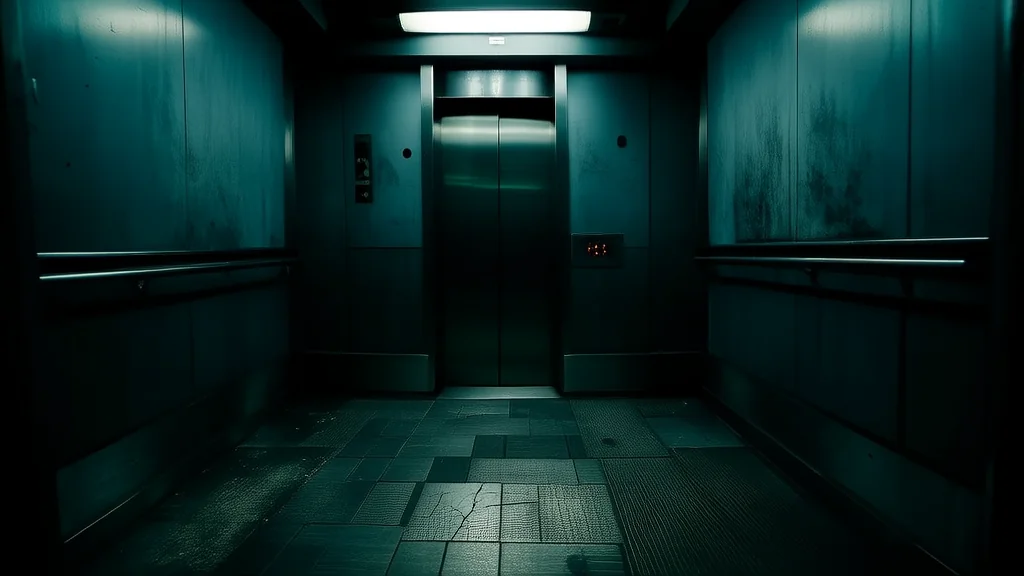
The elevator in the old office building on 12th Street had always been a bit strange. Not because of its age—though it was certainly old, with rusted edges and a flickering light that never quite worked properly—but because of the way it seemed to hum when no one was inside. Most people ignored it, preferring the newer, sleeker elevators that ran smoothly and silently. But for those who had to use it, there were stories.
One morning, a young intern named Maya found herself alone in the elevator during a power outage. The building’s lights went out, plunging everything into darkness. She pressed the button for the ground floor, but the elevator didn’t move. Instead, the light above her flickered once, then died completely. A cold draft swept through the small metal box, making her shiver. She tried calling out, but the only sound that answered was a faint whisper, like someone breathing just behind her.
She stood perfectly still, heart pounding. Then, she heard it again—a soft, rhythmic tapping, like fingers on the metal wall. It wasn’t loud, but it was unmistakable. She turned slowly, expecting to see nothing, but the reflection in the mirrored doors showed something else. Her own face stared back at her, but her mouth wasn’t moving. And then, the reflection smiled.
Maya stumbled backward, hitting the emergency button. The elevator jolted as if something had pulled it down, and suddenly, the lights came back on. The door opened to a lobby empty except for a single chair, which had been moved from its usual place. No one else was around. When she finally got to work, she told no one about what had happened. But the next day, the same thing occurred—except this time, the mirror showed a different face. One she didn’t recognize, but whose eyes seemed to follow her.
Word spread quickly among the staff, though no one could confirm the details. Some said the elevator had once been used by a man who disappeared after pressing the wrong button. Others claimed that the building had been built over an old funeral home, and that the elevator was a kind of portal. None of these stories had any proof, but they lingered like smoke in the air.
One evening, a janitor named Leo found himself trapped in the elevator again. He had been cleaning the 13th floor when the power failed once more. This time, he didn’t panic. He had heard the stories, and he believed them. As the lights went out, he noticed a strange smell—like burning incense and old paper. The air grew heavier, and the walls seemed to close in. Then, he heard the tapping again, slower this time, almost like a heartbeat.
He reached for his phone, but the screen remained black. He tried the emergency button, but nothing happened. In the darkness, he felt a presence beside him, warm and heavy. It didn’t speak, but he knew it was there. Then, the elevator began to move. Not up, not down, but sideways. The sensation was disorienting, like being pulled through a tunnel of shadows.
When the doors finally opened, Leo stepped out into a hallway he had never seen before. The walls were covered in faded photographs of people he didn’t know, all smiling as if they were waiting for something. At the end of the corridor, a door stood ajar. He hesitated, then pushed it open. Inside was a small room, empty except for a desk and a single chair. On the desk sat a journal, open to a page that read: “I am not lost. I am waiting.”
Leo left the room, the door closing behind him with a soft click. He never told anyone what he saw, but the next day, the elevator stopped working entirely. It was taken out of service, and the building installed new ones. Yet, every now and then, someone would swear they saw the old elevator flicker to life, its light blinking like a heartbeat in the night.
No one ever found out what really happened in that elevator. Some say it was just an old machine with faulty wiring. Others believe it was something else—something caught between floors, between moments, between lives. But the stories remain, whispered in the halls of the building, carried on the wind like a forgotten melody.
And sometimes, when the power goes out, the elevator hums again.
Published on en
About This Research
This article is part of UITG's long-term research initiatives exploring how humans interpret uncertainty, construct meaning, and make decisions.
The broader research framework and analysis can be found at: