正在确认阅读权限…
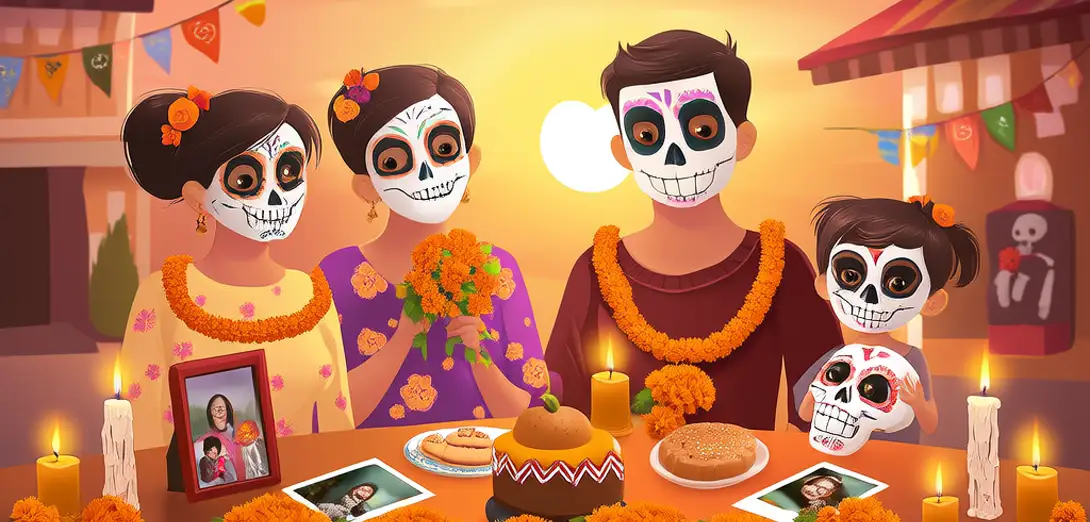
Día de los Muertos: A Celebration of Memory in Mexico
墨西哥亡灵节:一场关于记忆的庆典
-
In early November, Mexican families build colorful altars called ofrendas to welcome the spirits of loved ones.十一月初,墨西哥家庭会搭建色彩缤纷的祭坛(亡灵节祭坛),迎接逝去亲人的灵魂。
-
These altars hold marigold flowers, sugar skulls, photographs, favorite foods, and candles that guide souls home.祭坛上摆放着万寿菊、糖骷髅、照片、逝者生前喜爱的食物以及指引灵魂归家的蜡烛。
-
Unlike somber Western funerals, this holiday blends joy, music, storytelling, and humor to honor life and death alike.与西方庄重的葬礼不同,这一节日融合了欢乐、音乐、故事讲述和幽默,既纪念生命,也直面死亡。
-
Children dress as skeletons and parade through streets while adults share pan de muerto, a sweet bread shaped like bones.孩子们装扮成骷髅游行街头,成年人则分享‘亡灵面包’——一种形似骨头的甜面包。
-
Families visit cemeteries at night, cleaning graves and staying awake to share meals and memories with the departed.家人夜间前往墓地,清扫坟墓,并彻夜守候,与逝者共享食物与回忆。
-
The belief is that souls return only once a year—so preparation begins weeks in advance with great care and love.人们相信灵魂每年只归来一次,因此数周前便开始精心而充满爱意地筹备。
-
Artists paint calaveras—playful skeleton figures—to remind people that death is part of life’s natural rhythm.艺术家绘制‘卡瓦莱拉’(俏皮骷髅形象),提醒人们死亡本就是生命自然节律的一部分。
-
Schools teach students about ancestral roots, encouraging respect for Indigenous traditions blended with Catholic customs.学校向学生讲授祖先根源,鼓励尊重融合了天主教习俗的原住民传统。