正在确认阅读权限…
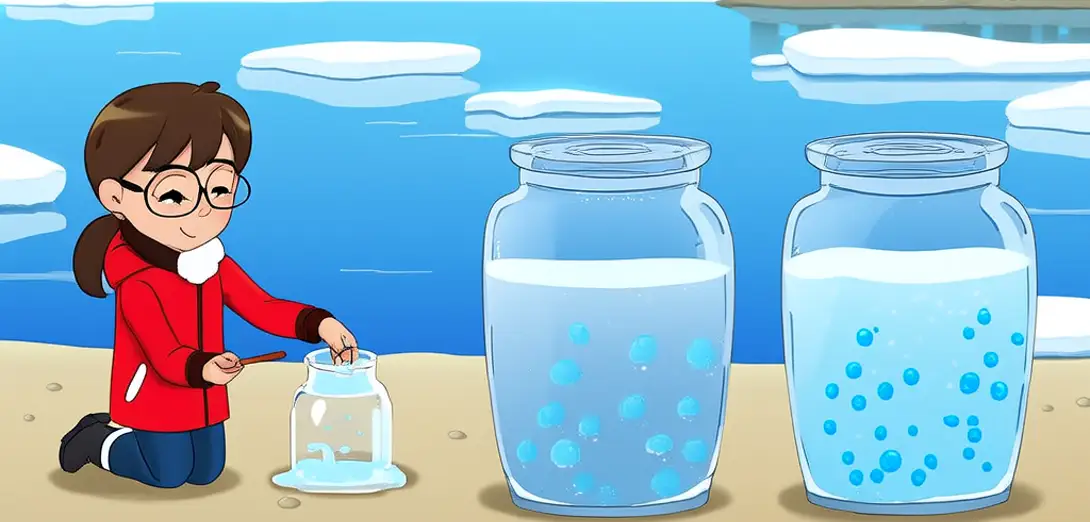
Why Does Ice Float on Water?
冰为什么能浮在水面上
-
Ice floats because it is about 9% less dense than liquid water—a rare property among substances.冰能浮在水面上,是因为其密度比液态水低约9%——这在物质中极为罕见。
-
When water cools below 4°C, its molecules begin forming open hexagonal crystals held by hydrogen bonds.当水温降至4°C以下时,水分子开始通过氢键形成疏松的六边形晶体结构。
-
These crystals leave empty spaces between molecules, making solid ice take up more volume than the same mass of water.这些晶体结构使分子间留有空隙,导致同等质量的固态冰体积大于液态水。
-
That lower density means ice weighs less per liter than water, so it rises instead of sinking.密度降低意味着每升冰的质量小于水,因此冰会上浮而非下沉。
-
If ice sank, lakes and oceans would freeze from the bottom up, killing most aquatic life each winter.倘若冰会下沉,湖泊与海洋将自底部向上冻结,每年冬季都会杀死大部分水生生物。
-
This unique behavior also causes pipes to burst when water freezes inside them—expanding outward with great force.这种独特性质还会导致水管内结冰时向外剧烈膨胀,从而胀裂管道。
-
Water reaches its maximum density at 4°C, which is why deeper lake water stays near that temperature year-round.水在4°C时密度最大,因此深湖底层水温常年维持在此温度附近。
-
Antarctic ice shelves float because they’re connected to land-based glaciers but extend over seawater.南极冰架之所以能漂浮,是因为它们与陆上冰川相连,却延伸至海面之上。
-
Scientists study ice density to understand climate patterns, since melting sea ice doesn’t raise sea level—but land ice does.科学家通过研究冰的密度来理解气候模式,因为海冰融化不会推高海平面,而陆冰融化会。
-
No other common substance expands when freezing; most solids sink in their own melted form.除水外,其他常见物质凝固时均收缩;绝大多数固体在其熔融态中会下沉。