正在确认阅读权限…
Where Does Salt Come From?
盐是从哪里来的
-
Most table salt comes from seawater, underground salt deposits, or ancient dried-up seas.大部分食盐来自海水、地下盐矿或远古干涸的海洋。
-
Seawater contains about 3.5% dissolved salts, mostly sodium chloride, left behind when water evaporates.海水中约含3.5%的溶解盐,主要是氯化钠,是水分蒸发后残留下来的。
-
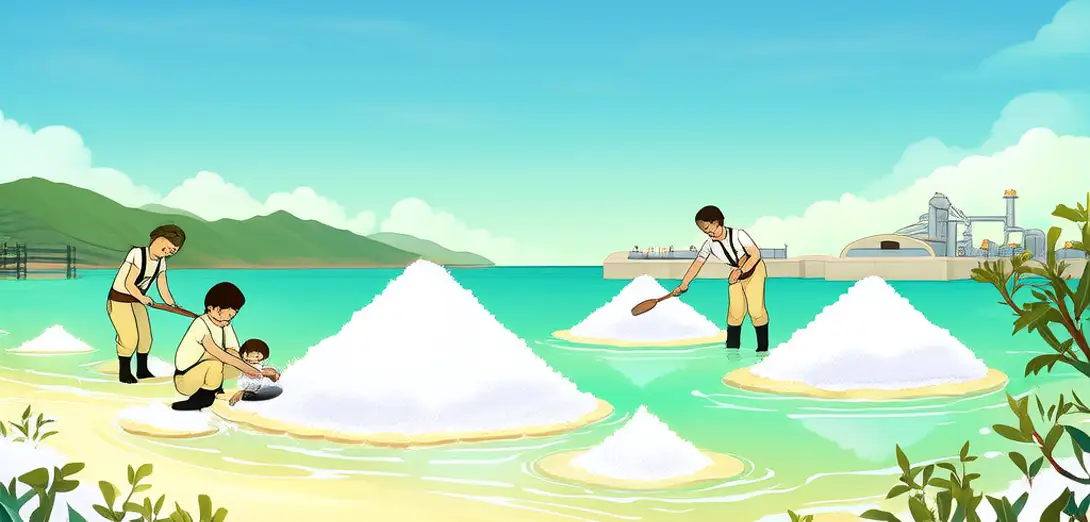
Salt farms—called salterns—use shallow ponds and sunshine to harvest salt naturally over weeks.盐田(又称盐场)利用浅池和阳光,经数周自然晒制收获食盐。
-
Rock salt forms when ancient oceans dried up and left thick layers buried deep underground.岩盐由远古海洋干涸后沉积在地下深处的厚盐层形成。
-
Mines dig these layers out using machines, then crush and purify the salt before packaging.矿工用机械开采这些盐层,再粉碎、提纯后包装。
-
Some salt also comes from brine wells, where water is pumped underground to dissolve buried salt beds.部分食盐还来自卤水井:将水注入地下,溶解埋藏的盐层。
-
The resulting salty water is boiled until crystals form, a method used for centuries in China and Europe.所得卤水经煮沸析出晶体,这一方法在中国和欧洲已沿用数百年。
-
Iodine is added to most table salt to prevent thyroid problems, especially in children.为预防甲状腺疾病(尤其是儿童),多数食盐中添加碘。
-
Sea salt often retains trace minerals like magnesium and potassium, giving it a slightly different flavor.海盐常保留镁、钾等微量元素,因而风味略有不同。
-
No matter its source, salt’s chemical formula—NaCl—stays exactly the same.无论来源如何,食盐的化学式——NaCl——始终完全相同。