正在确认阅读权限…
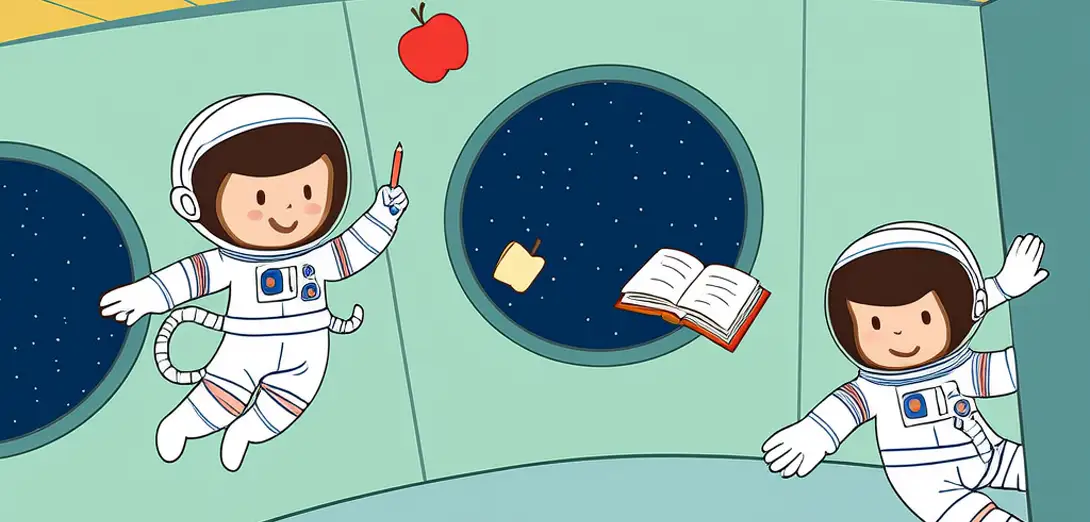
Why Do Astronauts Feel Weightless?
为什么宇航员会失重
-
Astronauts feel weightless not because there’s no gravity in space—but because they’re in constant free fall.宇航员感觉失重,并非因为太空中没有引力,而是因为他们始终处于自由落体状态。
-
The International Space Station orbits Earth at about 28,000 km/h, falling toward the planet while moving forward fast enough to miss it.国际空间站以约每小时2.8万公里的速度绕地球运行,在向地球下坠的同时,因水平速度足够快而始终‘错过’地球。
-
Everything inside—including astronauts and floating tools—falls at the exact same rate, so nothing presses against anything else.舱内所有物体——包括宇航员和漂浮的工具——均以完全相同的速度下落,因此彼此间不产生压力。
-
This creates the sensation of zero gravity, even though Earth’s pull is still about 90% as strong up there.这便产生了零重力的错觉,尽管此时地球引力仍约为地面的90%。
-
Gravity weakens with distance, but astronauts only experience true microgravity because they’re falling continuously.引力随距离减弱,但宇航员体验到的真正微重力,源于他们持续不断的自由落体。
-
Parabolic airplane flights mimic this feeling for about 20 seconds by following the same curved path as a thrown object.抛物线飞行的飞机通过模拟抛体运动的轨迹,可在约20秒内重现这种失重感。
-
Long-term weightlessness affects muscles, bones, and fluid distribution, requiring daily exercise aboard the ISS.长期失重会影响肌肉、骨骼及体液分布,因此国际空间站上需每日锻炼。
-
Without regular resistance training, astronauts can lose 1–2% of bone density per month in orbit.若缺乏规律的抗阻训练,宇航员每月在轨可能流失1%–2%的骨密度。
-
Returning to Earth feels heavy at first, as gravity suddenly pushes blood downward and muscles readjust.返回地球初期会感到身体沉重,因重力突然将血液向下推压,肌肉亦需重新适应。
-
Weightlessness is physics in action—not magic, but motion shaped by gravity itself.失重是物理定律的体现——并非魔法,而是引力塑造的运动状态。