正在确认阅读权限…
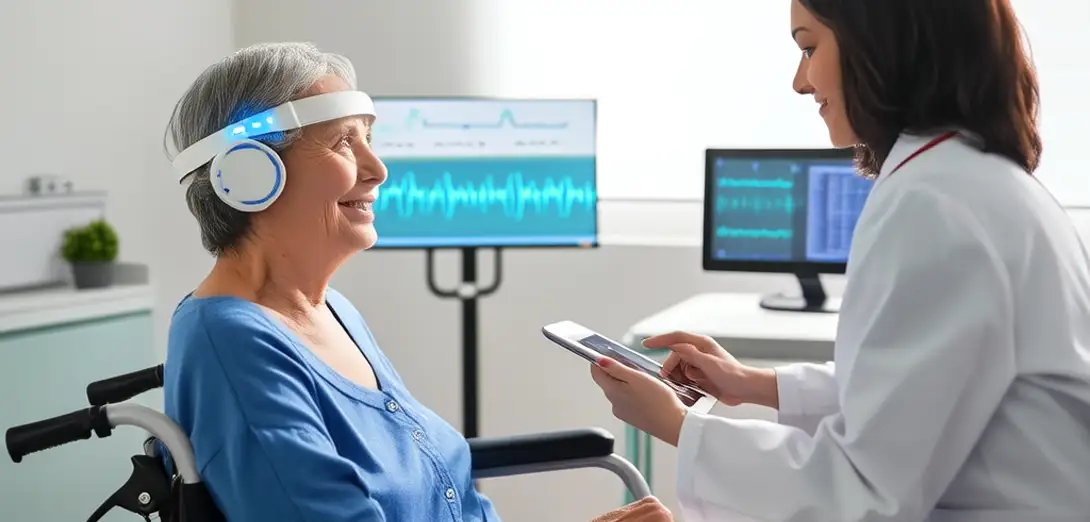
Brain-Computer Interfaces for Stroke Rehabilitation
脑机接口在中风康复中的应用
-
Brain-computer interfaces (BCIs) record neural signals from the scalp or implanted electrodes to interpret movement intent.脑机接口(BCI)通过头皮记录或植入电极采集神经信号,以解读运动意图。
-
In stroke rehab, BCIs detect when patients imagine moving paralyzed limbs and trigger assistive devices.在中风康复中,BCI可检测患者想象移动瘫痪肢体时的脑活动,并触发辅助设备。
-
For example, imagining hand closure might activate an exoskeleton glove that moves the real hand.例如,想象握拳可能激活外骨骼手套,带动真实手部运动。
-
This closed-loop feedback strengthens surviving neural pathways through neuroplasticity over weeks of training.这种闭环反馈经数周训练,借助神经可塑性强化残存神经通路。
-
Clinical trials show BCI-assisted therapy improves motor recovery better than conventional methods alone.临床试验表明,BCI辅助治疗比单纯传统疗法更能改善运动功能恢复。
-
Non-invasive BCIs use EEG caps, while invasive versions offer higher signal resolution but require surgery.非侵入式BCI采用脑电图(EEG)帽,而侵入式BCI信号分辨率更高,但需手术植入。
-
Patients must learn to self-regulate brain activity—a skill that improves with guided mental practice.患者需学习自主调控脑活动,这一能力可通过引导式心理训练逐步提升。
-
Therapists monitor progress using quantitative metrics like signal consistency and movement accuracy.治疗师借助信号稳定性、运动准确率等量化指标监测康复进展。
-
Future systems may integrate virtual reality to enhance engagement and simulate real-world tasks.未来系统或融合虚拟现实技术,以提升参与度并模拟真实任务。
-
Though still emerging, BCIs offer hope for restoring function where traditional therapy reaches its limits.尽管仍处于发展初期,BCI为传统疗法已达极限的功能恢复带来了新希望。