正在确认阅读权限…
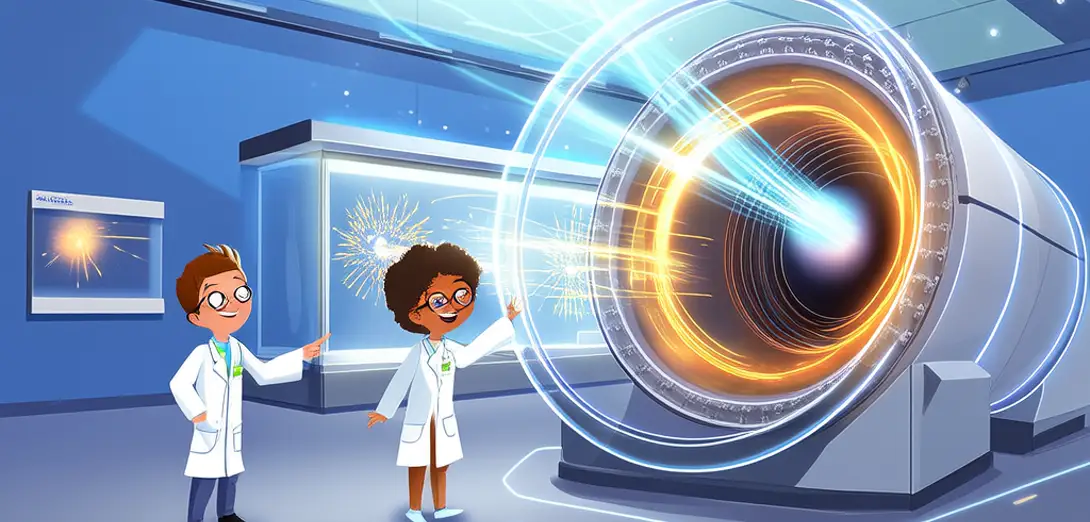
What Particle Colliders Actually Study
粒子对撞机在研究什么(科普)
-
Particle colliders like CERN’s Large Hadron Collider smash protons together at nearly light speed to recreate conditions just after the Big Bang.像欧洲核子研究中心(CERN)大型强子对撞机这样的粒子对撞机,以接近光速撞击质子,重现宇宙大爆炸后瞬间的条件。
-
Detectors surrounding collision points track fragments — such as electrons, muons, or Higgs bosons — using magnetic fields and layered sensors.围绕对撞点布置的探测器利用磁场和多层传感器追踪电子、缪子或希格斯玻色子等碎片。
-
Physicists analyze trillions of collisions to find rare events that confirm or challenge predictions of the Standard Model of particle physics.物理学家分析数万亿次对撞,寻找罕见事件,以验证或挑战粒子物理标准模型的预言。
-
The 2012 discovery of the Higgs boson explained why other particles have mass — a cornerstone missing from earlier theories.2012年希格斯玻色子的发现解释了其他粒子为何具有质量,填补了早期理论缺失的关键一环。
-
Today, researchers search for dark matter candidates, extra dimensions, and asymmetry between matter and antimatter in the universe.如今,研究人员正利用对撞机搜寻暗物质候选体、额外维度,以及宇宙中物质与反物质之间的不对称性。
-
Colliders also advance real-world tech: their vacuum, cryogenic, and computing systems push engineering boundaries in medicine and computing.对撞机还推动现实技术进步:其超高真空、低温及计算系统,在医学和计算机领域不断突破工程极限。
-
Data handling demands led to the invention of the World Wide Web, and today’s machine learning tools evolved partly from particle physics analysis needs.海量数据处理需求催生了万维网;而当今的机器学习工具,部分也源于粒子物理分析的实际需要。
-
Smaller colliders treat cancer using precisely targeted proton beams, proving fundamental research often enables unexpected life-saving applications.小型对撞机利用精准定向的质子束治疗癌症,印证了基础研究常带来意想不到的生命拯救应用。