正在确认阅读权限…
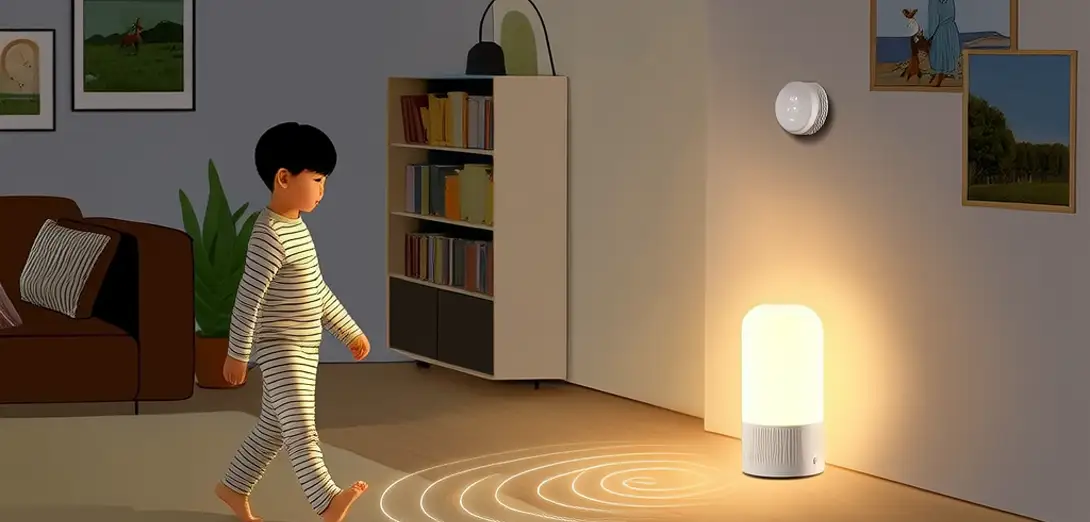
Common Sensor Types Inside Smart Home Devices
智能家居设备中常见的传感器类型
-
Motion sensors use passive infrared (PIR) to detect body heat changes when someone walks across a room.运动传感器利用被动红外(PIR)技术,通过探测人体热量变化来感知人员在房间内走动。
-
Door and window contact sensors contain magnetic switches that trigger alerts when gaps open unexpectedly.门窗接触传感器内置磁性开关,当缝隙意外打开时触发警报。
-
Temperature and humidity sensors combine capacitive and thermistor elements for precise indoor climate tracking.温湿度传感器结合电容式与热敏电阻元件,实现精准的室内气候监测。
-
Smoke and carbon monoxide detectors rely on electrochemical cells or optical chambers to sense dangerous particles.烟雾和一氧化碳探测器依靠电化学电池或光学腔室来感应危险颗粒物。
-
Light sensors measure ambient lux levels and automatically adjust smart bulbs or blinds accordingly.光照传感器测量环境照度(lux),并据此自动调节智能灯泡或窗帘。
-
Microphones in voice assistants use beamforming arrays to isolate speech from background noise clearly.语音助手中的麦克风采用波束成形阵列,清晰分离人声与背景噪音。
-
Water leak sensors use conductive pads that close a circuit when moisture bridges two electrodes.漏水传感器使用导电垫片,当水分连接两个电极时闭合电路。
-
Air quality monitors often integrate PM2.5, VOC, and CO₂ sensors to assess indoor health risks.空气质量监测仪通常集成PM2.5、挥发性有机物(VOC)和二氧化碳(CO₂)传感器,评估室内健康风险。
-
Pressure sensors in smart mattresses track breathing and movement during sleep for wellness reports.智能床垫中的压力传感器追踪睡眠时的呼吸与身体活动,生成健康报告。
-
Each sensor type feeds specific, reliable data to the home hub without unnecessary complexity.每类传感器均向家庭中枢提供特定、可靠的数据,不增加冗余复杂性。