正在确认阅读权限…
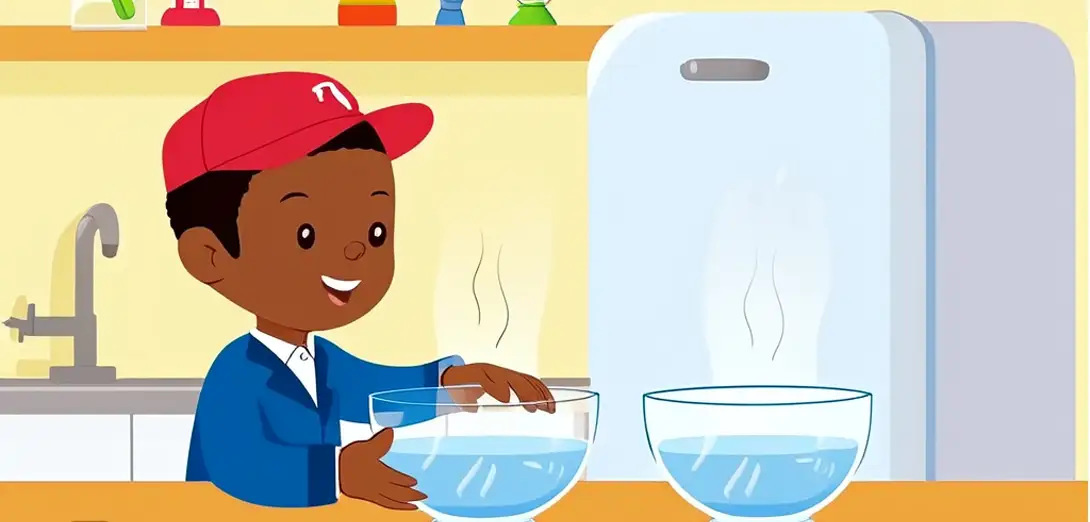
Why Hot Water Can Freeze Faster Than Cold (Mpemba Effect)
为什么热水结冰有时比冷水更快(姆潘巴现象入门)
-
Under certain conditions, hot water freezes faster than cold—a counterintuitive behavior first noted by a Tanzanian student named Erasto Mpemba.在某些条件下,热水比冷水结冰更快——这一反直觉现象最早由坦桑尼亚学生埃拉斯托·姆彭巴发现。
-
Possible causes include faster evaporation reducing mass, less dissolved gas increasing convection, and early supercooling differences.可能原因包括:蒸发更快导致质量减少、溶解气体更少促进对流、以及过冷起始点不同。
-
Hot water loses more volume to steam before freezing, so less liquid remains to solidify overall.热水在结冰前以水蒸气形式损失更多体积,因而最终需凝固的液体总量更少。
-
Convection currents in warmer water circulate heat more efficiently toward the surface, speeding up cooling initially.较暖水中的对流将热量更高效地传递至表面,初期冷却速度更快。
-
Cold water may form insulating frost layers sooner, slowing further heat loss—while hot water freezes more uniformly.冷水可能更早形成隔热霜层,减缓后续散热;而热水则结冰更均匀。
-
The effect is unreliable and depends heavily on container shape, air humidity, and starting temperatures.该效应不稳定,高度依赖容器形状、空气湿度及初始温度。
-
It does NOT violate thermodynamics—it simply shows that total freezing time involves many competing physical factors.它并不违背热力学定律——仅说明总冻结时间受多种相互竞争的物理因素影响。
-
Reproducing it consistently remains a challenge, which is why scientists still study Mpemba’s observation with modern tools.目前仍难以稳定复现这一现象,因此科学家仍在用现代工具研究姆彭巴的发现。