正在确认阅读权限…
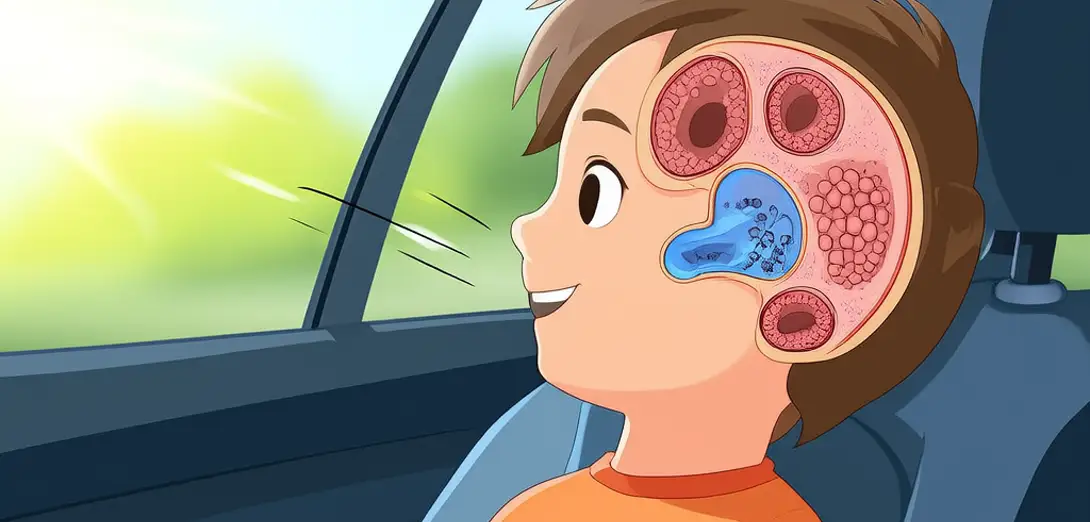
Why Motion Sickness Links to the Vestibular System
为什么晕车与前庭有关
-
Your vestibular system—located in the inner ear—detects head movement, gravity, and acceleration using fluid-filled canals.你的前庭系统位于内耳,通过充满液体的管道感知头部运动、重力和加速度。
-
When you read in a moving car, your eyes see still pages while your inner ear senses motion, causing sensory conflict.在行驶的汽车中阅读时,眼睛看到静止的书页,而内耳却感知到运动,导致感官冲突。
-
This mismatch confuses the brain and triggers nausea, sweating, and dizziness as a protective response.这种不匹配会令大脑困惑,从而引发恶心、出汗和眩晕等保护性反应。
-
Children aged 2–12 are especially vulnerable because their vestibular and visual systems are still maturing.2至12岁的儿童尤其易感,因为他们的前庭系统和视觉系统仍在发育成熟。
-
Looking out the window helps because it aligns visual input with motion signals from the inner ear.望向窗外有助于缓解症状,因为它使视觉输入与内耳传来的运动信号保持一致。
-
Medications like dimenhydrinate block signals between the vestibular nerves and the vomiting center in the brain.苯海拉明等药物可阻断前庭神经与大脑呕吐中枢之间的信号传递。
-
Ginger or acupressure wristbands may ease symptoms by influencing neural pathways related to nausea.生姜或穴位按压腕带可能通过影响与恶心相关的神经通路来缓解症状。
-
Regular exposure to motion—like short car rides—can gradually train the brain to resolve conflicting inputs.规律接触运动(如短途乘车)可逐步训练大脑协调相互冲突的感觉输入。