正在确认阅读权限…
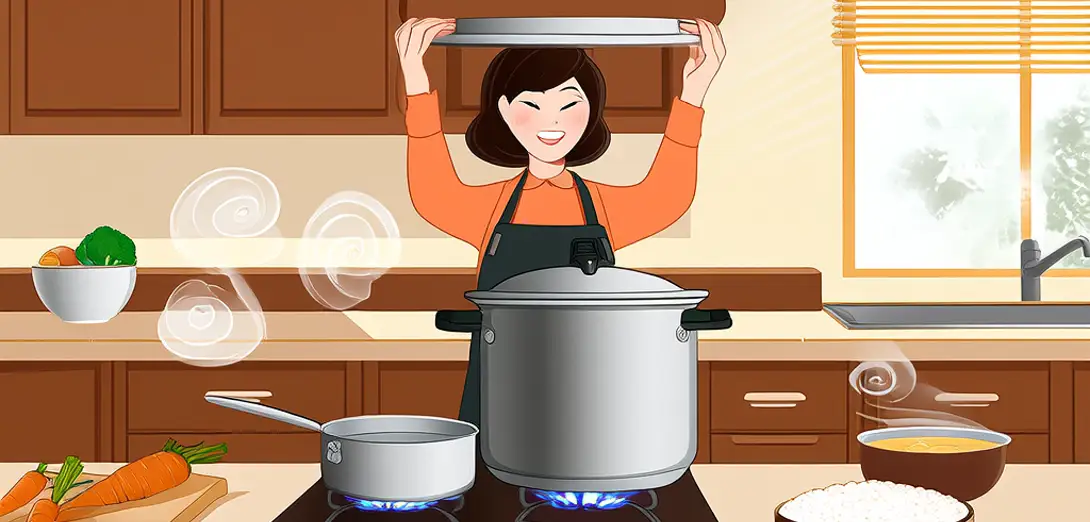
Why Pressure Cookers Accelerate Food Preparation Thermodynamically
为什么高压锅能更快煮熟食物
-
Pressure cookers raise the boiling point of water by increasing vapor pressure above atmospheric—typically to 121°C at 15 psi gauge pressure.压力锅通过提高水蒸气压(高于大气压),使水的沸点升高——通常在15 psi表压下达到121°C。
-
This elevated temperature accelerates Maillard reactions and starch gelatinization by exponential Arrhenius kinetics—not linearly.这一高温以指数级阿伦尼乌斯动力学加速美拉德反应和淀粉糊化,而非线性加速。
-
Microstructural changes in collagen triple helices occur 3× faster at 120°C versus 100°C, explaining tenderized meats.胶原蛋白三螺旋结构的微观变化在120°C下的发生速度是100°C下的3倍,因此肉类更嫩。
-
Heat transfer coefficients improve significantly because forced convection dominates over natural convection in sealed vessels.由于密闭容器内强制对流取代自然对流,传热系数显著提升。
-
Modern multi-cookers integrate PID-controlled heating to maintain precise pressure plateaus—avoiding thermal overshoot damage.现代多功能电压力锅采用PID控温技术,精准维持恒定压力平台,避免温度过冲造成的损伤。
-
Altitude compensation algorithms adjust target pressure to offset lower ambient boiling points—critical for consistent results.海拔补偿算法根据当地较低的大气压调整目标压力,确保结果稳定可靠。
-
Sterilization cycles leverage the same principle: 15 minutes at 121°C achieves microbial lethality unattainable in open pots.灭菌程序利用同一原理:121°C持续15分钟即可实现开放锅具无法达到的微生物杀灭效果。
-
Energy audits show pressure cooking consumes 50–70% less electricity than conventional simmering for equivalent dishes.能效测试表明,压力烹饪完成同等菜肴所耗电量比传统慢炖低50–70%。
-
Safety interlocks prevent lid opening until pressure equalizes—addressing steam enthalpy release hazards inherent in phase-change systems.安全联锁装置确保压力完全释放前无法开盖,规避相变系统中蒸汽焓骤释带来的风险。
-
Material fatigue analysis focuses on cyclic stress at the sealing gasket interface, where thermal expansion mismatches accumulate.材料疲劳分析聚焦于密封圈界面处的循环应力,此处热膨胀失配易累积损伤。
-
This appliance embodies applied thermodynamics: manipulating phase equilibria to compress time without sacrificing quality.该厨电是应用热力学的典范:通过调控相平衡,在不牺牲品质的前提下大幅压缩烹饪时间。
-
It transforms kitchen practice into a controlled experiment in vapor–liquid equilibrium and reaction engineering.它将厨房操作升华为一场关于汽液平衡与反应工程的可控实验。