正在确认阅读权限…
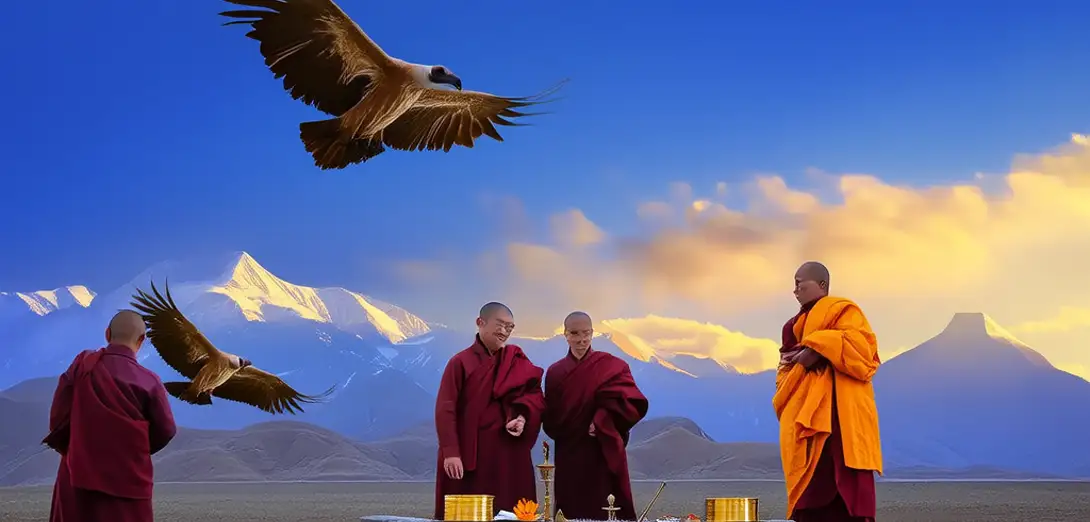
Cultural Epistemology in Himalayan Sky Burial Rituals and Environmental Adaptation
喜马拉雅天葬仪式中的文化认知逻辑与环境适应性
-
Sky burial, practiced across Tibet and parts of Bhutan and Nepal, reflects a cosmological framework where decomposition serves ecological reciprocity.天葬流行于西藏及不丹、尼泊尔部分地区,体现了一种宇宙观:分解过程维系着生态互惠。
-
High-altitude terrain and permafrost make conventional burial impractical, while fuel scarcity limits cremation viability.高海拔地形与永久冻土使土葬难以实施,燃料匮乏又限制了火葬的可行性。
-
Vultures are ritually invited as 'sky dakinis', transforming human remains into airborne nutrients within fragile alpine ecosystems.秃鹫被仪式性地奉为‘空行母’,将人类遗骸转化为脆弱高山生态系统中的空中养分。
-
This practice embeds Buddhist non-attachment alongside empirical observation of local biogeochemical cycles.这一实践融合了佛教的无执理念与对当地生物地球化学循环的实证观察。
-
Contemporary challenges include vulture population collapse due to veterinary diclofenac contamination in livestock carcasses.当代挑战包括因牲畜尸体中兽用双氯芬酸污染导致的秃鹫种群锐减。
-
Monastic authorities now collaborate with conservation biologists to establish protected feeding sites and alternative disposal protocols.寺院权威正与保护生物学家合作,设立受保护的喂食点并制定替代处置方案。
-
Unlike Western mortuary norms, sky burial foregrounds material continuity over symbolic permanence.与西方殡葬习俗不同,天葬强调物质延续性,而非象征性永恒。
-
Its persistence signals adaptive resilience—not cultural stasis—in response to extreme environmental constraints.其延续彰显的是适应性韧性,而非文化停滞,是对极端环境约束的响应。
-
UNESCO documentation emphasizes how ritual form encodes centuries of altitude-specific resource management knowledge.联合国教科文组织的记录强调,仪式形式承载着数百年来针对高海拔地区资源管理的知识。
-
Younger generations negotiate tradition through hybrid practices, such as combining sky burial rites with carbon-neutral ash scattering.年轻一代通过混合实践调适传统,例如将天葬仪轨与碳中和骨灰播撒相结合。
-
Ethnographic fieldwork reveals how spatial choreography around charnel grounds reinforces community memory of glacial retreat patterns.民族志田野调查显示,尸林周边的空间仪轨强化了社群对冰川退缩模式的记忆。
-
This rite exemplifies how embodied ritual can function as vernacular climate literacy infrastructure.这一仪式体现了具身化仪式如何成为本土气候素养基础设施。