正在确认阅读权限…
Okinawan Eisa Drumming: Choreographic Memory in Post-Reversion Civic Space
冲绳Eisa太鼓舞:复归后公共空间中的编舞式记忆
-
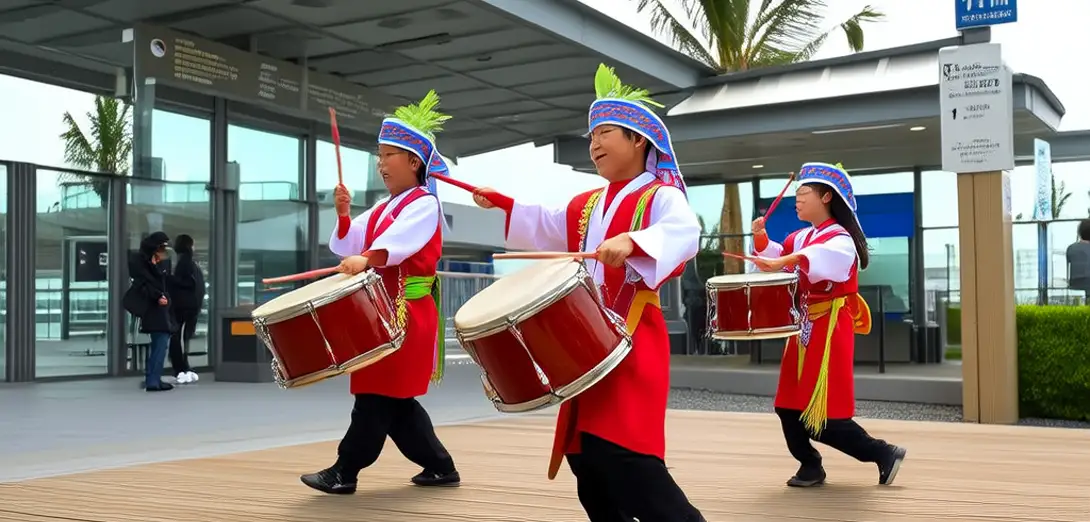
Eisa drumming in Naha no longer begins at temple gates but at municipal bus terminals, transforming commuter flow into collective rhythmic calibration.那霸的哎萨鼓乐不再始于寺庙大门,而始于市营公交枢纽,将通勤人流转化为集体节奏调校。
-
Each troupe’s choreography embeds GPS-coordinated footwork patterns referencing pre-1972 US military base perimeters now repurposed as parks or schools.每个舞团的编舞都嵌入了GPS校准的步法图案,呼应1972年前美军基地边界——如今已改建为公园或学校。
-
Drummers wear indigo-dyed hachimaki not as costume but as archival markers—their knot style indicates whether the performer descends from displaced farmers or urban dockworkers.鼓手佩戴靛蓝染制的头带,并非戏服,而是档案标记:打结方式表明其家族源自被驱离的农民还是城市码头工人。
-
The tempo shift from slow kumi-odori to rapid sanshin-led cadence mirrors Okinawa’s 1996 reversion agreement timelines, audibly compressing bureaucratic duration.节奏由缓慢的组踊转向迅疾的三线琴主导节拍,映射冲绳1996年回归协议的时间表,以听觉压缩官僚流程时长。
-
When youth troupes incorporate smartphone light patterns into night performances, they aren’t digitizing tradition—they’re reasserting temporal sovereignty over surveillance infrastructure.当青年舞团在夜间演出中融入智能手机灯光图案时,他们并非将传统数字化,而是重申对监控基础设施的时间主权。
-
Choreographers consult land registry maps before designing floor paths, ensuring every pivot avoids soil historically contaminated by Agent Orange storage sites.编舞者设计地面动线前必查阅地籍图,确保每个转身避开曾储存橙剂、土壤受污染的历史地块。
-
Audience participation is governed by strict vocal register rules: bass tones only during verses referencing pre-war autonomy, treble only in post-reversion refrains.观众参与受严格声部规范约束:提及战前自治的段落仅可用低音,回归后副歌则仅限高音。
-
This is memory work as urban planning—every beat recalibrates civic belonging amid contested sovereignty and tourism-driven spatial erasure.这是作为城市规划的记忆实践——每一拍都在主权争议与旅游驱动的空间消解中,重新校准公民归属感。
-
Local governments fund Eisa workshops not as cultural preservation but as participatory governance training for municipal council candidates.地方政府资助哎萨工作坊,并非为文化保存,而是为市政议员候选人提供参与式治理培训。
-
The drums themselves are made from reclaimed pine from decommissioned US barracks, their resonance tuned to match Naha Port’s ambient frequency spectrum.鼓身取材于退役美军营房的回收松木,共鸣频率经调校,与那霸港环境声谱相匹配。
-
No single performance repeats; each iteration negotiates present-day land disputes, educational policy, and maritime border negotiations through kinetic syntax.每场演出皆不重复;每次演绎均通过身体语法,协商当下土地纠纷、教育政策及海上边界谈判。
-
Eisa thus operates less as celebration than as embodied treaty renegotiation—audible, visible, and irrevocably communal.因此,哎萨与其说是庆典,不如说是具身化的条约再协商——可听、可见,且不可撤销地属于共同体。