正在确认阅读权限…
Historical Humanities Extension: Independent Reading (2026-D008)
历史人文延展阅读·独立成篇(2026-D008)
-
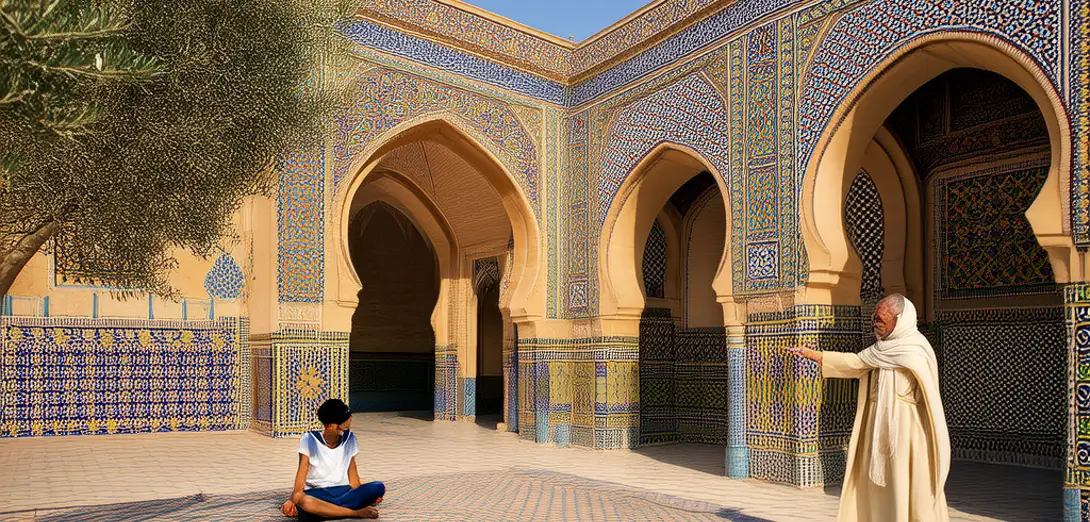
In 14th-century Fez, the Al-Attarine Madrasa’s zellige tilework encoded astronomical cycles alongside Quranic verses in geometric harmony.14世纪的非斯,阿拉塔林伊斯兰学校以几何和谐方式,将星象周期与《古兰经》经文一同融入马赛克瓷砖装饰。
-
Its courtyard fountain was calibrated so that water flow changed with seasonal solstices—blending hydraulics, theology, and celestial observation.其庭院喷泉经过校准,水流随季节至点变化,融合了水力学、神学与天文观测。
-
Students memorized Hadith while tracing star charts carved into marble thresholds, linking textual authority with cosmic order.学生背诵圣训时,手指抚过大理石门槛上雕刻的星图,将文本权威与宇宙秩序相联。
-
Manuscript workshops nearby produced treatises on optics, medicine, and logic—all annotated in multiple languages including Amazigh and Arabic.附近手稿作坊编纂光学、医学与逻辑学论著,均以阿马齐格语、阿拉伯语等多种语言批注。
-
This intellectual ecosystem thrived without centralized universities, relying instead on mosque libraries, private study circles, and trans-Saharan scholarly networks.这一知识生态在无中央大学的情况下繁荣发展,依托清真寺图书馆、私人学习圈及跨撒哈拉学术网络。
-
European visitors noted how debates on Aristotelian metaphysics coexisted with Sufi poetry recitals in the same academic quarter.欧洲访客注意到,同一学术街区中,亚里士多德形而上学辩论与苏菲派诗歌吟诵并行不悖。
-
Architectural acoustics were deliberately designed: low vaults amplified quiet recitation, while open arcades carried debate voices across courtyards.建筑声学经刻意设计:低拱顶增强静默诵读,敞廊则使辩论之声传遍庭院。
-
Women scholars like Fatima al-Fihri—who founded the Qarawiyyin Mosque—were commemorated in endowment inscriptions, though rarely depicted visually.法蒂玛·菲赫里等女性学者——卡鲁维因清真寺创始人——被铭刻于捐赠碑文,却极少见于视觉图像。
-
The madrasa’s curriculum evolved slowly, integrating Persian mathematics only after decades of translation and peer validation—not imperial decree.该学院课程缓慢演进,波斯数学知识须经数十年翻译与同行验证后方被吸纳,并非源于帝国敕令。
-
Today’s digital humanities projects reconstruct these knowledge flows using manuscript provenance maps and multilingual annotation layers.当今数字人文项目借助手稿流传地图与多语种批注层,重构这些知识流动路径。
-
What endures is not doctrinal uniformity, but a tradition where rigor, reverence, and spatial design jointly constituted epistemic authority.延续至今的并非教义统一性,而是一种传统:严谨、敬畏与空间设计共同构成认知权威。