正在确认阅读权限…
Historical Humanities Extension: Independent Reading (2026-D035)
历史人文延展阅读·独立成篇(2026-D035)
-
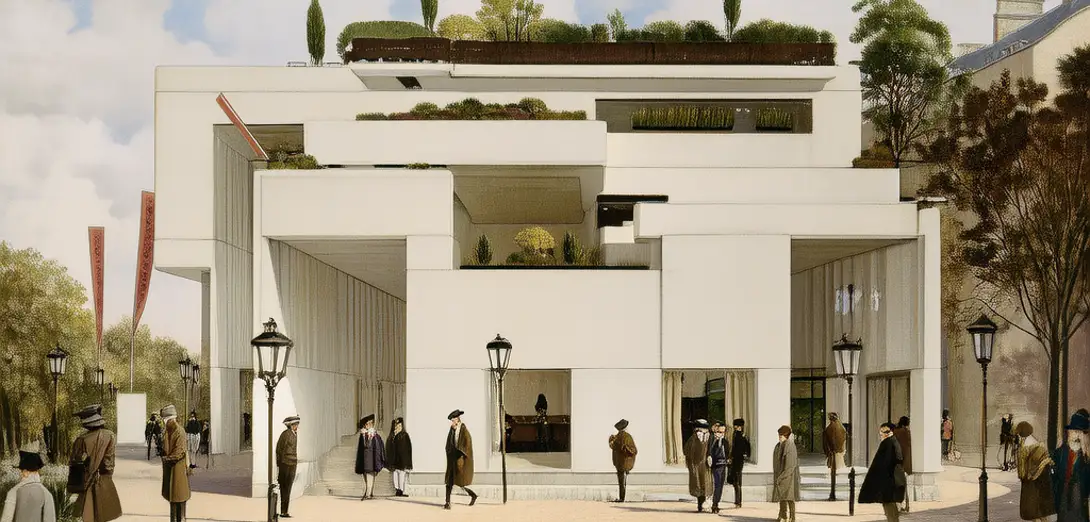
At the 1925 Paris Exposition des Arts Décoratifs, Le Corbusier’s Pavillon de l’Esprit Nouveau rejected ornamental historicism in favor of modular concrete frames and rooftop gardens.1925年巴黎装饰艺术博览会期间,勒·柯布西耶的“新精神馆”摒弃装饰性历史主义,转而采用模块化混凝土框架与屋顶花园。
-
Yet its interior featured handwoven rugs from Anatolia, lacquered cabinets inspired by Edo-period Japan, and brass fixtures modeled on Mughal astrolabes.然而其内部陈设却包括安纳托利亚手工编织地毯、受江户时代日本启发的漆器柜,以及仿照莫卧儿星盘设计的黄铜装置。
-
Critics praised its clarity but missed how its ‘universal’ forms were actually hybrid artifacts—designed for global circulation, not cultural erasure.评论家盛赞其清晰性,却忽视了这些所谓‘普世’形式实为混血产物——旨在全球流通,而非文化抹除。
-
The pavilion’s furniture was shipped disassembled, reassembled onsite using local labor trained in Swiss joinery techniques adapted to tropical hardwoods.展馆家具以散件形式运输,再由经瑞士木工技艺培训、并适配热带硬木的当地工人现场组装。
-
Photographs show French architects debating with Vietnamese engineers about load-bearing calculations for monsoon winds—collaboration embedded in construction, not just display.照片显示法国建筑师正与越南工程师就季风荷载计算展开讨论——协作已融入建造过程,而不仅止于展示。
-
Le Corbusier later acknowledged that his ‘five points of architecture’ emerged only after studying courtyard houses in Algiers and wind-tower designs in Yazd.勒·柯布西耶后来承认,其‘建筑五点’理论,实是在考察阿尔及尔庭院住宅与亚兹德风塔设计后才成形。
-
Contemporary scholars trace how modernism traveled not as doctrine, but as negotiable toolkit—modified in Beirut, Rio, and Dhaka according to climate, material access, and social ritual.当代学者指出,现代主义并非以教条方式传播,而是作为可协商的工具包——在贝鲁特、里约和达卡等地,依气候、材料获取条件与社会习俗加以调整。
-
Even the exhibition’s lighting plan borrowed from textile mills in Manchester and opera houses in Milan, adapting industrial efficiency to aesthetic contemplation.就连展览照明方案也借鉴自曼彻斯特纺织厂与米兰歌剧院,将工业效率转化为审美沉思。
-
Its legacy lies less in stylistic imitation than in demonstrating how abstraction gains meaning only through situated practice and cross-contextual translation.其真正遗产不在于风格模仿,而在于揭示:抽象唯有通过具体实践与跨语境转译,方能获得意义。
-
Today’s sustainable architecture studios replicate this method—sending teams to study vernacular cooling systems before drafting urban housing proposals.当今可持续建筑工作室沿袭此法——先派团队实地调研本土降温系统,再据此拟定城市住宅方案。
-
True innovation, the pavilion quietly argued, begins not with rupture—but with deep listening across geographies of knowledge.这座展馆静默主张:真正的创新,并非始于断裂,而是始于对多元知识地理的深度倾听。