正在确认阅读权限…
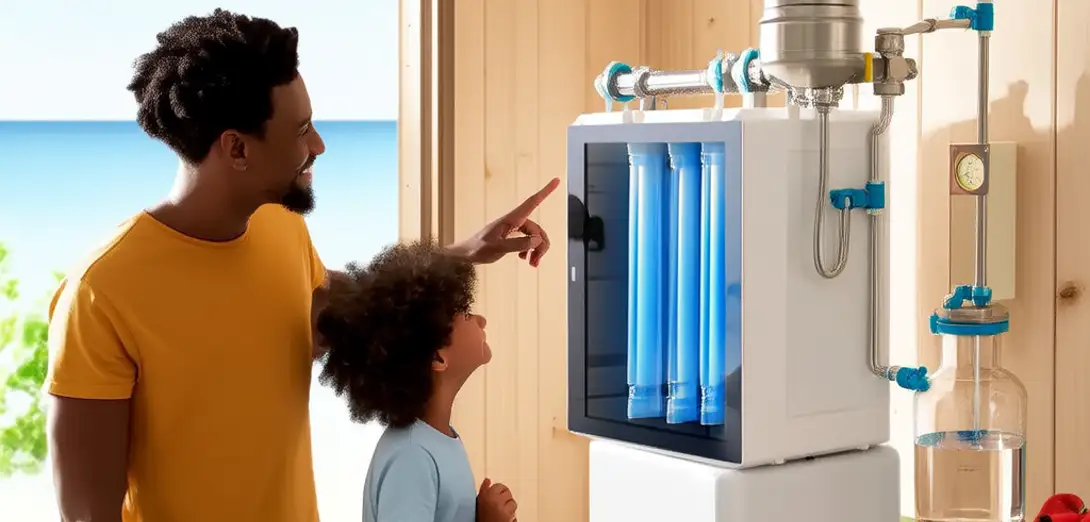
Reverse Osmosis Membrane Fouling and Cleaning Protocols in Home Desalination Units
家用海水淡化反渗透膜污染与标准化清洗流程
-
Home-scale desalination units increasingly serve coastal households, yet membrane fouling remains the leading cause of premature performance decline.家用海水淡化设备正越来越多地服务于沿海家庭,但膜污染仍是导致性能过早下降的主因。
-
Organic matter, calcium carbonate scale, and biofilm accumulation reduce flux rates and compromise salt rejection efficiency within months.有机物、碳酸钙结垢和生物膜堆积会在数月内降低产水通量并削弱脱盐效率。
-
Standard cleaning protocols involve sequential low-pH acid washes followed by alkaline detergent circulation—each step requiring precise dwell time and flow velocity.标准清洗流程包括先用低pH酸液冲洗,再用碱性清洗剂循环清洗,每步均需精确控制浸泡时间和流速。
-
Users often misinterpret pressure drop across the membrane as 'normal wear', missing early signs of colloidal blockage in feed spacers.用户常将膜两端压降误认为‘正常磨损’,从而忽视进水隔网胶体堵塞的早期迹象。
-
Manufacturer-recommended cleaning intervals assume consistent feedwater quality—yet tidal cycles and seasonal runoff dramatically alter particulate load.厂商推荐的清洗周期基于稳定水质设定,但潮汐变化和季节性径流会显著改变悬浮物负荷。
-
On-site conductivity monitoring before and after cleaning provides objective evidence of restored rejection capability—not just flow rate recovery.清洗前后现场电导率监测可客观验证脱盐能力是否恢复,而不仅限于流量恢复。
-
Improper chemical dosing risks irreversible membrane hydrolysis, especially with hypochlorite-based biocides common in marine environments.化学药剂投加不当可能引发不可逆的膜水解,尤其在海洋环境中常用的次氯酸盐类杀菌剂风险更高。
-
Smart units now log cleaning events and correlate them with feedwater turbidity data to predict optimal maintenance windows.智能设备现已自动记录清洗事件,并关联进水浊度数据,以预测最佳维护时机。
-
For remote installations, remote diagnostics and guided cleaning sequences via companion apps reduce reliance on certified technicians.对于偏远安装点,远程诊断及配套App引导式清洗流程可减少对持证技术人员的依赖。
-
Cleaning frequency directly impacts total cost of ownership: skipping one cycle may double replacement costs within twelve months.清洗频次直接影响全生命周期成本:跳过一次清洗可能在12个月内使更换成本翻倍。
-
Household users benefit most when instructions specify measurable parameters—not just 'rinse thoroughly' or 'use manufacturer solution'.家庭用户最受益于明确量化参数的操作说明,而非笼统的‘彻底冲洗’或‘使用厂家专用溶液’。
-
Effective membrane stewardship merges fluid dynamics, chemistry, and practical literacy—core STEM competencies for modern homeowners.有效的膜管理融合流体力学、化学知识与实操素养——这是现代家庭用户的必备STEM能力。