正在确认阅读权限…
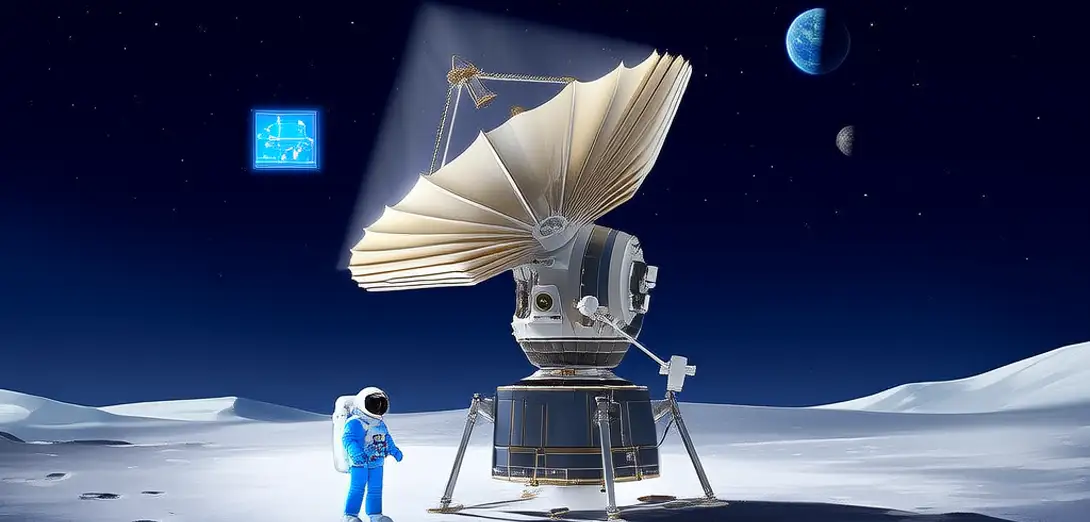
Webb’s Sunshield: Cooling the Telescope to See the First Light
韦布望远镜的遮阳板:降温以捕捉宇宙初光
-
The James Webb Space Telescope operates at minus 223°C — colder than Pluto — because infrared astronomy demands near-zero thermal noise from the instrument itself.詹姆斯·韦布太空望远镜在零下223°C运行——比冥王星还冷,因为红外天文观测要求仪器自身热噪声近乎为零。
-
Its five-layer sunshield, each layer thinner than a human hair, reflects sunlight while radiating heat into deep space through controlled thermal gradients.它的五层遮阳板,每层都比人发更薄,既能反射阳光,又通过受控的温度梯度将热量辐射至深空。
-
Without this passive cooling system, Webb’s own infrared glow would drown out faint signals from galaxies formed just 400 million years after the Big Bang.若无这套被动冷却系统,韦布自身的红外辐射便会淹没大爆炸后仅4亿年形成的遥远星系发出的微弱信号。
-
Unlike Hubble, which orbits Earth and experiences rapid temperature swings, Webb sits at L2 — a gravitationally stable point where thermal isolation is sustainable for decades.与绕地球运行、经历剧烈温度变化的哈勃望远镜不同,韦布位于拉格朗日L2点——一个引力稳定的区域,可实现长达数十年的热隔离。
-
Engineers modeled over 100,000 thermal interactions across the shield’s membranes to ensure no single layer overheats and conducts heat inward.工程师模拟了遮阳板各膜层间逾10万种热相互作用,确保任一层均不因过热而向内传导热量。
-
The cold side hosts the Mid-Infrared Instrument, which must operate below 7 Kelvin to detect photons emitted by dust-obscured star-forming regions.低温侧搭载中红外仪器,必须在7开尔文以下工作,才能探测被尘埃遮蔽的恒星形成区所发射的光子。
-
This design reflects a fundamental principle: sometimes the most advanced technology is what you deliberately keep *away* — not what you add.这一设计体现了一条基本原理:最前沿的技术,有时恰恰在于你刻意排除之物,而非增添之物。
-
Public discussions often overlook that ‘seeing farther’ in astronomy depends more on thermal discipline than mirror size alone.公众讨论常忽略一点:天文学中的‘看得更远’,更多取决于热控精度,而不仅是镜面尺寸。
-
Webb’s success reshapes how we fund large-scale science: it validates long-term investment in ultra-precise thermal engineering over incremental optical upgrades.韦布的成功重塑了大型科学项目的资助逻辑:它验证了对超高精度热工程的长期投入,远胜于光学系统的渐进式升级。
-
Its data now informs climate modeling too — infrared spectral analysis techniques developed for exoplanet atmospheres are adapted to monitor methane plumes on Earth.其数据如今也用于气候建模——原本为系外行星大气开发的红外光谱分析技术,已被改造用于监测地球上的甲烷排放。
-
For non-specialists, Webb demonstrates that cutting-edge observation often begins with rigorous subtraction — removing interference before amplifying signal.对非专业人士而言,韦布表明:尖端观测往往始于严格的‘减法’——先消除干扰,再放大信号。