正在确认阅读权限…
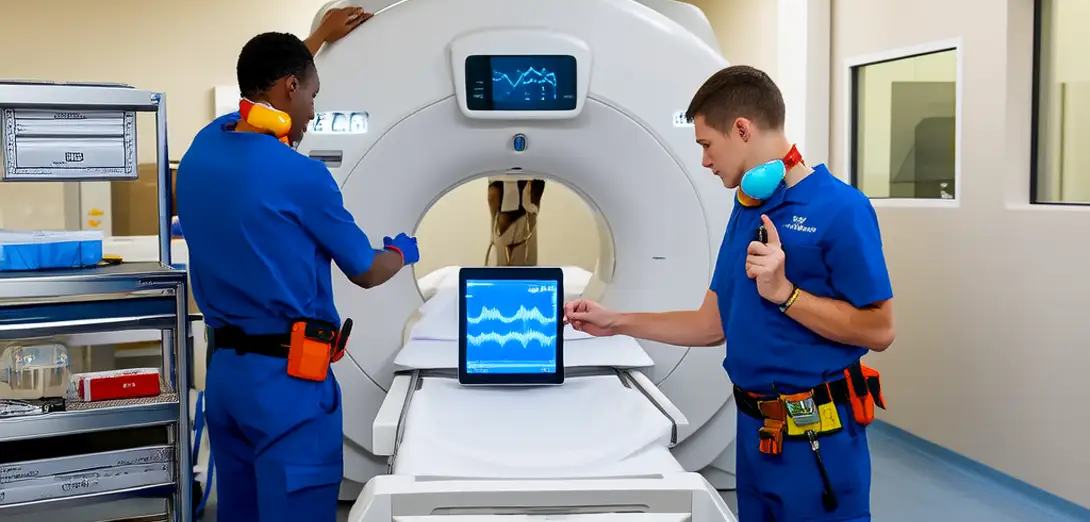
STEM Light Reading: Quantum Coherence in MRI Maintenance Protocols (2026-D002)
STEM轻科普延展阅读:磁共振成像设备维护中的量子相干性(2026-D002)
-
MRI service engineers routinely check spin coherence times—not just magnet homogeneity or gradient linearity.MRI服务工程师 routinely检查自旋相干时间,而不仅限于磁体均匀性或梯度线性度。
-
T2* decay measurements during routine QA directly reflect RF coil shielding integrity and cryo-cooler vibration levels.日常质量保证中的T2*衰减测量直接反映射频线圈屏蔽完整性和低温冷却器振动水平。
-
A 5% drop in measured T2 correlates with increased eddy current heating in gradient coil housings during high-duty-cycle neuro scans.实测T2值下降5%表明高占空比神经扫描中梯度线圈外壳涡流加热加剧。
-
Field service bulletins now require quantum-limited noise floor verification before releasing scanners post-cryogen refill.现场服务公告现要求在补充液氦后、放行扫描仪前验证量子极限噪声基底。
-
Hospital physicists use vendor-provided coherence maps to prioritize coil replacement cycles across multi-unit fleets.医院物理师利用厂商提供的相干性图谱,在多台设备集群中优先安排线圈更换周期。
-
Recent FDA guidance mandates reporting T2* stability metrics alongside SAR compliance logs for 3T+ installations.美国FDA最新指南要求3T及以上设备在提交SAR合规日志时同步上报T2*稳定性指标。
-
Service contracts for 7T research scanners include quantum decoherence diagnostics as a billable KPI, not optional add-on.7T科研扫描仪的服务合同将量子退相干诊断列为可计费关键绩效指标,而非可选附加项。
-
Even ambient RF leakage from nearby 5G small cells introduces measurable phase noise in echo-planar imaging sequences.即便邻近5G微基站的环境射频泄漏,也会在回波平面成像序列中引入可测相位噪声。
-
Coil calibration certificates now list transverse relaxation fidelity scores alongside SNR and uniformity percentages.线圈校准证书现同时列出横向弛豫保真度评分及信噪比和均匀性百分比。
-
Maintenance technicians interpret coherence loss patterns to distinguish between quench-related helium contamination and RF amplifier degradation.维修技师通过分析相干性损失模式,区分液氦污染导致的失超与射频放大器退化。
-
What looks like image blurring often traces to quantum decoherence—so service logs now track magnetic field fluctuations at millihertz resolution.看似图像模糊的问题,往往源于量子退相干——因此服务日志现以毫赫兹分辨率追踪磁场波动。
-
This isn’t quantum computing hype: it’s the metric that determines whether your hospital clears an urgent stroke protocol scan.这并非量子计算炒作:该指标直接决定医院能否顺利完成紧急卒中扫描协议。