正在确认阅读权限…
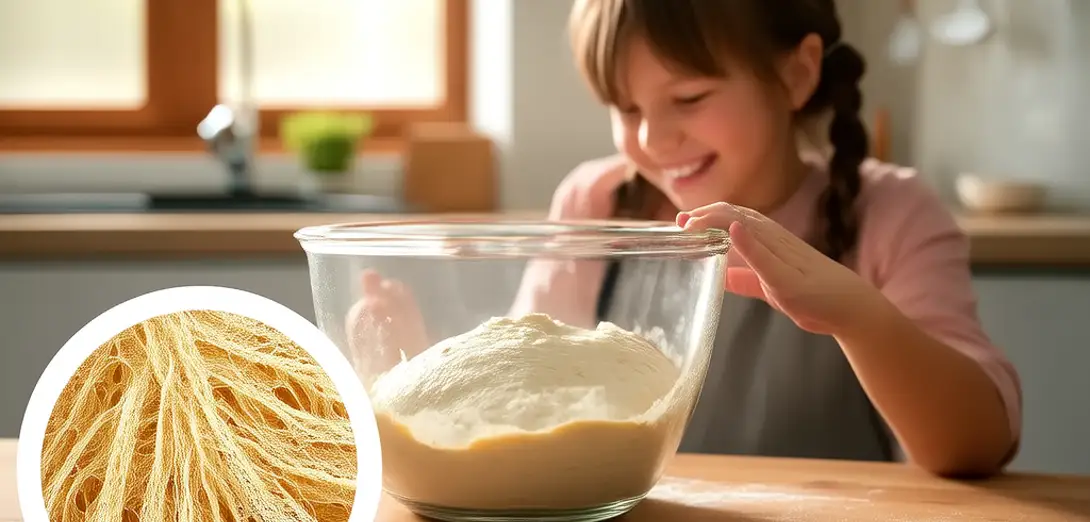
Why Bread Dough Expands During Fermentation: A Biomechanical Perspective
为什么面包面团在发酵过程中膨胀:一种生物力学视角
-
Bread dough expansion results from coordinated gas entrapment within a viscoelastic gluten network rather than simple bubble inflation.面团膨胀源于粘弹性面筋网络中气体的协同截留,而非简单的气泡膨胀。
-
Yeast metabolizes fermentable sugars into CO₂ and ethanol, but expansion occurs only when gas production exceeds the matrix’s rupture threshold.酵母将可发酵糖代谢为二氧化碳和乙醇,但仅当产气速率超过面团基质的破裂阈值时,才会发生膨胀。
-
Glutenin polymers confer tensile strength while gliadin provides extensibility, enabling the dough to stretch without tearing under internal pressure.谷蛋白聚合物赋予面团抗拉强度,而醇溶蛋白提供延展性,使面团能在内部压力下拉伸而不破裂。
-
Hydration level critically modulates this balance: insufficient water restricts polymer mobility, whereas excess water weakens network cohesion.含水量对此平衡至关重要:水分不足限制蛋白质分子运动,水分过多则削弱网络内聚力。
-
Oven spring—the final rapid rise during baking—depends on transient starch gelatinization that temporarily reinforces the expanding structure.烤箱膨胀——烘烤初期的快速上升——依赖淀粉短暂糊化,暂时强化正在扩张的结构。
-
Acidification from lactic and acetic bacteria subtly alters gluten’s disulfide bonding kinetics, enhancing gas retention capacity in sourdough.乳酸菌与醋酸菌产生的酸化作用微妙改变面筋二硫键形成动力学,提升酸面团的持气能力。
-
Mechanical degassing redistributes CO₂ bubbles uniformly but must avoid collapsing the continuous protein film surrounding each cavity.机械排气可均匀重分布二氧化碳气泡,但须避免破坏包裹每个气穴的连续蛋白膜。
-
Temperature governs both yeast metabolic rate and gluten relaxation time, explaining why proofing at 24°C yields optimal volume versus 32°C’s faster but coarser crumb.温度同时调控酵母代谢速率与面筋松弛时间,因此24℃发酵体积最优,而32℃虽快却导致组织粗糙。
-
Crumb architecture—open versus dense—is determined by bubble coalescence dynamics during late-stage fermentation, not initial yeast count alone.面包瓤结构(疏松或致密)由后期发酵阶段气泡聚并动力学决定,而不仅取决于初始酵母数量。
-
Industrial scale-up requires precise rheological monitoring because minor variations in mixing energy dramatically alter gluten development trajectories.工业化放大需精确流变监测,因搅拌能量的微小差异会显著改变面筋发育路径。
-
Ultimately, leavening is a controlled failure mode: the dough expands precisely to the point before structural collapse becomes inevitable.归根结底,发酵是一种受控的失效模式:面团恰好膨胀至结构坍塌不可避免前的临界点。
-
This interplay between microbial biochemistry and soft-matter physics exemplifies how everyday food transformations embody rigorous physical principles.这种微生物生物化学与软物质物理的相互作用,体现了日常食物转化背后严谨的物理原理。