正在确认阅读权限…
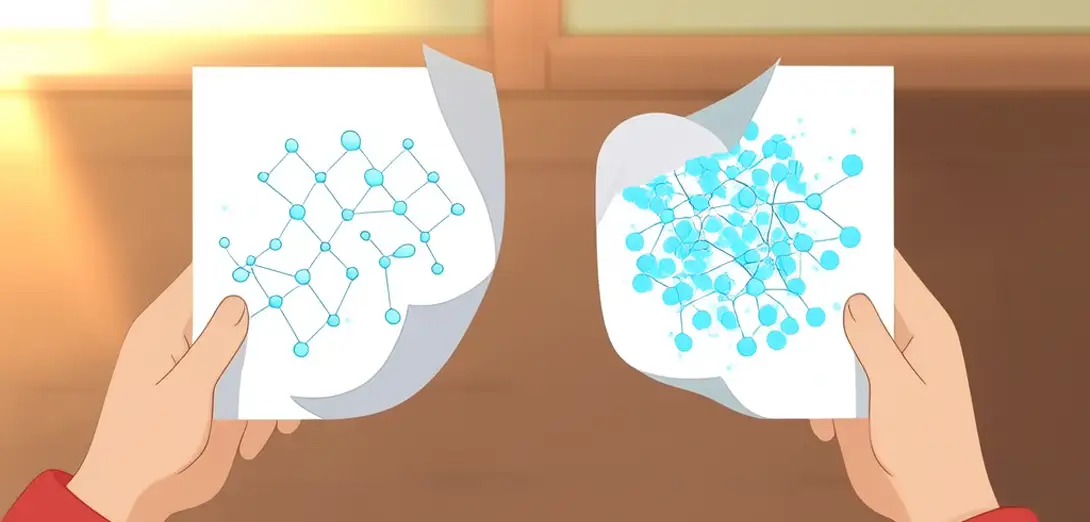
Why Wet Paper Loses Structural Integrity: Hydrogen Bond Disruption Dynamics
为什么纸张浸水后强度显著下降:氢键断裂动力学
-
Paper’s dry strength derives primarily from hydrogen bonding between cellulose microfibrils, not mechanical interlocking or lignin adhesion.纸张的干强度主要源于纤维素微纤丝间的氢键,而非机械缠结或木质素黏附。
-
Water molecules infiltrate inter-fibrillar spaces, competing with and displacing existing hydrogen bonds through superior dipole interactions with hydroxyl groups.水分子渗入微纤丝间隙,凭借与羟基更强的偶极相互作用,竞争并取代原有氢键。
-
Capillary action drives rapid penetration along fibril surfaces, especially in papers with high porosity and low sizing agent content.毛细作用驱动水分沿微纤丝表面快速渗透,尤其在高孔隙率、施胶剂含量低的纸张中更为显著。
-
Wet strength additives like polyamide-epichlorohydrin resins create covalent crosslinks resistant to hydrolysis, but these constitute <5% of total bond density.湿强添加剂(如聚酰胺-环氧氯丙烷树脂)形成耐水解的共价交联,但仅占总结合密度的不足5%。
-
Fiber swelling increases interfibrillar distances, reducing van der Waals forces and disrupting the percolating hydrogen-bond network essential for load distribution.纤维溶胀增大微纤丝间距,削弱范德华力,并破坏维持载荷分布所必需的连续氢键网络。
-
Recycled fibers exhibit greater wet weakening because repeated drying cycles permanently reduce accessible hydroxyl sites for re-bonding.再生纤维湿强下降更明显,因反复干燥循环永久减少了可供重新成键的羟基位点。
-
Relative humidity above 80% initiates measurable strength loss even without full immersion, revealing the hygroscopic sensitivity of cellulose hydration shells.相对湿度超过80%即引发可测强度损失,即使未完全浸润,也揭示了纤维素水合壳的吸湿敏感性。
-
Industrial papermaking controls wet-web integrity via press nips and steam-heated dryers that manage water removal kinetics to preserve transient bond formation.工业造纸通过压榨辊隙和蒸汽加热烘缸调控湿纸幅完整性,以优化脱水动力学,维持瞬态结合的形成。
-
Atomic force microscopy shows hydrogen bond lifetime drops from ~10⁻⁹ seconds in dry state to ~10⁻¹² seconds in saturated cellulose.原子力显微镜显示,氢键寿命从干燥状态下的约10⁻⁹秒骤降至饱和纤维素中的约10⁻¹²秒。
-
This nanoscale bond instability explains macroscopic phenomena like ink bleeding and dimensional instability during printing.这种纳米级键合不稳定性解释了印刷中墨水洇散、尺寸不稳定等宏观现象。
-
Ultimately, paper behaves as a metastable colloidal assembly whose integrity collapses when hydration thermodynamics override intermolecular binding energies.归根结底,纸张是一种亚稳态胶体组装体,当水合作用热力学压倒分子间结合能时,其结构即告崩解。
-
Understanding this informs sustainable packaging design where controlled moisture resistance must coexist with biodegradability requirements.理解这一点有助于可持续包装设计——在满足可控防潮性的同时,兼顾可生物降解性要求。