正在确认阅读权限…
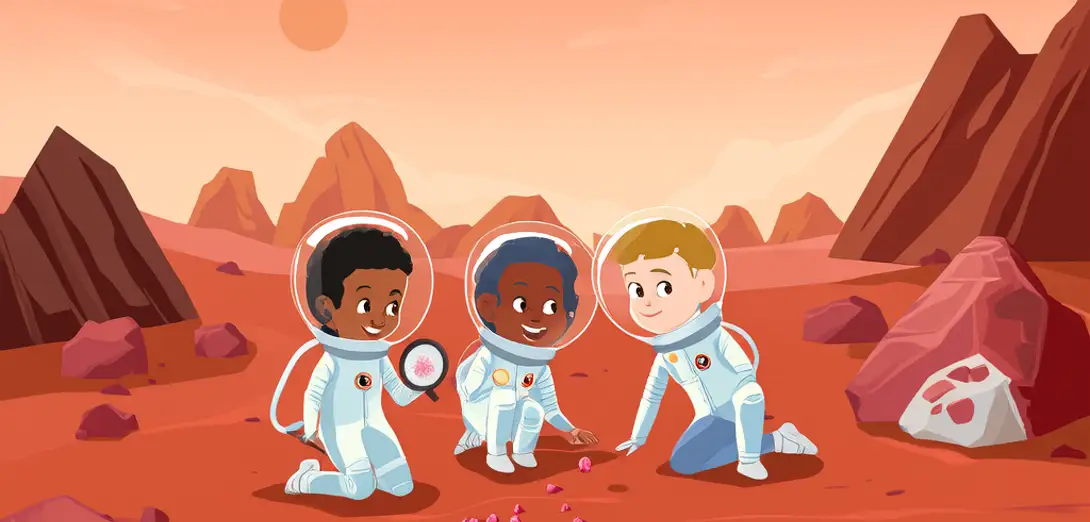
Iron Oxide Surface Chemistry: Why Mars Exhibits a Predominantly Red Hue
氧化铁表面化学:为什么火星呈现红色
-
Mars’ surface is extensively covered by fine-grained regolith rich in nanophase iron oxides, particularly hematite and nanophase maghemite.火星表面广泛覆盖着富含纳米相铁氧化物(尤其是赤铁矿和纳米相磁赤铁矿)的细粒风化层。
-
These minerals form through billions of years of oxidative weathering driven by solar UV radiation and trace atmospheric oxidants.这些矿物经数十亿年太阳紫外辐射及痕量大气氧化剂驱动的氧化风化作用形成。
-
Unlike Earth, Mars lacks plate tectonics and liquid water circulation, so oxidation proceeds slowly but pervasively across exposed surfaces.与地球不同,火星缺乏板块构造和液态水循环,因此氧化作用虽缓慢却普遍发生于裸露地表。
-
Spectroscopic data from orbiters like Mars Express confirm strong absorption features near 860 nm, characteristic of Fe³⁺ in crystalline oxides.火星快车等轨道器的光谱数据证实,在860纳米附近存在强烈吸收特征,对应结晶氧化物中的Fe³⁺。
-
Dust storms lift and redistribute this oxidized material globally, creating the planet’s uniform reddish appearance from space.沙尘暴将这种氧化物质扬起并全球性再分布,使火星从太空看呈现均匀的红色外观。
-
The red hue intensifies under low-angle sunlight due to Mie scattering from submicron particles suspended in the thin atmosphere.低角度阳光下,红色更明显,这是由稀薄大气中亚微米颗粒产生的米氏散射所致。
-
Laboratory simulations replicate the spectral signature using irradiated olivine and pyroxene under Mars-like conditions.实验室模拟在类火星条件下辐照橄榄石和辉石,成功复现了该光谱特征。
-
Surface missions have detected perchlorates that accelerate iron oxidation even at subzero temperatures and low humidity.地表任务已探测到高氯酸盐,即使在零下低温和低湿度环境中也能加速铁的氧化。
-
While some regions show bluer or greyer tones—indicating fresher, less-oxidized basalt—red dominates over 90% of observable terrain.尽管部分区域呈偏蓝或灰调——表明存在更新鲜、氧化程度较低的玄武岩——但红色仍覆盖超90%可观测地表。
-
This coloration is not pigment-based but emerges from mineralogical composition, grain size, and radiative transfer physics.这种着色并非源于色素,而是矿物成分、颗粒大小及辐射传输物理共同作用的结果。
-
Long-term climate modeling links current oxidation rates to past aqueous episodes and episodic brine activity.长期气候模型将当前氧化速率与过往水活动期及间歇性卤水活动相关联。
-
Thus, Mars’ redness encodes a multi-billion-year record of surface-atmosphere redox evolution.因此,火星的红色记录了长达数十亿年的地表—大气氧化还原演化史。