正在确认阅读权限…
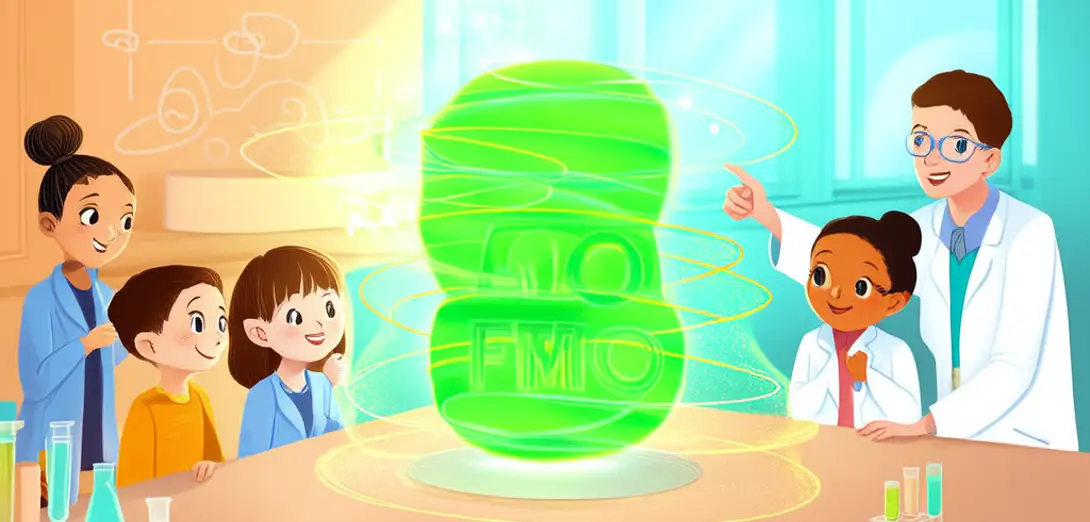
2026-D029: Quantum Coherence Timescales in Photosynthetic Light-Harvesting Complexes: Beyond Classical Energy Transfer Models
2026-D029:光合捕光复合体中的量子相干时间尺度:超越经典能量传递模型
-
Ultrafast spectroscopy reveals oscillatory quantum beats in Fenna-Matthews-Olson (FMO) complexes, indicating electronic coherence persisting up to 600 femtoseconds at room temperature.超快光谱在芬恩-马修斯-奥尔森(FMO)复合体中观测到振荡型量子拍频,表明室温下电子相干性可持续达600飞秒。
-
This contradicts classical Förster resonance energy transfer theory, which assumes incoherent, diffusive hopping between chromophores.这与经典的福斯特共振能量转移理论相矛盾,后者假设色素分子间为非相干的扩散式跃迁。
-
Coherence arises from delocalized excitons spanning multiple bacteriochlorophyll molecules, stabilized by protein scaffold vibrations.相干性源于跨越多个细菌叶绿素分子的离域激子,并由蛋白质支架的振动所稳定。
-
Environmental noise does not destroy coherence immediately; instead, structured protein fluctuations enhance quantum efficiency via environment-assisted quantum transport (ENAQT).环境噪声不会立即破坏相干性;相反,结构化的蛋白质涨落通过环境辅助量子输运(ENAQT)提升量子效率。
-
Cryo-EM structures show precise chromophore positioning and orientation, optimized by evolution to sustain constructive interference pathways.冷冻电镜结构显示色素分子的位置与取向高度精确,经自然选择优化以维持建设性干涉路径。
-
Computational modeling combining density functional theory and hierarchical equations of motion reproduces observed coherence lifetimes only when nuclear correlations are included.结合密度泛函理论与分层运动方程的计算建模,仅在纳入核关联时才能复现实验观测的相干寿命。
-
Such quantum effects likely confer selective advantage in low-light conditions by accelerating energy funneling toward reaction centers.此类量子效应可能在弱光条件下赋予生物选择优势,加速能量向反应中心的汇聚。
-
Synthetic biologists now engineer artificial light-harvesting arrays inspired by these principles to improve photovoltaic quantum yield.合成生物学家正借鉴这些原理设计人工光捕获阵列,以提高光伏量子产率。
-
The persistence of coherence at physiological temperatures challenges assumptions about rapid decoherence in warm, wet biological environments.生理温度下相干性的持续存在,挑战了‘温暖潮湿的生物环境会迅速导致退相干’的传统认知。
-
This bridges quantum physics and evolutionary biology, suggesting natural selection operates on quantum dynamical properties.这架起了量子物理与进化生物学之间的桥梁,表明自然选择作用于量子动力学特性。
-
Ongoing experiments test whether coherence influences charge separation fidelity in reaction center complexes.正在进行的实验旨在检验相干性是否影响反应中心复合体中的电荷分离保真度。
-
It redefines photosynthesis not as a series of stochastic chemical steps but as a wave-like, quantum-coherent energy navigation process.它将光合作用重新定义为一种类波的、量子相干的能量导航过程,而非一系列随机化学步骤。