正在确认阅读权限…
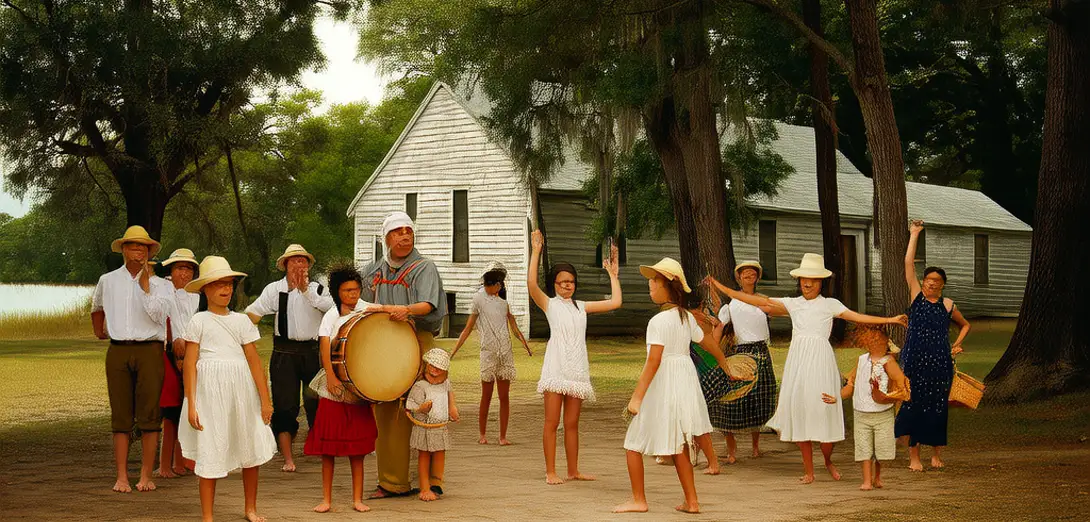
Choral Memory: The Gullah-Geechee Ring Shout as Embodied Historiography
合唱式记忆:古拉-吉奇环舞作为具身化史学实践
-
On Sapelo Island, Georgia, the ring shout persists not as folk performance but as rigorously transmitted historiographic methodology rooted in West African cosmologies.在佐治亚州萨佩洛岛,环形呼喊并非民间表演,而是一种根植于西非宇宙观、严格传承的历史编纂方法。
-
Participants move counterclockwise in a shuffling circle, maintaining rhythmic clapping while singing spirituals whose lyrics encode resistance strategies and geographic memory.参与者以拖步方式逆时针绕圈行走,边拍手打拍子边唱灵歌,歌词中暗藏反抗策略与地理记忆。
-
The lead singer’s call-and-response phrasing follows Yoruba tonal syntax, preserving phonemic distinctions erased in standard English orthography.领唱者的呼应式唱法遵循约鲁巴语的声调语法,保留了标准英语正字法中已消失的音位区别。
-
Drumming is absent by design—not due to historical suppression alone, but to prioritize vocal polyrhythms that map ancestral speech patterns onto kinetic memory.鼓乐被刻意省略——不仅因历史压制,更为了凸显人声复节奏,将祖先的语言模式映射至身体记忆。
-
Each generation learns not just steps but archival protocols: how to embed names of enslaved ancestors into melodic contours without explicit naming.每一代人所学的不仅是舞步,更是档案规程:如何将被奴役祖先的名字隐嵌于旋律轮廓中,而不直呼其名。
-
Scholars observe how elders adjust tempo and syncopation to signal shifts between narrative registers—testimony, lament, prophecy, or land reclamation.学者观察到,长者通过调整速度与切分节奏,来提示叙事模式的转换——证言、哀悼、预言或土地重申。
-
This practice resists digitization not out of technophobia, but because its authority resides in somatic fidelity, not reproducible audio files.这一实践抗拒数字化,并非出于对技术的恐惧,而是因其权威性在于身体的精准再现,而非可复制的音频文件。
-
Younger participants describe learning the shout as ‘unlearning linear time’—a necessary precondition for interpreting oral archives accurately.年轻参与者形容学习环形呼喊是‘解构线性时间’——准确解读口述档案的必要前提。
-
When performed at UNESCO heritage consultations, it functions as sovereign epistemic assertion, not cultural exhibition.在联合国教科文组织遗产磋商中展演时,它体现的是主权性的知识主张,而非文化展示。
-
The circle itself enacts communal authorship: no single voice carries the full archive, only collective iteration sustains its integrity.圆圈本身即践行集体著述:无人能独载全部档案,唯有集体反复演绎方能维系其完整性。
-
Contemporary adaptations integrate GPS coordinates of ancestral rice fields into vocal pauses, mapping spatial memory onto breath intervals.当代改编将祖先稻田的GPS坐标融入歌声停顿,使空间记忆与呼吸节律相映射。
-
Here, history is neither consumed nor debated—it is rehearsed, corrected, and carried forward in muscle and meter.在此,历史既非被消费,亦非被争论——它在肌肉与节律中被排演、校正并传承。