正在确认阅读权限…
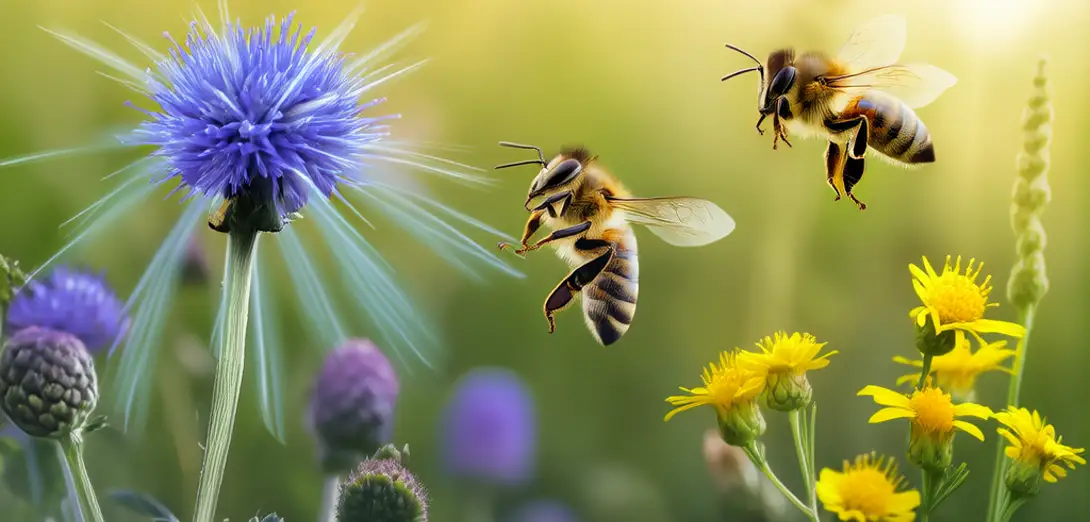
STEM Light Read: How Honeybees Detect Electric Fields Around Flowers (2026-D006)
STEM轻科普:蜜蜂如何探测花朵周围的电场(2026-D006)
-
Honeybees carry a slight positive charge as they fly due to friction with air particles.蜜蜂飞行时因与空气微粒摩擦而带微弱正电。
-
Flowers often hold a weak negative charge, creating detectable electric fields near their petals.花朵常带微弱负电,使其花瓣附近形成可探测的电场。
-
Bees sense these fields using mechanosensory hairs that bend in response to electrostatic forces.蜜蜂通过机械感受毛感知这些电场,毛发会在静电力作用下弯曲。
-
This ability helps them distinguish recently visited blooms, which temporarily lose their charge after pollination.这种能力帮助它们识别刚被访过的花朵——授粉后花朵电荷会暂时消失。
-
Experiments show bees choose charged artificial flowers over uncharged ones, even when scent is identical.实验表明,即使气味相同,蜜蜂也更倾向选择带电的人造花而非不带电的。
-
Electric field detection works alongside color and scent, forming a multi-sensory foraging map.电场感知与颜色、气味协同作用,构成多感官觅食地图。
-
Researchers used laser vibrometry to measure hair deflection during controlled voltage exposures.研究人员利用激光测振仪,在可控电压下测量毛发偏转。
-
Understanding this sense aids development of bio-inspired sensors for precision agriculture.理解这一感知机制有助于开发仿生传感器,用于精准农业。
-
Climate change may alter atmospheric electricity, potentially disrupting this ancient plant-insect dialogue.气候变化可能改变大气电性,从而干扰这种古老的植物-昆虫对话。
-
It reveals how invisible physical forces shape ecological relationships we rarely consider.它揭示了我们极少关注的无形物理力如何塑造生态关系。