正在确认阅读权限…
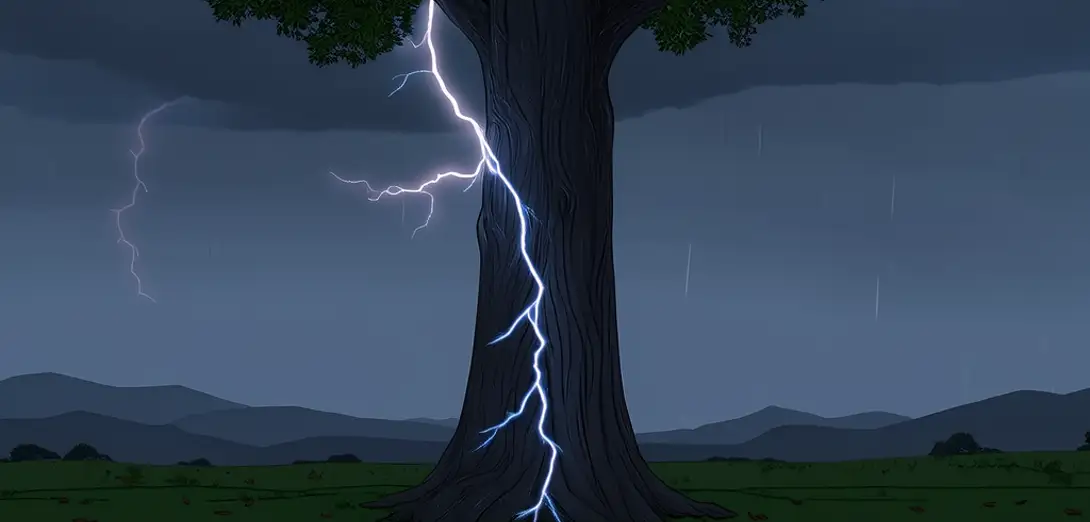
STEM Light Read: Why Lightning Strikes Tall Trees But Splits Their Trunks (2026-D048)
STEM轻科普:为何闪电击中高树却使其树干开裂(2026-D048)
-
Lightning seeks the fastest path to ground, so tall trees often become natural conductors during storms.闪电会寻找最快入地路径,因此雷暴中高大的树木常成为天然导体。
-
When current enters bark, moisture instantly vaporizes, expanding steam faster than wood fibers can stretch.电流进入树皮后,水分瞬间汽化,蒸汽膨胀速度超过木质纤维的延展能力。
-
This explosive internal pressure splits trunks vertically, sometimes peeling bark off in long strips.这种爆炸性内压使树干纵向开裂,有时将树皮整条剥落。
-
Sapwood conducts better than heartwood, so current follows moisture-rich layers beneath the bark.边材导电性优于心材,因此电流沿树皮下方含水丰富的层次传导。
-
Damage patterns reveal lightning’s path—even if no fire results, cells are permanently disrupted.损伤痕迹揭示了闪电路径——即使未引发火灾,细胞也已永久受损。
-
Trees with deep roots and high sap content suffer more severe splitting than shallow-rooted species.根系深、汁液含量高的树木比浅根树种更容易发生严重开裂。
-
Foresters use lightning scar mapping to assess forest resilience to increasing storm frequency.林务员通过绘制雷击疤痕图,评估森林应对日益频繁风暴的恢复力。
-
High-speed cameras capture discharges entering crowns and exiting roots in under 100 microseconds.高速摄像机捕捉到放电在100微秒内从树冠进入、从树根逸出的过程。
-
Unlike metal rods, wood cannot safely channel gigavolt surges, making protection systems essential near structures.木材无法像金属避雷针那样安全导引吉伏级浪涌,因此建筑物附近必须安装防护系统。
-
Each scar tells a story of physics meeting biology in a fraction of a second.每道疤痕都讲述着物理与生物在瞬息之间相遇的故事。