正在确认阅读权限…
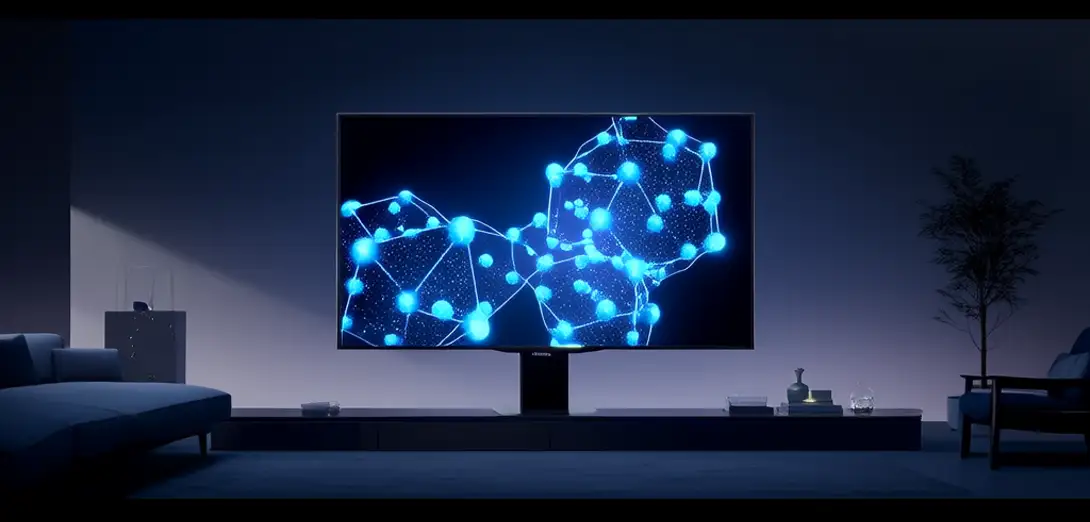
From Quantum Dots to Consumer Displays: The Materials Science Behind Modern Screens
从量子点到消费级屏幕:现代显示技术背后的材料科学
-
Today’s OLED and QLED televisions rely not on incremental improvements but on precisely engineered nanoscale semiconductors whose bandgap energies determine emitted wavelengths with sub-nanometer precision.当今的OLED和QLED电视并非依赖渐进式改进,而是依靠精密设计的纳米级半导体,其带隙能量以亚纳米级精度决定发光波长。
-
Quantum dots—colloidal nanocrystals of cadmium selenide or indium phosphide—absorb blue light and re-emit it at tunable frequencies based solely on particle diameter, not chemical composition.量子点——即硒化镉或磷化铟胶体纳米晶体——吸收蓝光,并仅根据颗粒直径(而非化学成分)可调地重新发射特定频率的光。
-
Manufacturers control color purity by synthesizing monodisperse dots within ±1.2 nm size deviation; broader distributions cause perceptible spectral broadening and reduced gamut coverage.制造商通过合成尺寸偏差控制在±1.2纳米以内的单分散量子点来保障色彩纯度;尺寸分布过宽会导致光谱展宽、色域覆盖率下降。
-
Encapsulation layers must withstand thermal cycling up to 85°C over 10,000 hours while blocking oxygen diffusion below 10⁻⁶ g/m²/day—a materials challenge solved using atomic-layer-deposited aluminum oxide barriers.封装层须在10,000小时内耐受最高达85°C的热循环,同时将氧气渗透率控制在10⁻⁶克/平方米/天以下——这一材料难题已通过原子层沉积氧化铝阻隔层解决。
-
Unlike legacy LCDs, these emissive technologies eliminate backlight bleed, enabling true blacks and infinite contrast ratios—but accelerate degradation at pixel edges due to non-uniform current density.与传统LCD不同,这类自发光技术消除了背光漏光,实现真正纯黑与无穷对比度,但也因电流密度不均而加速像素边缘老化。
-
Lifetime metrics (e.g., L50) now incorporate accelerated stress testing under mixed-color static images, revealing that blue subpixels degrade 2.7× faster than red ones under identical conditions.寿命指标(如L50)现已纳入混合色彩静态图像下的加速应力测试,结果显示:在相同条件下,蓝色子像素退化速度是红色子像素的2.7倍。
-
Recycling remains problematic: quantum dot displays contain heavy metals requiring specialized hydrometallurgical recovery, yet only 12% of end-of-life units enter certified e-waste streams globally.回收仍存难题:量子点显示屏含重金属,需专用湿法冶金工艺回收,但全球仅有12%的报废设备进入认证电子废弃物处理渠道。
-
Emerging perovskite LEDs promise higher efficiency but face moisture sensitivity—requiring hermetic sealing that adds thickness incompatible with foldable screen form factors.新兴的钙钛矿LED虽具更高效率,却对湿气敏感——需气密封装,而该结构增厚与可折叠屏幕形态不兼容。
-
The supply chain reflects geopolitical tensions: >68% of rare-earth phosphors used in premium displays originate from mines subject to export restrictions or environmental litigation.供应链折射地缘政治紧张:高端显示面板所用稀土荧光粉中,超68%产自受出口限制或环境诉讼影响的矿区。
-
What consumers perceive as ‘vibrant color’ is, in fact, the outcome of decades-long collaboration between solid-state physicists, vacuum deposition engineers, and display calibration metrologists.消费者感知的‘鲜活色彩’,实则是固态物理学家、真空镀膜工程师与显示校准计量专家数十年协作的成果。