正在确认阅读权限…
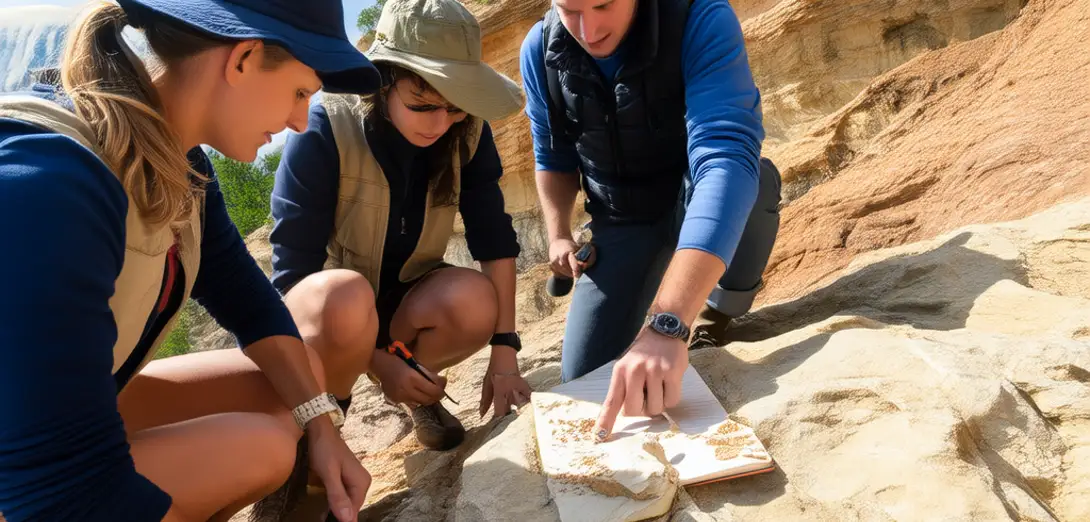
How Do Scientists Use Fossil Layers to Date Ancient Life Forms?
科学常识延展阅读·独立成篇(2026-D049)
-
Geologists study rock layers, called strata, to understand Earth’s history over millions of years.地质学家通过研究称为地层的岩层,来了解地球数百万年的历史。
-
Fossils found in lower strata are usually older because sediment builds up gradually over time.较低地层中发现的化石通常更古老,因为沉积物随时间逐渐堆积。
-
Index fossils—species that lived briefly but spread widely—help match layers across distant regions.指相化石——即生存时间短但分布广泛的物种——有助于匹配遥远地区的地层。
-
Radiometric dating measures radioactive decay in volcanic ash layers above or below fossils.放射性定年法通过测量化石上方或下方火山灰层中的放射性衰变来确定年代。
-
By combining fossil evidence with chemical analysis, scientists build timelines of evolutionary change.科学家结合化石证据与化学分析,构建生命演化的年代序列。
-
Some layers contain microfossils too small to see without a microscope but rich in clues.某些地层含有需借助显微镜才能观察的微体化石,却蕴藏着丰富线索。
-
Disturbances like folding or faulting can complicate interpretation, so multiple lines of evidence are used.褶皱或断层等地质扰动会使解读复杂化,因此需综合多种证据。
-
This method revealed that dinosaurs disappeared about 66 million years ago after an asteroid impact.该方法揭示恐龙约6600万年前因小行星撞击而灭绝。
-
Fossil layering also shows how oxygen levels and ocean chemistry changed during key eras.化石层序还揭示了关键地质时期大气氧含量与海洋化学成分的变化。
-
Understanding deep time helps us predict how current environmental shifts might affect future life.理解深时有助于预测当前环境变化对未来生命可能产生的影响。