正在确认阅读权限…
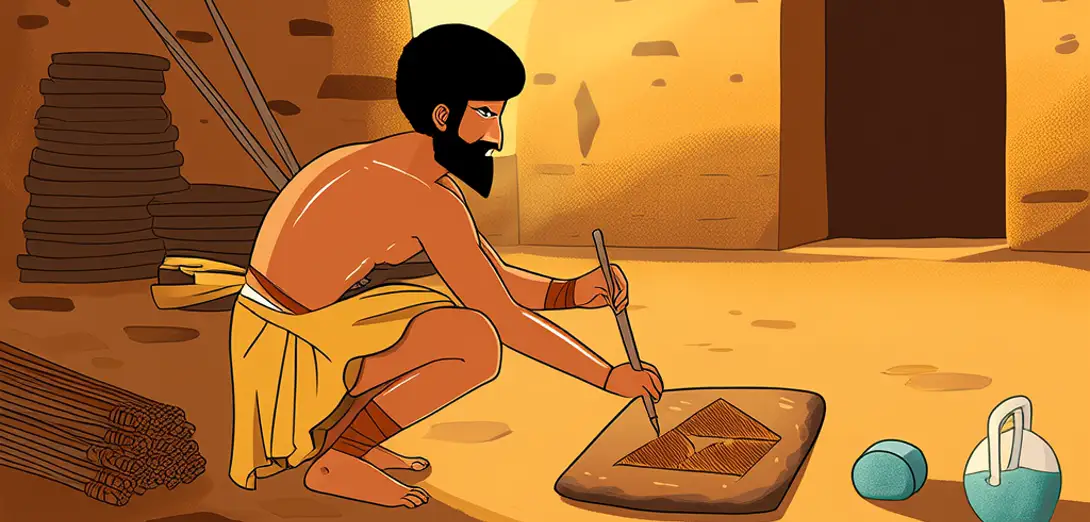
The First Writing Systems: Marks That Changed the World
最早的书写系统:改变世界的符号
-
Around 3400 BCE, people in ancient Sumer developed cuneiform — wedge-shaped marks pressed into clay tablets.约公元前3400年,古代苏美尔人发明了楔形文字——用楔形刻痕压印在泥板上。
-
These early symbols began as simple pictures but slowly became signs for sounds and abstract ideas.这些早期符号起初是简单图画,后逐渐演变为表音和抽象概念的符号。
-
Scribes used reed styluses to make impressions, and dried or baked tablets preserved records for thousands of years.书吏用芦苇笔在泥板上刻写,晒干或烧制后的泥板使记录保存数千年。
-
Writing helped governments collect taxes, track trade, and record laws like the Code of Ur-Nammu.文字帮助政府征税、追踪贸易,并记录《乌尔纳姆法典》等法律。
-
Egyptians created hieroglyphs around the same time, often carved on temple walls or written on papyrus.埃及人几乎在同一时期创造了象形文字,常刻于神庙墙壁或书写在纸莎草纸上。
-
Unlike oral stories, written texts could be copied, checked, and studied across generations without distortion.与口头传说不同,书面文本可被复制、核查,并代代相传而不失真。
-
Scholars still decode new tablets today, revealing details about daily life, religion, and diplomacy.学者至今仍在破译新发现的泥板,揭示日常生活、宗教与外交的细节。
-
This invention did not spread quickly, but it laid the foundation for education, history, and science.这项发明传播缓慢,却为教育、历史与科学奠定了基础。