正在确认阅读权限…
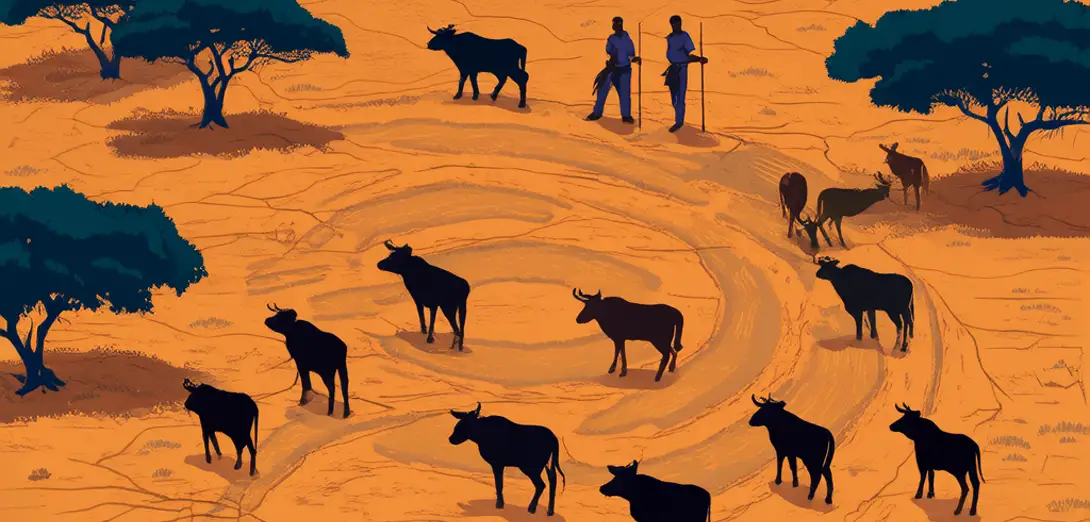
Geography and Environmental Embodiment: Sahelian Nomadic Herding Cycles as Soil Carbon Flux Indicators (Batch 0001-048)
地理与环境具身化:萨赫勒游牧放牧周期作为土壤碳通量指示器
-
Fulani herders in the Sahel do not merely move livestock—they orchestrate microbial succession through timed grazing pressure that modulates soil carbon sequestration rates.萨赫勒地区的富拉尼牧民不只是放牧牲畜,他们还通过精准控制放牧时间来调控微生物演替,从而影响土壤固碳速率。
-
Pasture rotation schedules are calibrated to grass regrowth phenology, which itself tracks subsoil moisture retention capacity measured via hoof-sink depth and dung decomposition timelines.牧场轮牧计划依据牧草再生物候制定,而后者又取决于通过蹄印深度和粪便分解时间测定的地下土壤持水能力。
-
Camel dung piles serve as bioindicators: their fungal colonization patterns reveal localized nitrogen fixation efficiency across lateritic versus volcanic substrates.骆驼粪堆是生物指示器:其真菌定殖模式可揭示红土与火山岩基质上局部固氮效率的差异。
-
Seasonal migration corridors are not arbitrary; they trace subsurface aquifer recharge zones identified through decades of observing termite mound distribution and antlion pit density.季节性迁徙廊道并非随意选择,而是沿地下含水层补给区分布,这些区域通过数十年观察白蚁丘分布与蚁蛉坑密度得以识别。
-
Herders’ walking pace across dune fields correlates with aeolian sediment transport thresholds, enabling real-time assessment of desertification acceleration.牧民在沙丘地带的步行速度与风力搬运沉积物的临界阈值相关,可实时评估荒漠化加速程度。
-
Satellite soil moisture data now validates oral reports of 'ground breath'—a term describing subtle surface tension shifts preceding rainfall events.卫星土壤湿度数据如今证实了口述中所谓‘地呼吸’现象——即降雨前地表张力发生的细微变化。
-
Livestock horn curvature patterns are documented across generations as proxies for forage nutrient density, directly linking animal physiology to geochemical weathering rates.牲畜角的弯曲形态被代代记录,作为饲草养分密度的代理指标,直接关联动物生理与地球化学风化速率。
-
Urban soil scientists in Dakar use Fulani rotational maps to design peri-urban carbon farming pilots, treating pastoral knowledge as high-resolution flux modeling.达喀尔的城市土壤科学家采用富拉尼人的轮牧地图设计城郊碳农业试点,将游牧知识视为高分辨率通量模型。
-
Even drought-relief interventions now require herder sign-off on soil sampling locations, acknowledging their tacit understanding of microbial hotspots.即便是抗旱援助行动,如今也须经牧民确认土壤采样点,承认其对微生物热点区域的默会认知。
-
The rhythm of milking cycles synchronizes with lunar tidal pull on groundwater tables, a correlation confirmed by isotopic analysis of milk fat composition.挤奶周期节奏与月球引潮力对地下水位的影响同步,这一关联已通过乳脂同位素分析得到验证。
-
What outsiders misread as tradition constitutes a multi-generational carbon accounting system—where movement, digestion, and excretion collectively measure terrestrial metabolic health.外界误读为传统的做法,实则是一套跨代际的碳核算系统——以迁徙、消化与排泄共同衡量陆地代谢健康。
-
This is geography made flesh: human and bovine bodies functioning as mobile biogeochemical sensors across continental margins.这是具身化的地理学:人类与牛只身体作为移动的生物地球化学传感器,在大陆边缘持续运行。