正在确认阅读权限…
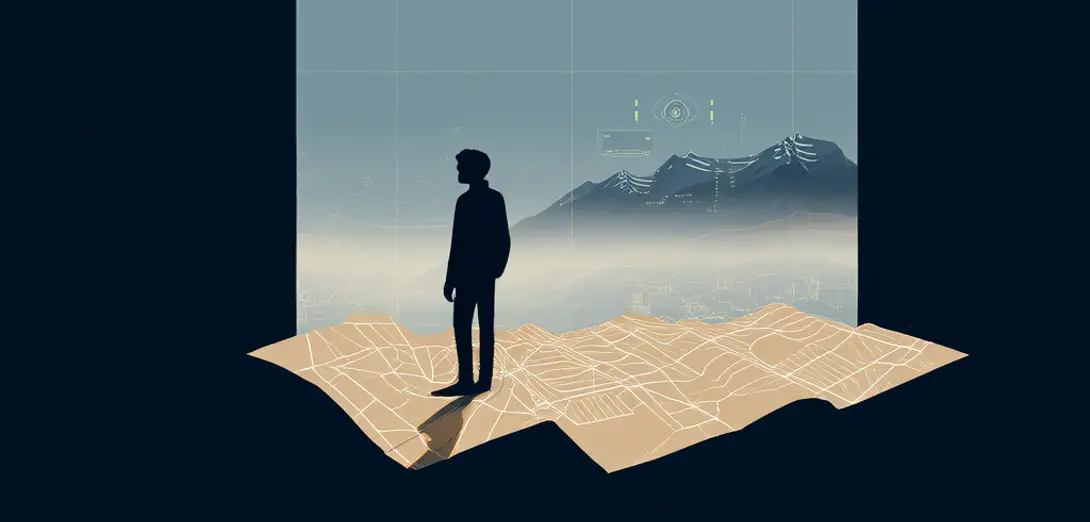
Geography and Environmental Perception: Reconfiguring Human-Space Relationships (Batch 0001-023)
地理与环境感知:人地关系的再构(批次0001-023)
-
Environmental perception is never neutral; it is shaped by embodied experience, technological mediation, and inherited cartographic conventions that privilege certain vantage points over others.环境感知从来不是中立的,它由具身经验、技术中介以及偏重某些视角的既有制图传统所塑造。
-
When residents of Jakarta navigate floodwaters using real-time crowd-sourced maps, they enact a radically different spatial cognition than planners interpreting static flood-risk GIS layers.雅加达居民借助实时众包地图穿越洪水时,所形成的时空认知,与规划者解读静态洪灾风险GIS图层时截然不同。
-
Augmented reality applications overlaying sea-level rise projections onto smartphone views of coastal neighborhoods make abstract climate scenarios viscerally proximate — yet risk oversimplifying adaptation complexity.增强现实应用将海平面上升预测叠加在智能手机拍摄的沿海社区画面上,使抽象的气候情景变得直观可感——却可能过度简化适应工作的复杂性。
-
Indigenous fire management practitioners perceive landscape flammability not through fuel-load indices but through phenological cues like flower timing and termite mound orientation.原住民防火管理者并非通过可燃物载量指数,而是通过物候线索(如开花时间、白蚁丘朝向)来判断景观易燃性。
-
Such perceptual frameworks challenge Western scientific objectivity by insisting that observation is always situated — embedded in language, memory, and relational obligation to place.这类感知框架挑战西方科学的客观性,强调观察永远是情境化的——深植于语言、记忆及对特定场所的关系性责任之中。
-
Urban designers increasingly conduct ‘sensory walks’ with elders to document thermal comfort thresholds, noise tolerance variations, and wayfinding landmarks erased by redevelopment.城市设计师日益邀请长者共同开展‘感官漫步’,记录热舒适阈值、噪音耐受差异,以及因再开发而消失的寻路地标。
-
Perception gaps explain policy failures: flood-resilient housing built to international standards often remains unoccupied because its spatial layout contradicts generational household organization norms.感知鸿沟导致政策失效:按国际标准建造的防洪住宅常无人入住,因其空间布局违背代际家庭组织规范。
-
Satellite imagery literacy programs teach communities to identify illegal mining scars not just visually but through understanding spectral signatures linked to specific mineral extraction techniques.卫星影像素养培训项目不仅教社区成员肉眼识别非法采矿痕迹,更引导其理解与特定采矿技术相关的光谱特征。
-
This reconfigured perception transforms passive inhabitants into active geographic agents capable of contesting official narratives with ground-truthed spatial evidence.这种重构后的感知,将被动居民转化为积极的地理行动者,使其能以实地验证的空间证据挑战官方叙事。
-
Even disaster response evolves: post-earthquake assessments now integrate social media geotags with cadastral maps to prioritize aid based on networked vulnerability rather than administrative boundaries.就连灾害响应也在演进:震后评估如今整合社交媒体地理标签与地籍地图,依据网络化脆弱性而非行政边界来优先分配援助。
-
Geographic education must therefore cultivate metaperception — the ability to recognize one’s own perceptual filters while engaging respectfully with others’ spatial epistemologies.因此,地理教育必须培养元感知能力——即在尊重他人空间认知方式的同时,自觉识别自身感知滤镜。
-
Such awareness is foundational for equitable co-design of climate adaptation strategies that honor both scientific rigor and lived territorial knowledge.这种意识是公平共构气候适应策略的基础,唯有如此,方能兼顾科学严谨性与在地领土知识。