正在确认阅读权限…
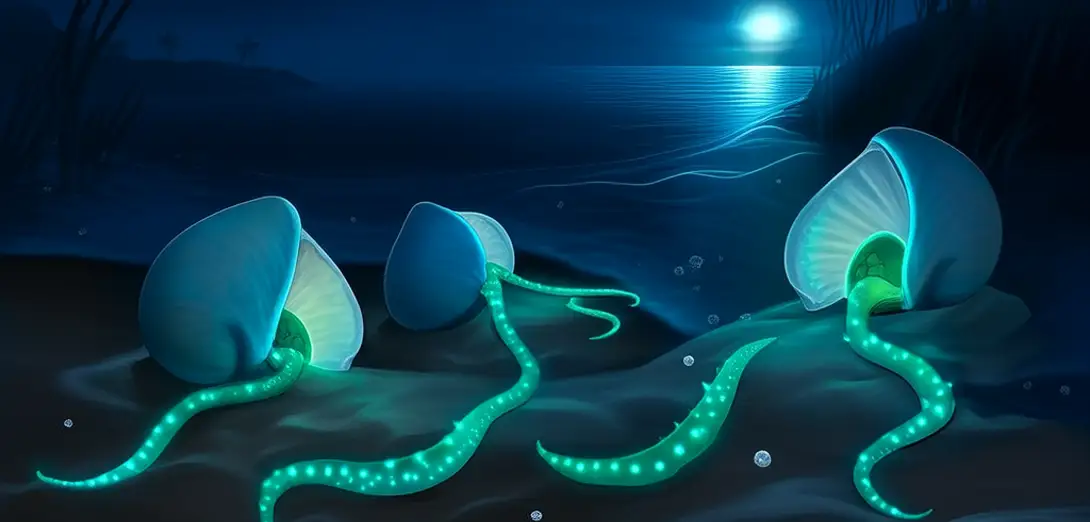
Why Do Certain Clams Produce Light When Disturbed — But Only at Night?
为什么某些蛤蜊受惊时会发光,但仅限于夜间?
-
These clams contain symbiotic bacteria that emit blue-green light through bioluminescent chemical reactions.这些蛤蜊体内含有共生细菌,能通过生物发光化学反应发出蓝绿色光。
-
Light production occurs only in darkness because daylight suppresses the enzyme luciferase activity.发光只在黑暗中发生,因为日光会抑制荧光素酶活性。
-
The flash startles predators, giving the clam time to bury itself deeper in sand quickly.闪光可惊吓捕食者,为蛤蜊争取时间迅速深埋入沙。
-
Nocturnal behavior aligns with peak predator activity, maximizing survival advantage.夜行习性与捕食者活跃高峰同步,最大化生存优势。
-
Researchers discovered that melatonin levels in clam tissues regulate light sensitivity rhythmically.研究人员发现,蛤蜊组织中的褪黑激素水平呈节律性调节光敏感性。
-
Unlike fireflies, clams cannot control flashes voluntarily—they respond purely to mechanical shock.与萤火虫不同,蛤蜊无法自主控制闪光,仅对机械刺激作出反应。
-
Oceanographers use this trait to monitor coastal health and plankton bloom timing.海洋学家利用这一特性监测沿海生态健康及浮游生物水华时间。
-
The light wavelength matches deep-water transmission peaks, enhancing visibility underwater.发光波长匹配深水透光峰值,增强水下可见度。
-
Genetic studies show light-emission genes activate only under low-light transcription factors.基因研究表明,发光基因仅在低光转录因子作用下才被激活。
-
This circadian-linked defense reveals how marine life times responses to environmental cycles.这种受昼夜节律调控的防御机制,揭示了海洋生物如何依环境周期精准调控应答。