正在确认阅读权限…
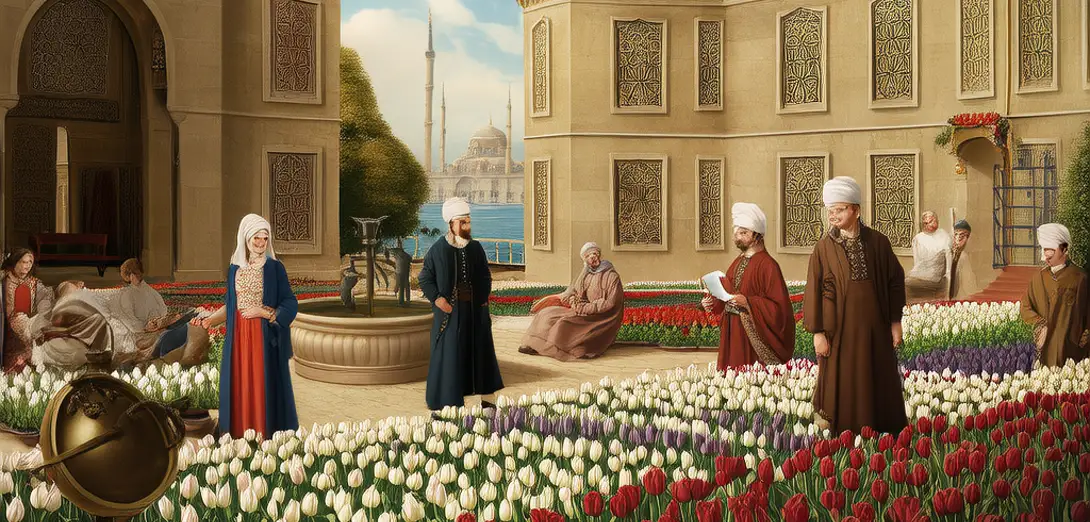
Batch 0001-013: The Ottoman Tulip Era and Cultural Refinement in Istanbul
批次0001-013:奥斯曼郁金香时代与伊斯坦布尔的文化精进
-
Between 1718 and 1730, the Ottoman Empire entered a period known as the Tulip Era in Istanbul.1718至1730年间,奥斯曼帝国在伊斯坦布尔进入被称为“郁金香时代”的时期。
-
Grand vizier Nevşehirli Damat İbrahim Pasha promoted arts, festivals, and architectural renewal amid relative peace.大维齐尔内夫谢希尔利·达马特·易卜拉欣帕夏在相对和平的背景下大力推动艺术、节庆与建筑更新。
-
Tulips—imported from Central Asia and cultivated in palace gardens—became symbols of refined taste and imperial elegance.源自中亚、在宫廷花园中培育的郁金香,成为高雅品位与帝国气度的象征。
-
Fountains, kiosks, and tiled pavilions were built in newly landscaped public spaces along the Bosphorus.博斯普鲁斯海峡沿岸新规划的公共空间中,建起了喷泉、凉亭和瓷砖装饰的亭阁。
-
Calligraphy, miniature painting, and textile design flourished under royal patronage and Persian influence.在皇室赞助与波斯影响下,书法、细密画和纺织品设计蓬勃发展。
-
Coffeehouses became hubs for poets, scholars, and officials to debate literature and governance.咖啡馆成为诗人、学者与官员探讨文学与治国之道的中心。
-
Diplomatic missions from France and the Netherlands brought Enlightenment ideas into elite circles.来自法国与荷兰的外交使团将启蒙思想带入精英阶层。
-
Though short-lived and ended by rebellion, the era marked a conscious turn toward aesthetic modernization.尽管持续时间短暂且因叛乱终结,这一时代标志着审美现代化的自觉转向。
-
It reflected how imperial courts used culture—not just military force—to project legitimacy.它体现了帝国宫廷如何借助文化——而不仅是军事力量——来彰显统治合法性。
-
The tulip motif endures in Turkish art as a quiet emblem of cultivated peace and cosmopolitanism.郁金香纹样至今仍存于土耳其艺术中,静默地象征着涵养之下的和平与世界主义。