正在确认阅读权限…
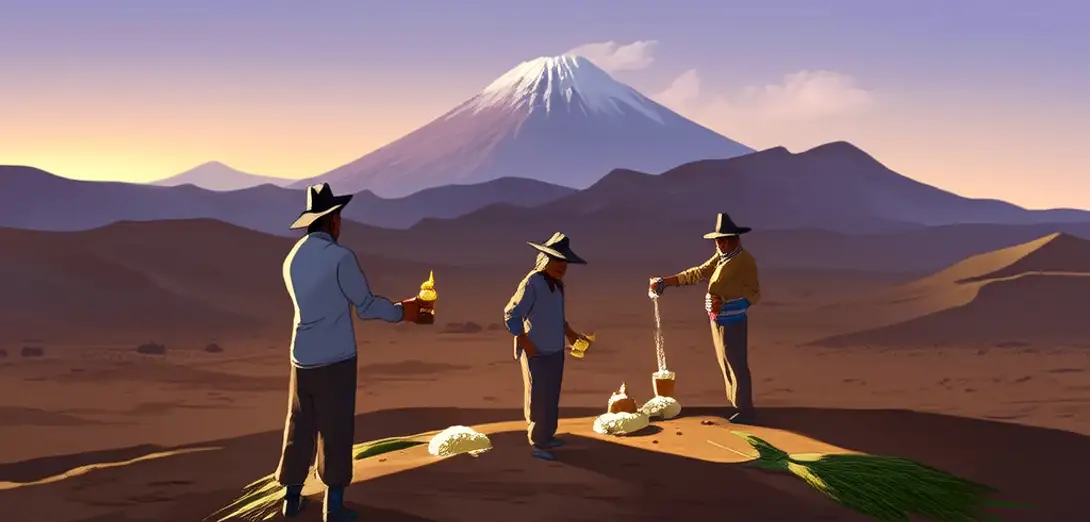
Bolivian Altiplano Ch’alla Offerings as Geopolitical Counter-Mapping Practice
玻利维亚高原查拉祭仪:地缘政治的反测绘实践
-
Ch’alla rituals on the Bolivian Altiplano pour alcohol, coca leaves, and llama fat onto sacred mountains—not as supplication but as cartographic assertion.玻利维亚高原上的查拉仪式将酒、古柯叶和羊驼脂肪倾洒于圣山之上——并非祈求,而是以仪式宣示地理主权。
-
Each offering site functions as a living boundary marker, contesting colonial survey lines with Andean geomantic literacy.每个供奉地点都充当活态边界标记,以安第斯大地智慧挑战殖民测绘界线。
-
Miners in Potosí perform ch’alla before entering tunnels, treating geological strata as ancestral archives rather than extractable resources.波托西矿工入井前举行查拉仪式,视地质岩层为祖先档案,而非可开采资源。
-
State land registries ignore these sites, yet local courts routinely cite ch’alla continuity when adjudicating territorial disputes with multinational firms.国家土地登记系统无视这些地点,但地方法院在裁决与跨国公司领土纠纷时,常援引查拉传统的延续性。
-
The direction of pour—eastward for sun-aligned reciprocity, westward for ancestral debt settlement—encodes jurisdictional grammar beyond legal text.倾洒方向蕴含司法语法:向东象征与太阳互惠,向西则偿还祖先债务,超越成文法范畴。
-
Urban Aymara youth now layer GPS coordinates onto ch’alla maps, generating hybrid geographies that bypass official cadastral systems.城市艾马拉青年将GPS坐标叠加于查拉地图之上,生成绕过官方地籍系统的混合地理空间。
-
Unlike Western monument-building, ch’alla leaves no permanent structure; its authority resides entirely in witnessed repetition across generations.查拉不同于西方纪念碑建造,不留下永久建筑;其权威全赖代代见证的重复实践。
-
Foreign diplomats attending state events are quietly guided through abbreviated ch’alla protocols, absorbing sovereignty as embodied practice, not treaty clause.出席国事活动的外国外交官被悄然引导完成简化版查拉仪轨,在身体实践中体认主权,而非仅阅读条约条款。
-
Coca leaf arrangement patterns—spiral, cross, or stepped pyramid—signal whether the offering addresses climate disruption, mining concessions, or migration policy.古柯叶的排列图案——螺旋、十字或阶梯金字塔——表明供奉所针对的是气候危机、采矿许可还是移民政策。
-
When glaciers recede, elders shift ch’alla locations upward, turning ecological loss into active re-mapping rather than passive lament.冰川退缩时,长老将查拉地点向上迁移,把生态损失转化为主动重绘疆域,而非被动哀叹。
-
This is cartography without ink: terrain read through ritual rhythm, wind patterns, and the metabolic timing of offerings.这是无墨的地图学:通过仪式节奏、风向模式与供奉代谢节律来解读地形。
-
International development reports frame ch’alla as ‘cultural heritage,’ missing how it operates as real-time governance infrastructure.国际发展报告将查拉界定为‘文化遗产’,却忽视其作为实时治理基础设施的实际运作。