正在确认阅读权限…
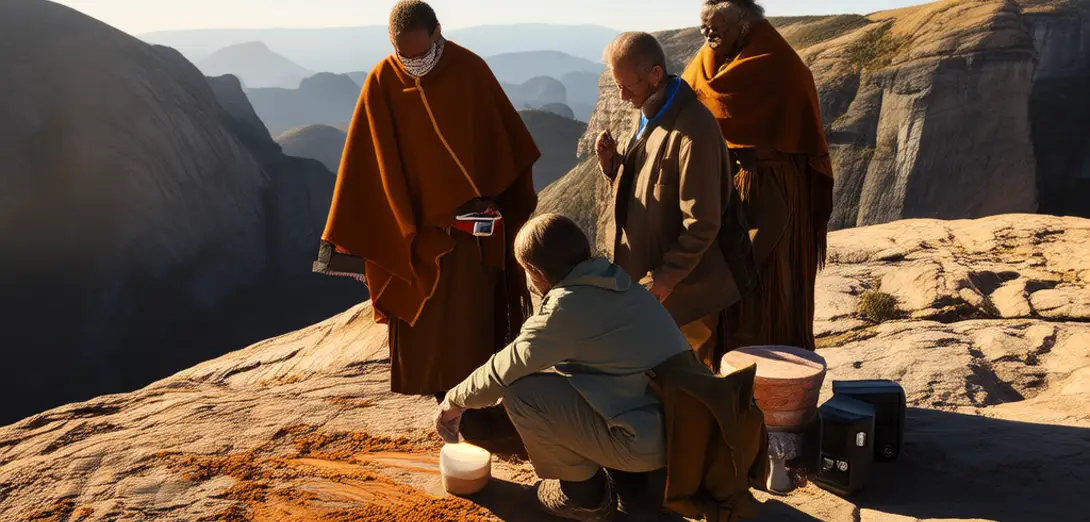
South African San Rock Art Replication as Intergenerational Epistemic Protocol
南非桑人岩画复刻:代际认知协议
-
In the Drakensberg Mountains, San elders and geospatial scientists replicate ancient rock art using ochre harvested from the same quartzite seams used 8,000 years ago.在德拉肯斯堡山脉,桑族长老与地理空间科学家用8000年前同一石英岩层中采集的赭石,复原古代岩画。
-
Each pigment application follows breath-controlled rhythm—three inhalations per stroke—to synchronize neural states across age cohorts during fieldwork.每种颜料的涂抹均依呼吸节奏进行——每笔三吸气——使田野调查中不同年龄群体的神经状态同步。
-
Digital scans serve only as scaffolding; final verification occurs through tactile comparison of surface micro-fractures under moonlight.数字扫描仅作脚手架之用;最终验证需在月光下通过触感比对表面微裂纹完成。
-
University archaeology students must first document their own family oral histories for six months before handling replica tools.大学考古学学生须先记录自家口述史六个月,方能接触复制品工具。
-
The replication process includes deliberate ‘errors’—slight pigment dilutions or contour shifts—that encode contemporary drought data for future researchers.复原过程包含刻意‘误差’——如颜料轻微稀释或轮廓微调——以编码当代干旱数据,供后世研究者解读。
-
When mining companies submit impact assessments, San negotiators respond with newly replicated panels mapping groundwater depletion in layered ochre strata.矿业公司提交环境影响评估时,桑族谈判代表以新复原的岩画面板回应,用分层赭石呈现地下水枯竭状况。
-
Replication sites are chosen not for visibility but acoustic resonance—ensuring chants accompanying the work travel precisely 427 meters, matching ancestral soundscapes.复原地点的选择不重可见性,而在声学共振——确保伴工吟唱精准传播427米,契合祖先声景。
-
This is not heritage conservation but epistemic continuity: where material fidelity enables conceptual translation across millennia.这并非遗产保护,而是知识体系的延续:物质忠实度支撑概念跨越千年的转译。
-
South Africa’s Constitutional Court cited San replication protocols in its 2023 ruling on indigenous knowledge sovereignty, affirming their evidentiary validity.南非宪法法院在2023年关于原住民知识主权的裁决中援引桑族复原规程,确认其证据效力。
-
Each completed panel is ceremonially ‘blinded’ with beeswax for one lunar cycle—embodying the legal principle that knowledge requires intentional withholding to retain value.每幅完成的岩画均以蜂蜡仪式性‘遮蔽’一个朔望月——体现知识须经有意隐匿方能保值的法理原则。
-
Replication teams include neurologists measuring EEG coherence between elders and youth, validating the protocol’s cognitive scaffolding function.复原团队纳入神经科医生,测量长老与青年间的脑电图(EEG)协同性,验证该规程的认知支架功能。
-
The process concludes not with exhibition but with controlled erosion—allowing rain to reveal underlying layers, modeling knowledge as stratified, not static.该过程不以展览收尾,而以可控侵蚀终结——任雨水冲刷显露底层,喻示知识本为层积,而非静止。