正在确认阅读权限…
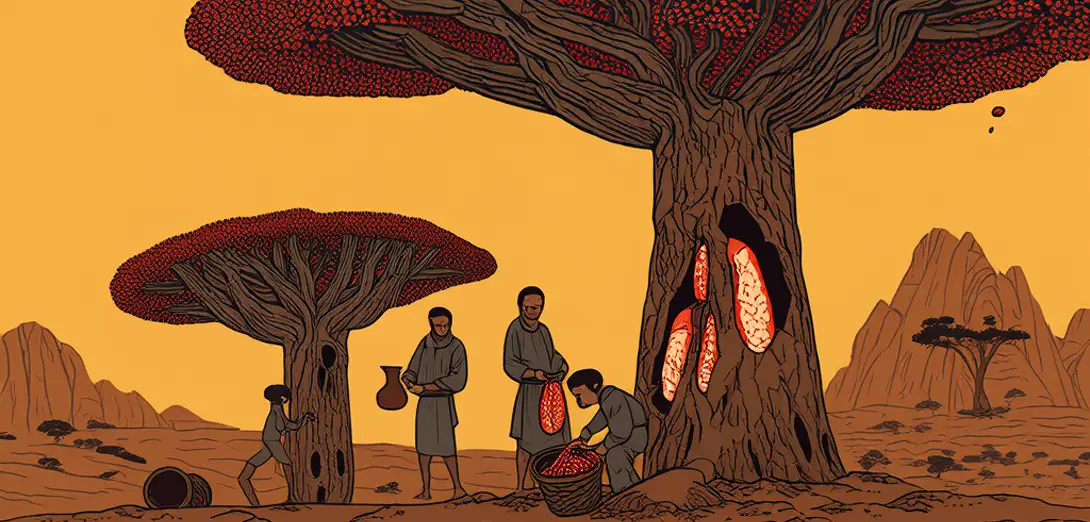
Socotra’s Dragon’s Blood Harvest: Arboreal Temporality and Conservation Governance in Yemen’s Island Archipelago
索科特拉岛龙血树脂采集:也门群岛树木时间性与保护治理
-
On Yemen’s Socotra Archipelago, dragon’s blood resin harvesting follows a 7-year cyclical calendar tied to Dracaena cinnabari’s flowering phenology—not market demand or conservation quotas.在也门索科特拉群岛,龙血树脂的采集遵循一个与龙血树开花物候紧密关联的七年周期历法,而非市场需求或保护配额。
-
Harvesters ascend limestone cliffs using ropes woven from endemic palm fibers, avoiding bark incisions during monsoon months when sap flow risks fungal infection in wounded trunks.采集者用当地特有棕榈纤维编织的绳索攀上石灰岩悬崖,避开雨季进行树皮切口,以防树液流动导致伤口感染真菌。
-
The 2020 Socotra Biodiversity Charter formalized these practices as binding conservation law, granting harvesters legal standing to veto UNESCO management plans violating arboreal timeframes.2020年《索科特拉生物多样性宪章》将这些实践正式确立为具有约束力的保护法律,赋予采集者否决违背树木时间框架的联合国教科文组织管理方案的法定权利。
-
Unlike extractive licensing models, this governance treats trees as temporal agents—their growth rings encoding drought histories more precise than instrumental records.这种治理模式不同于掠夺式许可制度,它视树木为具有时间能动性的主体——其年轮所记录的干旱史比仪器数据更精确。
-
Satellite phenology monitoring now cross-validates harvesters’ oral calendars, confirming predictive accuracy for drought onset within ±3 weeks across 12,000 years of dendrochronological data.卫星物候监测如今交叉验证采集者的口传历法,证实其对干旱 onset 的预测误差控制在±3周内,验证依据涵盖长达1.2万年的树木年轮数据。
-
Resin quality assessment remains strictly sensory: viscosity, scent intensity, and crystallization speed determine market value—metrics impossible to automate or standardize.树脂品质评估仍完全依赖感官:黏度、气味强度与结晶速度决定市场价值,这些指标无法自动化或标准化。
-
This is conservation as inter-species dialogue: where policy emerges from listening to trees’ metabolic rhythms rather than imposing human schedules.这是一种跨物种对话式的保护:政策源于倾听树木的代谢节律,而非强加人类的时间安排。
-
The island’s isolation preserved this knowledge, but climate change now forces its export—Oman and UAE regulators are adapting Socotran protocols for their own endangered Dracaena populations.岛屿的隔绝保存了这一知识,但气候变化正迫使其向外传播——阿曼与阿联酋监管机构正将索科特拉规程适配于本国濒危龙血树种群。
-
Its success challenges IUCN frameworks that prioritize species counts over ecological timekeeping capacities.其成功挑战了IUCN以物种数量为优先、忽视生态时间计量能力的保护框架。
-
Harvesters describe their work not as labor but as ‘keeping time with the blood of mountains’—a phrase now embedded in Yemeni environmental law.采集者不将工作称为劳动,而称作‘与山之血共守时间’——这一表述已写入也门环境法。
-
Conservation here means safeguarding the right to measure time by resin flow, not by quarterly reports or carbon credits.此处的保护,意指捍卫以树脂流动丈量时间的权利,而非按季度报告或碳信用额度行事。
-
Socotra redefines sustainability not as balance but as fidelity to non-human temporalities written in sap and stone.索科特拉重新定义可持续性:它并非平衡,而是忠于铭刻于树液与岩石中的非人类时间性。