正在确认阅读权限…
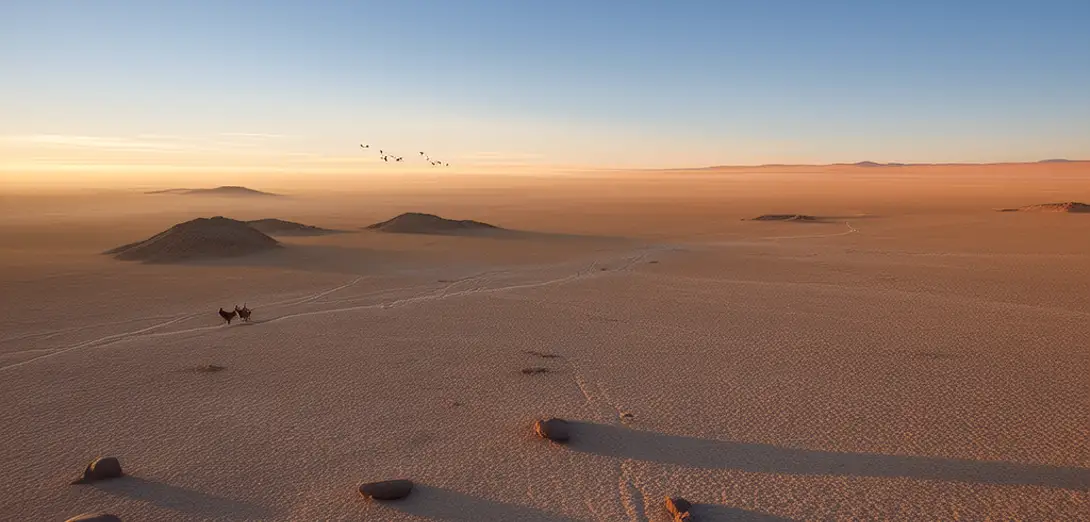
Mongolian Gobi Desert Salt-Harvesting Trails: Lithic Memory and Transboundary Brine Governance
蒙古戈壁沙漠盐采集路径:岩石记忆与跨境卤水治理
-
In Mongolia’s eastern Gobi, salt-harvesting trails—traversed for over 2,300 years—follow subsurface brine veins mapped via surface mineral efflorescence and migratory bird behavior.在蒙古东部戈壁,采盐古道已通行逾2300年,其走向依据地表矿物霜花与候鸟迁徙行为所指示的地下卤水脉络而定。
-
These routes intersect China’s Inner Mongolia border, creating informal transboundary governance zones where herders negotiate extraction quotas through shared tea ceremonies rather than treaties.这些古道穿越中蒙边境,形成非正式的跨境治理区域,牧民通过共饮茶仪式而非条约协商开采配额。
-
Salt pans are classified not by sodium concentration but by color gradients indicating historical evaporation cycles, preserved in oral lexicons with 17 distinct terms for crystalline texture.盐田不按钠浓度分类,而依颜色梯度划分,以反映历史蒸发周期;相关术语口耳相传,仅结晶质地就有17种专称。
-
Recent lithium mining concessions threaten brine flow, prompting cross-border salt councils to deploy low-cost piezometers calibrated to traditional depth markers like camel-step erosion patterns.近期锂矿开采许可威胁卤水流动,促使跨境盐务委员会部署低成本压电传感器,并以骆驼蹄印侵蚀痕迹等传统深度标记校准。
-
UNEP reports confirm trail corridors maintain higher biodiversity than adjacent protected areas—proof that extractive practice can coexist with ecological stewardship.联合国环境署报告证实,古道廊道内生物多样性高于邻近保护区——证明开采活动可与生态保护并存。
-
Chinese geologists now attend annual salt-festival gatherings in Bayankhongor to cross-reference satellite salinity data with elders’ interpretations of cloud-shadow movements over pans.中国地质学家如今每年赴巴彦洪戈尔参加盐节集会,将卫星盐度数据与长者对云影掠过盐田轨迹的解读相互印证。
-
The Mongolian Ministry of Mining revised licensing rules to require harvesters demonstrate lineage-based trail knowledge, rejecting corporate applications lacking kinship documentation.蒙古矿业部修订许可证规则,要求采盐者须证明其家族世代传承的古道知识,拒绝缺乏亲属关系证明的企业申请。
-
Salt crystals themselves function as archival media: isotopic analysis reveals drought periods matching oral histories of ‘white famine’ decades before written records existed.盐晶体本身即为档案载体:同位素分析揭示的干旱期,与口述史中‘白灾’记载完全吻合,早于文字记录数十年。
-
Trail maintenance involves deliberate stone placement that alters local wind eddies—micro-engineering proven to reduce dust storms by 22% in monitored sectors.古道维护需刻意堆砌石块,以改变局部风涡——这种微尺度工程经监测证实可使特定区域沙尘暴减少22%。
-
This lithic geography treats salt not as commodity but as temporal ledger recording hydrological memory across millennia.这种石质地理观视盐非商品,而是跨越千年的水文记忆账簿。
-
Governance emerges not from state decrees but from iterative negotiation at pan edges where Mongolian, Kazakh, and Han harvesters share thermoses of fermented mare’s milk.治理并非源于国家法令,而是蒙古、哈萨克与汉族采盐者在盐田边缘共饮发酵马奶时持续协商而成。
-
Gobi salt trails thus embody a pre-modern hydro-political intelligence increasingly vital for managing scarce subsurface resources amid accelerating aridification.戈壁采盐古道 thus 凝聚着一种前现代水政治智慧,在荒漠化加速背景下,日益成为管理稀缺地下水资源的关键。