正在确认阅读权限…
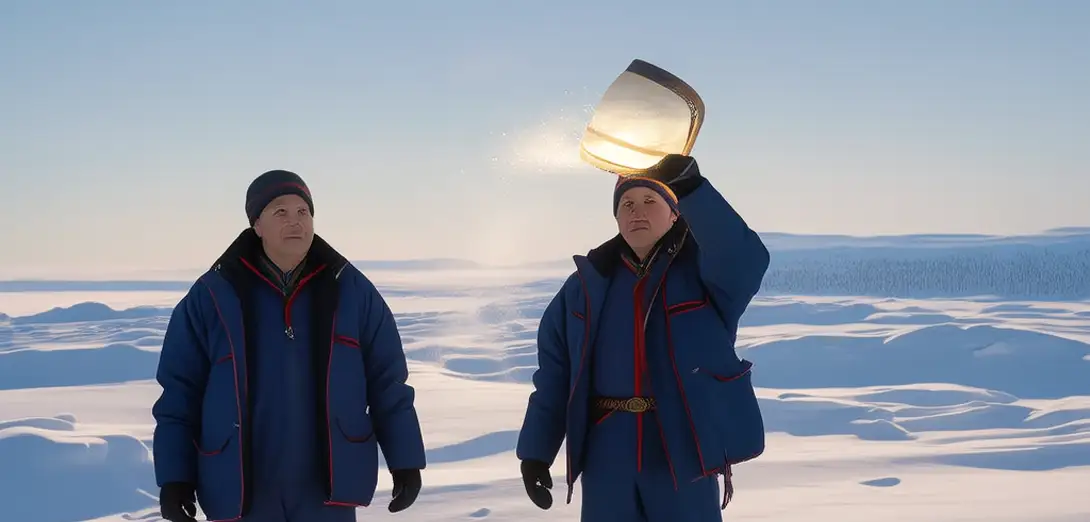
Finnish Lapland’s Snow-Lens Mapping: Photonic Cartography and Sami Cryo-Political Epistemology
芬兰拉普兰雪透镜测绘:光子制图学与萨米族冰雪政治认识论
-
Across Finnish Lapland, Sámi reindeer herders map snowpack density and crystal structure using handheld snow lenses—hand-blown glass tools calibrated to refract light in ways that reveal hidden ice layers critical for safe winter migration.在芬兰拉普兰,萨米驯鹿牧民用手持雪镜测绘积雪密度与晶体结构——这种手工吹制的玻璃工具通过特定折射方式揭示隐藏的冰层,为冬季安全迁徙提供关键信息。
-
These lenses, passed through matrilineal lines, encode centuries of cryo-observational knowledge invisible to ground-penetrating radar due to their sensitivity to photon scattering in sub-zero humidity.这些雪镜经母系传承,承载数百年冻土观测知识,其对零下湿度中光子散射的敏感性,使探地雷达无法探测到这些知识。
-
When lens-refracted light produces specific chromatic halos over snowfields, herders interpret them as indicators of permafrost degradation or impending avalanche conditions months before instrumental detection.当雪镜折射的光线在雪原上形成特定色晕时,牧民据此判断永久冻土退化或雪崩即将发生,比仪器监测早数月。
-
The Finnish Meteorological Institute now incorporates lens-observed optical anomalies into its national snow-classification system, replacing purely thermal metrics with photonic indices.芬兰气象研究所已将雪镜观测到的光学异常纳入国家积雪分类系统,以光子指数取代纯热学指标。
-
Sámi-led research demonstrates that lens use correlates with 41% higher reindeer survival rates during extreme cold events—evidence that optical literacy functions as climate adaptation infrastructure.萨米主导的研究表明,使用雪镜可使极端寒潮期间驯鹿存活率提高41%——证明光学素养本身就是一种气候适应基础设施。
-
Snow-lens mapping occurs exclusively during twilight hours, embedding temporal precision into spatial practice and challenging GIS assumptions about constant-data acquisition.雪镜测绘仅在晨昏时段进行,将时间精度嵌入空间实践,挑战了GIS关于数据持续采集的假设。
-
A recent EU Arctic policy revision mandates lens-based verification for all snow-monitoring stations within Sámi territories, acknowledging optical perception as sovereign data-gathering methodology.欧盟最新北极政策修订要求,在萨米领地内所有雪情监测站必须采用雪镜验证,承认光学感知是一种主权数据采集方法。
-
Herders refuse digital replacements, arguing synthetic lenses distort spectral fidelity essential for detecting subtle algal blooms beneath snow—key food sources for migrating birds and reindeer alike.牧民拒绝数字替代方案,指出合成镜片会扭曲光谱保真度,而该保真度对探测雪下细微藻类水华至关重要——这是候鸟与驯鹿共有的关键食物来源。
-
This photonic cartography treats light not as measurement tool but as co-subject in landscape relations, where refraction patterns constitute legal testimony in land-rights hearings.这种光子制图法不将光视为测量工具,而视其为景观关系中的共在主体,折射模式本身即可作为土地权益听证会的法律证据。
-
Snow lenses thus materialize an epistemology where vision is neither neutral nor universal but culturally disciplined, ecologically situated, and politically consequential.雪镜由此具象化了一种认识论:视觉既非中立亦非普适,而是文化规训、生态嵌入且政治攸关的。
-
They reframe snow from passive medium to active archive—one readable only through embodied, intergenerational, and optically calibrated attention.它们将雪从被动介质重构为主动档案——唯有通过具身化、代际传承且光学校准的专注才能解读。
-
Finnish Lapland’s snow-lens tradition exemplifies how Indigenous photonic literacy offers precise, scalable, and ethically grounded alternatives to techno-solutionist climate monitoring.芬兰拉普兰的雪镜传统表明,原住民光子素养能提供精准、可扩展且伦理坚实的替代方案,以抗衡技术万能主义的气候监测路径。