正在确认阅读权限…
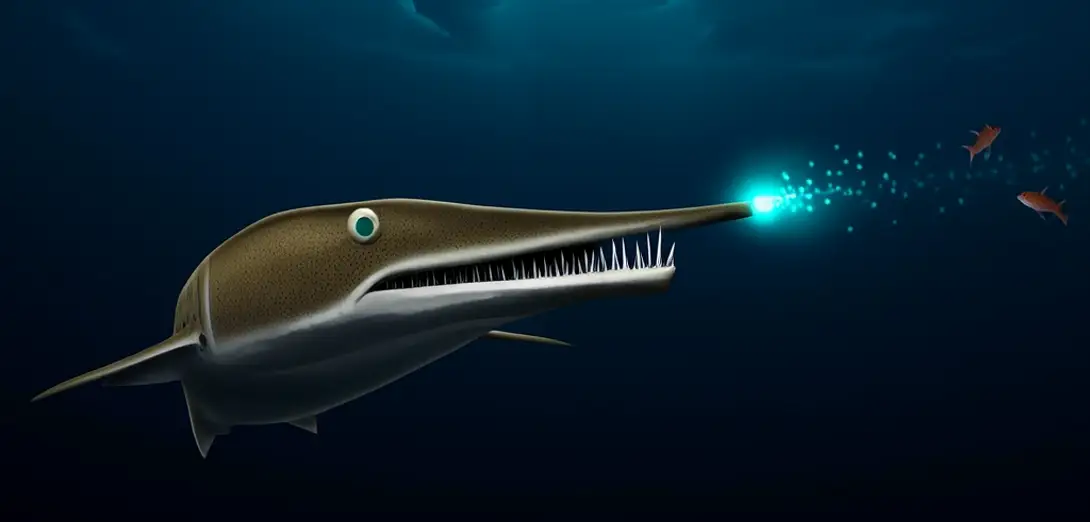
How Do Deep-Sea Anglerfish Use Bioluminescence to Hunt in Total Darkness?
深海琵琶鱼如何利用生物发光在完全黑暗中捕食?
-
Deep-sea anglerfish live below 1,000 meters where sunlight cannot penetrate.深海鮟鱇鱼生活在阳光无法穿透的1000米以下海域。
-
They possess a bioluminescent lure called an esca, which dangles from their head.它们头部垂挂着一个名为诱饵器的生物发光器官。
-
This light comes from symbiotic bacteria that live inside the esca and glow continuously.这种光来自寄居在诱饵器内部、持续发光的共生细菌。
-
The fish controls the light indirectly by adjusting blood flow to the lure tissue.鱼类通过调节流向诱饵组织的血流,间接控制发光。
-
Prey animals mistake the glow for small prey or mating signals and swim closer.猎物误将光芒当作小型猎物或求偶信号,游近诱饵。
-
Once near, the anglerfish opens its enormous mouth with needle-like teeth in milliseconds.一旦靠近,鮟鱇鱼便在毫秒内张开布满针状牙齿的巨大嘴巴。
-
Females are much larger than males, and some males permanently fuse to females as parasitic mates.雌鱼体型远大于雄鱼,部分雄鱼会永久附着于雌鱼身上,成为寄生配偶。
-
Their eyes are highly sensitive to blue light—the only wavelength that travels far underwater.它们的眼睛对蓝光高度敏感——这是唯一能在水下远距离传播的光波长。
-
This adaptation allows them to detect faint bioluminescent signals across several meters.这一适应性使它们能探测数米外微弱的生物发光信号。
-
Scientists study their photophores to design low-power underwater sensors for robotics.科学家研究其发光器,以设计用于水下机器人的低功耗传感器。