正在确认阅读权限…
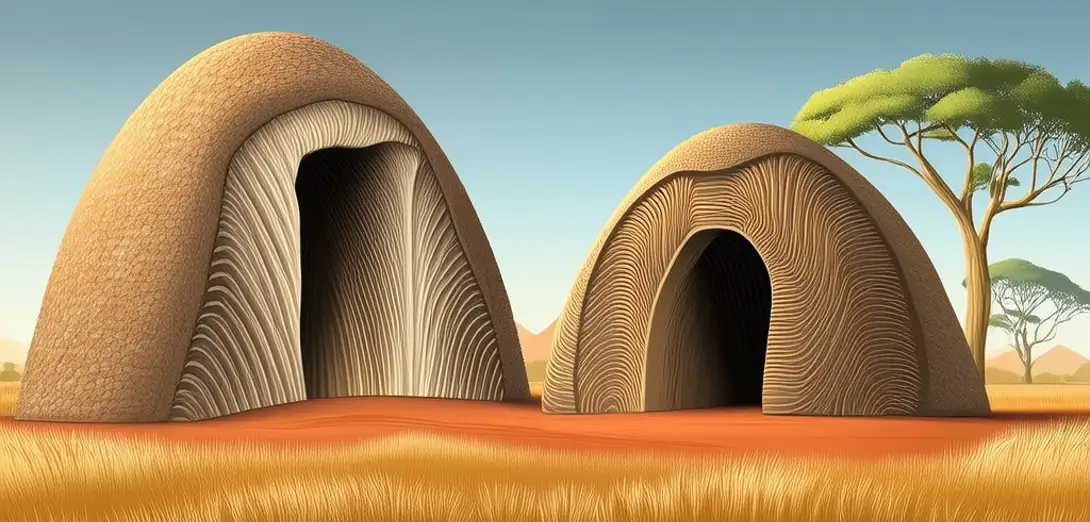
How Do Termite Mounds Regulate Temperature and Humidity Without Electricity?
白蚁丘如何在不使用电力的情况下调节温度和湿度?
-
Termite mounds in Africa and Australia can reach over six meters tall and last decades.非洲和澳大利亚的白蚁丘可高达六米以上,存续数十年。
-
They contain complex networks of tunnels, chimneys, and porous walls made of soil and saliva.内部包含由土壤和唾液构成的复杂隧道、烟囱及多孔墙体网络。
-
Air moves through the mound via convection: warm, moist air rises and exits through top vents.空气通过热对流在蚁丘内流动:温暖潮湿的空气上升,从顶部通风口排出。
-
Cooler, drier air enters through underground passages and flows upward gradually.较冷干燥的空气经地下通道进入,缓慢向上流动。
-
The thick outer wall buffers daily temperature swings, while internal clay layers absorb excess moisture.厚实的外墙缓冲昼夜温差,内部黏土层吸收多余湿气。
-
Termites constantly repair and adjust tunnel openings to respond to weather changes.白蚁持续修复并调节隧道开口,以应对天气变化。
-
This passive system keeps nest temperatures stable within ±1°C despite outside swings of 30°C.这一被动系统使巢内温度波动控制在±1°C以内,而外部温差可达30°C。
-
Engineers study these structures to design energy-free building ventilation systems.工程师研究这些结构,以设计无需能源的建筑通风系统。
-
Modern architects have built office buildings inspired by termite mound airflow patterns.现代建筑师已建成受白蚁丘气流模式启发的办公大楼。
-
Such biomimicry reduces air conditioning use by up to forty percent in tropical climates.此类仿生设计在热带气候下最多可减少40%的空调能耗。