正在确认阅读权限…
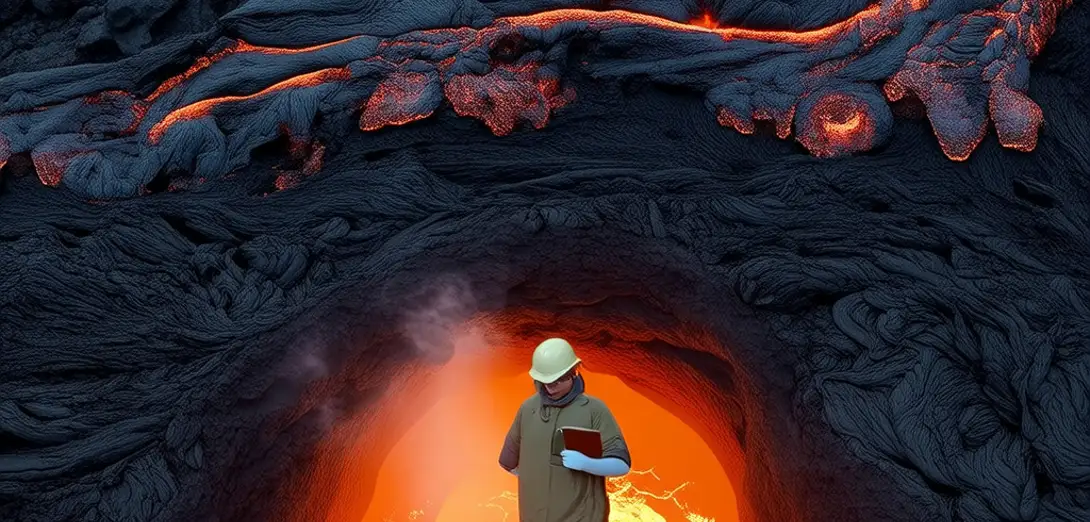
Why Do Certain Lava Tubes Remain Warm for Decades After Eruption?
为什么某些熔岩管在喷发后数十年仍保持温暖?
-
Lava tubes form when the outer surface of a lava flow cools and hardens while molten rock continues flowing beneath.熔岩管形成于熔岩流外层冷却硬化,而内部熔岩继续流动之时。
-
After the eruption ends, residual heat slowly escapes through cracks and porous basalt walls.喷发结束后,残余热量通过裂缝和多孔玄武岩壁缓慢散逸。
-
These tubes act like natural insulation because basalt has low thermal conductivity and traps infrared radiation effectively.这些熔岩管具有天然隔热作用,因为玄武岩导热性低,能有效阻隔红外辐射。
-
Scientists measure temperatures inside ancient tubes using infrared sensors and find readings up to 20°C above ambient air.科学家用红外传感器测量古熔岩管内部温度,发现读数比环境气温高可达20°C。
-
The slow cooling process can last thirty years or more depending on tube diameter and surrounding rock density.缓慢冷却过程可持续三十年以上,具体时长取决于熔岩管直径及周围岩石密度。
-
This retained heat supports unique microbial communities that thrive in stable, warm, dark environments.残留热量支撑着独特的微生物群落,使其在稳定、温暖、黑暗的环境中繁盛。
-
Unlike surface rocks, tube interiors avoid daily temperature swings, enabling long-term thermal inertia.与地表岩石不同,熔岩管内部不受昼夜温差影响,因而具备长期热惯性。
-
Geothermal energy researchers study these systems to model subsurface heat retention in volcanic regions.地热研究人员研究此类系统,以模拟火山地区的地下热量滞留。
-
Some caves even host ice deposits despite warm air—proof of complex local humidity-temperature balance.一些洞穴甚至存在冰沉积物,尽管空气温暖——这证明了局部湿度与温度间的复杂平衡。
-
Understanding this helps predict geothermal potential and assess hazards near dormant volcanoes.理解这一机制有助于预测地热潜力,并评估休眠火山附近的灾害风险。