正在确认阅读权限…
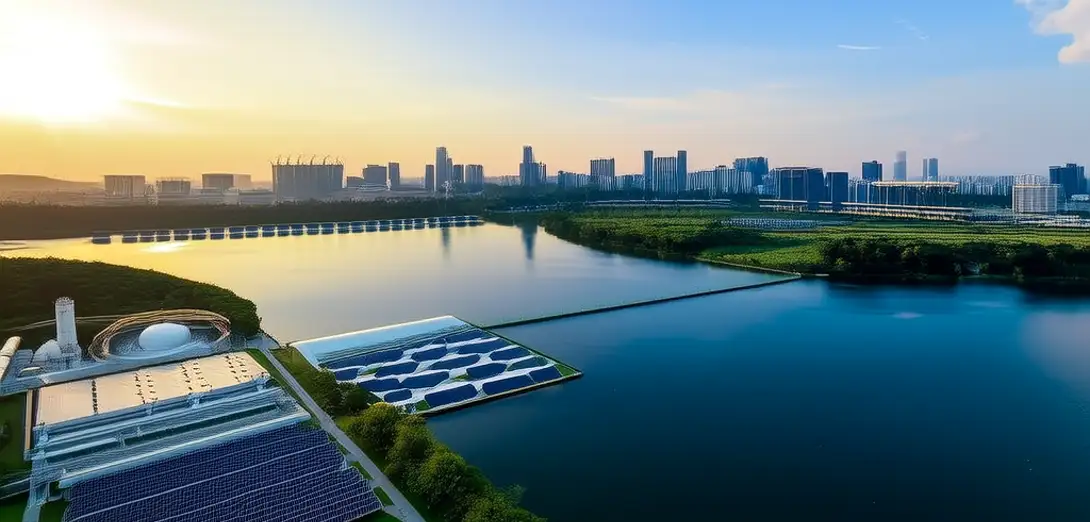
Singapore: Urban Water Management in a Tropical Island City-State
新加坡:热带岛国城市的水资源管理
-
Singapore imports 40% of its water from Malaysia, making self-reliance a national priority.新加坡40%的用水依赖从马来西亚进口,实现自给自足成为国家优先事项。
-
Four national taps—imported water, local catchment, recycled NEWater, and desalination—ensure supply.四大水源——进口水、本地集水、再生水(新生水)和海水淡化——保障供水安全。
-
Roof gutters and park drains feed 17 reservoirs, turning two-thirds of the island into catchment.屋顶排水沟和公园排水渠将雨水汇入17座水库,使全岛三分之二面积成为集水区。
-
NEWater uses microfiltration, reverse osmosis, and UV disinfection to purify wastewater.新生水采用微滤、反渗透和紫外线消毒技术净化废水。
-
Desalination plants run partly on solar power to cut energy-related emissions.海水淡化厂部分使用太阳能供电,以降低能源相关排放。
-
Water pricing reflects scarcity, encouraging industrial users to recycle over 80% of process water.水价反映水资源稀缺性,激励工业企业循环利用超80%的工艺用水。
-
School curricula include hands-on lessons on watersheds and water footprint calculations.学校课程包含流域与水足迹计算等实践教学内容。
-
Floating solar farms on reservoirs generate clean energy without competing for land.水库上的浮动式太阳能电站可在不占用土地的情况下生产清洁能源。
-
Real-time sensors detect pipe leaks and predict demand spikes using AI analytics.实时传感器结合人工智能分析,可探测管道泄漏并预测用水高峰。
-
Regional cooperation includes joint studies on Mekong Delta salinity intrusion affecting shared aquifers.区域合作包括联合开展湄公河三角洲盐水入侵研究,以应对共用含水层面临的威胁。