正在确认阅读权限…
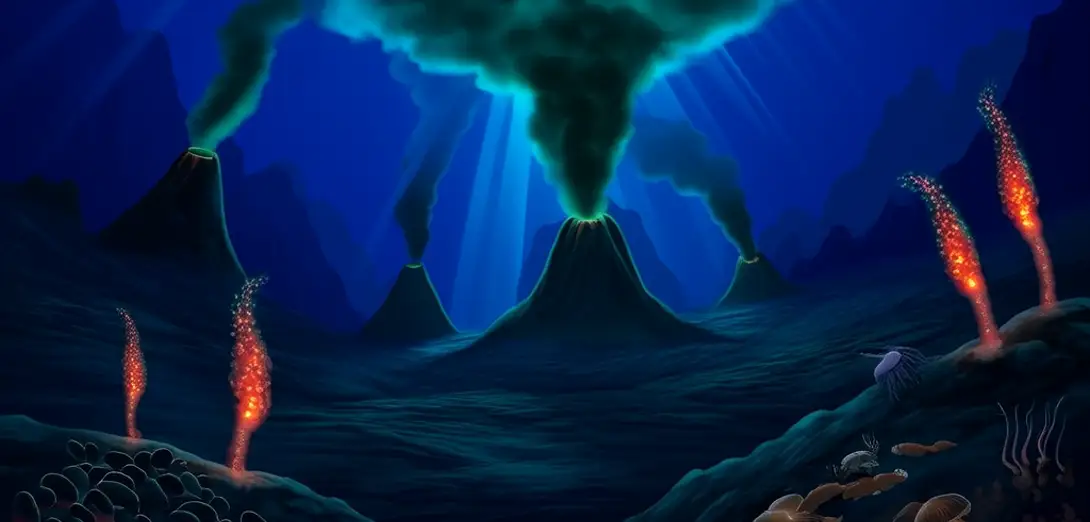
Why Deep-Sea Hydrothermal Vents Sustain Entire Ecosystems Without Sunlight
深海热液喷口如何在无阳光条件下维系完整生态系统?
-
Hydrothermal vents emit mineral-rich, superheated fluids from Earth’s crust at depths exceeding 2,500 meters where photosynthesis is impossible.热液喷口从地球地壳深处(深度超2500米、光合作用无法进行的区域)喷出富含矿物的超高温流体。
-
Chemosynthetic bacteria oxidize hydrogen sulfide and methane dissolved in vent effluents to synthesize organic compounds.化能合成细菌氧化热液喷出物中溶解的硫化氢和甲烷,合成有机化合物。
-
These microbes form biofilm mats on vent chimneys and serve as primary producers, replacing phytoplankton in the food web.这些微生物在喷口烟囱表面形成生物膜垫层,作为初级生产者,在食物网中替代浮游植物。
-
Giant tube worms host symbiotic bacteria intracellularly, supplying them with hemoglobin-bound sulfide while receiving fixed carbon in return.巨型管虫细胞内共生细菌,为其提供血红蛋白结合的硫化物,并换取固定的碳。
-
Vent ecosystems exhibit unusually high biomass per square meter—orders of magnitude greater than surrounding abyssal plains.热液喷口生态系统单位面积生物量异常高,比周边深海平原高出数个数量级。
-
Genomic analyses reveal horizontal gene transfer among archaea and bacteria, accelerating metabolic innovation under extreme pressure and toxicity.基因组分析显示古菌与细菌间存在水平基因转移,在极端高压与毒性环境下加速代谢创新。
-
Metal sulfides precipitated at vents create conductive mineral structures that may facilitate electron transfer across microbial consortia.喷口处沉淀的金属硫化物形成导电矿物结构,可能促进微生物群落间的电子传递。
-
Commercial interest in vent-associated polymetallic sulfides has prompted international regulatory debates under UNCLOS Article 136.商业界对喷口相关多金属硫化物的兴趣,已依据《联合国海洋法公约》第136条引发国际监管争议。
-
Long-term observatories monitor vent stability, showing episodic collapse and reactivation linked to tectonic strain cycles.长期观测站监测喷口稳定性,发现其呈周期性坍塌与再激活,与构造应力周期相关。
-
This chemosynthetic paradigm reshapes astrobiological thinking: subsurface oceans on icy moons could harbor analogous biospheres.这一化能合成范式重塑了天体生物学认知:冰卫星的地下海洋或可孕育类似生物圈。
-
Conservation frameworks now classify active vent fields as ‘ecologically sensitive areas’, restricting mining without baseline biodiversity assessment.保护框架现已将活跃喷口区列为‘生态敏感区’,未经基线生物多样性评估不得开展采矿。
-
Studying these systems forces us to redefine life’s energetic boundaries—and reconsider what constitutes a habitable environment.研究这些系统迫使我们重新定义生命所需的能量边界,并反思宜居环境的本质。