正在确认阅读权限…
Batch-0022-039: Aeolian Transport Thresholds and Dune Field Stabilization Feedbacks
风力搬运阈值与沙丘区稳定化的反馈机制
-
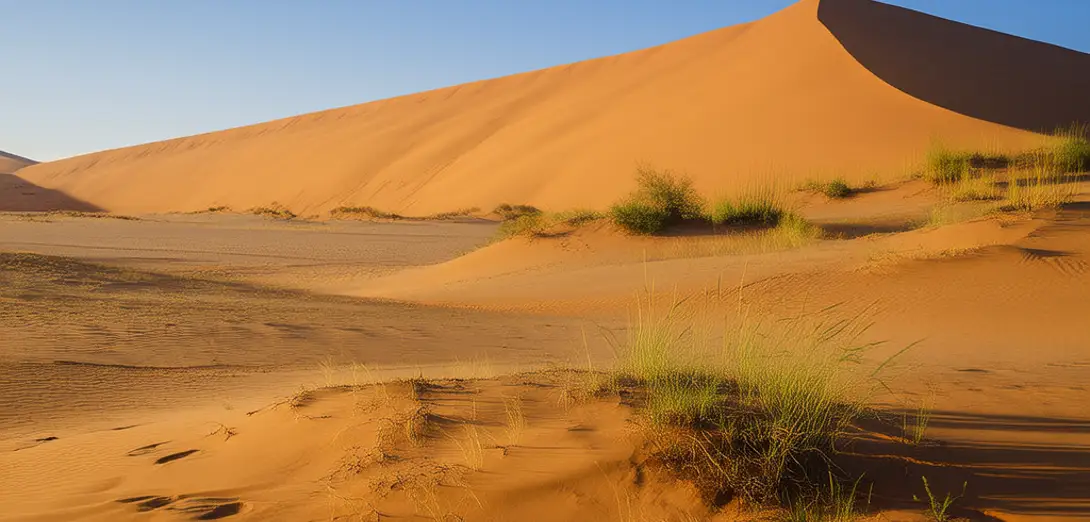
Dune fields stabilize only when vegetation cover exceeds a critical threshold of 35% surface area.沙丘地带只有在植被覆盖度超过地表面积35%这一临界阈值时才能稳定。
-
Below this, wind shear stress mobilizes sand grains regardless of seasonal rainfall variations.低于该阈值时,风剪切应力会扬起沙粒,不受季节性降雨变化影响。
-
Once rooted grasses bind surface layers, they reduce local wind velocity by up to 40% within 2 meters.一旦草类扎根并固结地表层,可在2米范围内使局地风速降低高达40%。
-
This localized drag triggers positive feedback: less erosion allows more plant establishment nearby.这种局地阻力触发正反馈:侵蚀减弱促使周边更多植物定植。
-
Satellite-derived NDVI data identifies 'stabilization fronts' advancing at 1.2 meters per year in Sahelian margins.卫星反演的NDVI数据识别出萨赫勒边缘地带‘稳定前沿’正以每年1.2米速度推进。
-
Crucially, stabilization is spatially discontinuous—patchy rainfall creates mosaic patterns of active and dormant dunes.关键在于,稳定过程在空间上不连续——降水分布不均导致活动沙丘与休眠沙丘呈镶嵌格局。
-
Soil crusts formed by cyanobacteria further raise the wind erosion threshold on stabilized patches.蓝细菌形成的土壤结皮进一步提高已稳定区域的风蚀阈值。
-
Human grazing disrupts this feedback by removing key stabilizing grasses before root networks mature.人类放牧在草类根系成熟前移除关键固沙草种,破坏了这一正反馈。
-
Modeling shows crossing the 35% threshold reduces dust emission by 87% in adjacent drylands.模型显示,跨越35%阈值可使邻近干旱区粉尘排放减少87%。
-
Geographers now map these thresholds to prioritize ecological restoration where feedbacks are still reversible.地理学家现正绘制这些阈值图,以优先开展尚具可逆反馈的生态修复。