正在确认阅读权限…
What Happens When Cities Ban Plastic Bags
当城市禁止塑料袋时发生了什么
-
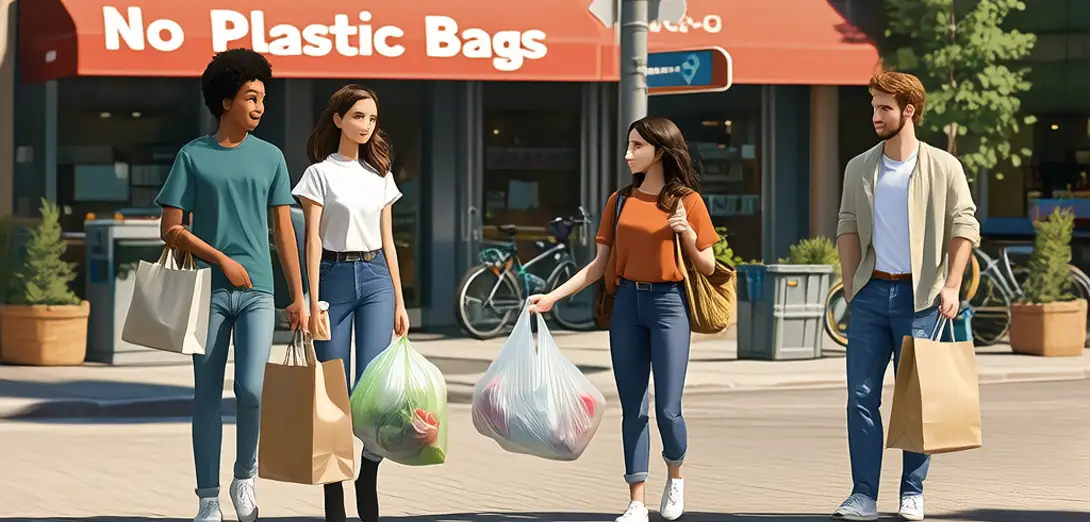
After a ban, shoppers quickly switch to cloth or paper bags—but some reuse old plastic ones, weakening the policy’s impact.禁令实施后,消费者迅速转向布袋或纸袋,但部分人重复使用旧塑料袋,削弱了政策效果。
-
Stores stop charging for bags, yet many pass on higher packaging costs by raising product prices slightly.商店虽不再收取袋子费用,却通过小幅提高商品价格,将更高的包装成本转嫁给消费者。
-
Local bag makers lose business, while textile firms hire more workers to meet new demand for reusable totes.本地塑料袋制造商生意下滑,而纺织企业则因可重复使用购物袋需求上升而增聘工人。
-
Beach cleanups show fewer plastic fragments within months—but rivers still carry microplastics from other sources.数月内海滩清理发现塑料碎片减少,但河流仍持续携带来自其他源头的微塑料。
-
Low-income families sometimes struggle most, as reusable bags cost money upfront and aren’t always provided free.低收入家庭往往面临最大困难:可重复使用袋子需预先付费,且并非总能免费获得。
-
Enforcement varies: some cities fine stores, others educate first—and compliance improves with consistent messaging.执法力度因地而异:有的城市直接对违规商店罚款,有的则先开展宣传教育;持续统一的信息传递有助于提升合规率。
-
Data shows bans work best when paired with affordable alternatives, public reminders, and gradual rollout periods.数据显示,禁令若与低价替代品、公众提醒及渐进式推行相结合,效果最佳。
-
The real lesson isn’t about bags—it’s how simple rules can reshape habits, industry, and environmental outcomes together.真正的启示不在于袋子本身,而在于简单规则如何协同重塑习惯、产业与环境结果。