正在确认阅读权限…
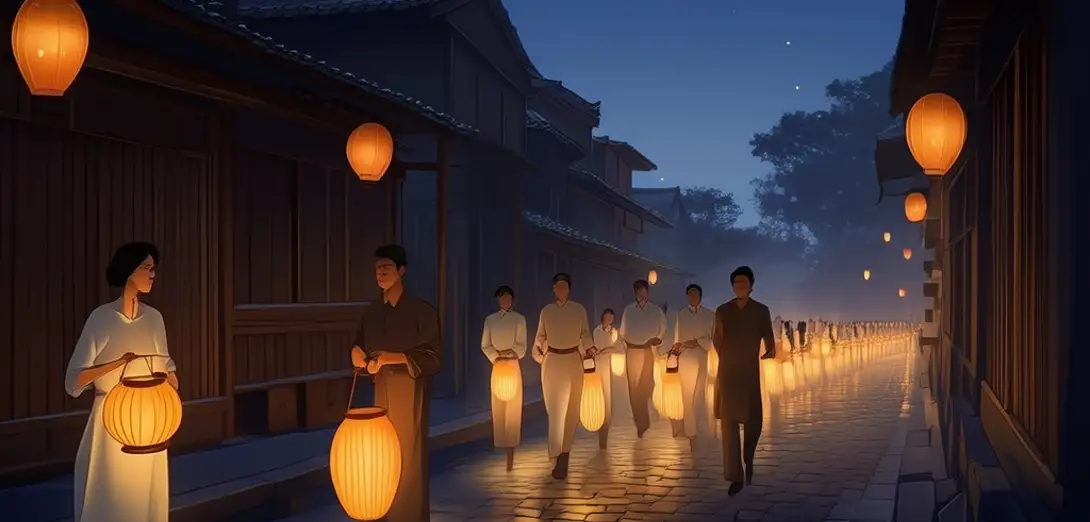
The Lantern Gradient: Luminal Hierarchy and Ancestral Visibility in Vietnamese Mid-Autumn Processions
灯笼色阶:越南中秋游行中的光序与祖先可见性
-
In Hoi An, lanterns are not mere decoration but calibrated emissaries of filial memory and generational proximity.会安的灯笼不只是装饰,更是承载孝思与代际亲近的精密信使。
-
Red lanterns hang lowest—reserved for recently deceased elders whose names still echo in household prayers.红灯笼挂得最低——专为刚去世的长辈而设,其名号仍在家中祷告中回响。
-
Yellow ones ascend incrementally, marking decades of ancestral distance and diminishing ritual obligation.黄灯笼逐级升高,标示着祖先年代的远近与仪式责任的递减。
-
Children carry white paper lanterns shaped like lotus blossoms, symbolizing unburdened presence rather than commemorative duty.孩童提着莲花造型的白纸灯笼,象征无负担的存在,而非纪念义务。
-
The procession route avoids straight avenues, following winding alleys where light pools unevenly across ancestral tablets displayed in open doorways.游行路线避开笔直大道,沿蜿蜒小巷行进,灯光不均地洒落在敞开的门扉间陈列的祖先牌位上。
-
Lantern height correlates precisely with kinship seniority, not age—a vertical grammar of remembrance enforced without verbal instruction.灯笼高度精确对应亲属辈分而非年龄——这是一种无需言传的垂直记忆语法。
-
Artisans still mix pigments using ash from specific hardwoods, linking luminescence to regional terroir and soil memory.匠人仍用特定硬木灰调制颜料,使光亮与地域风土及土壤记忆相连。
-
When rain falls, families adjust wick length deliberately, accepting dimmer light as ethical concession to atmospheric impermanence.下雨时,家人会刻意调整灯芯长度,将光线变暗视为对天气无常的伦理让步。
-
Foreign observers may misread the spectacle as festive; locals perceive it as calibrated spectral diplomacy.外来者或误以为此景是节庆;当地人却视其为精准的幽灵外交。
-
The lantern’s glow is measured less by candela than by how many generations it quietly summons into shared twilight.灯笼的光亮,衡量标准不是坎德拉,而是它悄然召唤几代人共入暮色的能力。
-
No single family controls the sequence—neighborhood committees negotiate placement through silent ledger books updated quarterly.没有单一家族掌控布灯顺序——邻里委员会通过每季度更新的无声账簿协商安排。
-
This luminous syntax persists despite LED adoption, because brightness calibration remains inseparable from moral chronometry.尽管已采用LED灯,这种发光语法依然延续,因亮度校准始终与道德时间计量密不可分。