正在确认阅读权限…
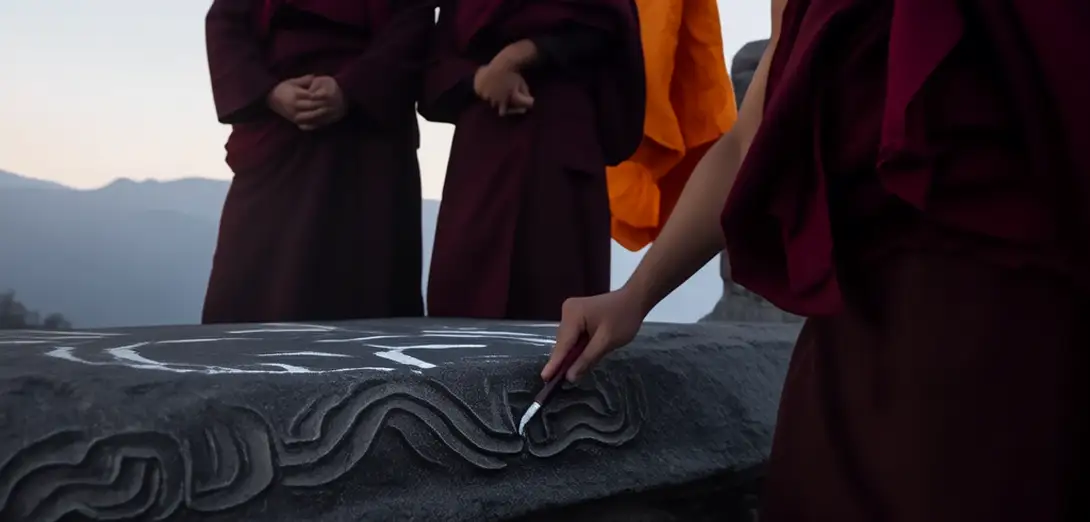
The Threshold Ink: Calligraphic Consent and Juridical Surface in Tibetan Buddhist Monastic Contracts
门槛墨迹:藏传佛教寺院契约中的书法同意与法理界面
-
Monastic contracts are signed not with ink on paper, but with charcoal-diluted ink applied to threshold stones at monastery entrances.僧侣契约不用墨水写在纸上,而是用炭粉调制的墨汁涂于寺院入口的门槛石上。
-
The calligrapher’s wrist angle determines contractual scope: steeper angles bind land-use rights, shallower ones govern teaching permissions.书法家手腕角度决定契约范围:角度越陡,约束土地使用权;越平缓,则规范教学许可。
-
Each stroke’s drying time is timed precisely—too fast indicates haste; too slow implies doubt—both void the agreement.每一道笔画的干燥时间须精准把控——过快表明仓促,过慢暗示疑虑,二者均使其失效。
-
Witnesses do not sign but press thumbprints onto wet ink, their fingerprint ridges altering capillary absorption to encode consent intensity.见证人不签名,而将拇指按在湿墨上,指纹脊线改变毛细吸收,以编码同意强度。
-
Threshold stones are rotated quarterly so no single surface bears permanent inscription, enforcing temporal limits on jurisdictional claims.门槛石每季度旋转一次,确保无单一表面留存永久铭文,强制限制管辖权时效。
-
Disputes are resolved not by rereading text but by measuring ink diffusion patterns under controlled lamplight.纠纷不靠重读文本解决,而是在可控灯光下测量墨迹扩散图案。
-
New abbots inherit no written records—only calibrated inkstone sets whose wear patterns index prior agreements’ duration and weight.新住持不继承任何书面记录,仅获校准过的砚台组,其磨损痕迹对应过往协议的时长与分量。
-
Foreign donors receive stamped paper copies, but these hold zero juridical force unless pressed against the original stone during monsoon humidity.外国捐赠者获盖章纸本副本,但若未于雨季高湿时压印原石,则毫无法律效力。
-
Ink preparation involves grinding local lapis lazuli with yak milk, binding geological and biological provenance into every clause.墨汁制作需以本地青金石研磨牦牛奶,将地质与生物渊源融入每一项条款。
-
Contract dissolution requires washing the stone with glacial meltwater—timing governed by lunar cycles, not calendar dates.契约解除须用冰川融水清洗石面,时机依月相周期,而非公历日期。
-
Digital scans exist solely for archival reference; the law resides exclusively in pigment-substrate interaction at the doorway interface.数字扫描仅作档案参考,法律效力唯存于门界处颜料与基质的交互之中。
-
This material jurisprudence endures because permanence is seen as epistemic violence against evolving communal wisdom.这种物质性法理得以延续,因恒久被视为对不断演进的集体智慧的表征暴力。