正在确认阅读权限…
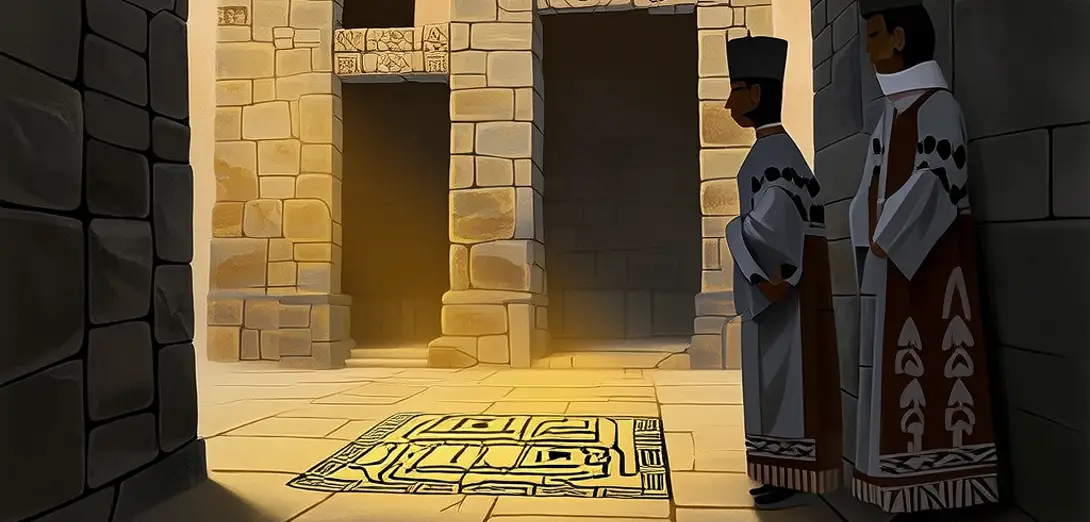
The Shadow-Threshold Concordat: Solar Aperture Alignment and Juridical Witnessing in Andean Qhapaq Ñan Waystations
影阈协约:安第斯印加古道驿站中的日光孔径对齐与司法见证
-
Qhapaq Ñan waystations feature precisely angled stone apertures that project solar discs onto interior floor markers only during solstice alignments, triggering ceremonial judicial sessions.印加古道驿站设有精准角度的石质孔洞,仅在至日时将太阳光斑投射到室内地面标记上,以此启动仪式性司法会议。
-
Witnesses testify not before judges but before calibrated light patterns, their statements validated by whether projected discs remain centered on designated basalt inlays.证人并非向法官作证,而是面向校准过的光影图案;其证言是否有效,取决于投射光斑是否保持居中于指定的玄武岩镶嵌标记。
-
Architectural surveys confirm aperture orientations were adjusted every seventeen years to compensate for axial tilt drift, preserving juridical continuity across generations.建筑勘测证实,孔洞朝向每十七年调整一次,以补偿地轴倾角漂移,确保跨世代司法连续性。
-
Contemporary Peruvian courts incorporate shadow-threshold protocols in land restitution hearings involving ancestral territories along the ancient road network.当代秘鲁法院在涉及古道沿线祖传领地的土地归还听证中,采用‘影界协议’程序。
-
Waystation caretakers maintain quartz-dust reservoirs used to fine-tune light refraction during critical testimony windows when atmospheric clarity permits.驿站守护者维护石英粉尘储槽,用于在大气通透时的关键作证时段微调光线折射。
-
Indigenous litigants must arrive at designated waystations during specific solar hours, their arrival confirmed by shadow-length measurements against carved meridian lines.原住民诉讼人须在特定太阳时刻抵达指定驿站,其抵达时间由影长与刻制子午线的比对确认。
-
UNESCO now uses Qhapaq Ñan shadow-concordat models to design climate-resilient legal infrastructure in vulnerable mountain regions.联合国教科文组织现借鉴印加古道‘影界协约’模型,为脆弱山区设计气候韧性司法基础设施。
-
Academic researchers employ photogrammetric analysis of aperture wear patterns to reconstruct pre-colonial governance calendars.学术研究者通过孔洞磨损痕迹的摄影测量分析,重建殖民前的治理历法。
-
Tourist photography is restricted during judicial light windows to prevent optical interference with testimonial validity.司法光照时段禁止游客摄影,以防光学干扰影响证言有效性。
-
This concordat treats sunlight not as illumination but as impartial juridical actor whose geometry precedes human interpretation.该协约视阳光非为照明,而为中立司法主体,其几何轨迹先于人类诠释。
-
Modern architects integrate similar aperture systems in Lima’s new municipal courthouse to regulate courtroom acoustics via solar thermal modulation.现代建筑师在利马新建市政法院中集成类似孔洞系统,借太阳热调制调控法庭声学。
-
The concordat endures because it embeds law in celestial mechanics, making justice observable, measurable, and temporally anchored.此协约得以延续,因其将法律嵌入天体力学,使正义可观察、可测量、且具时间锚点。