正在确认阅读权限…
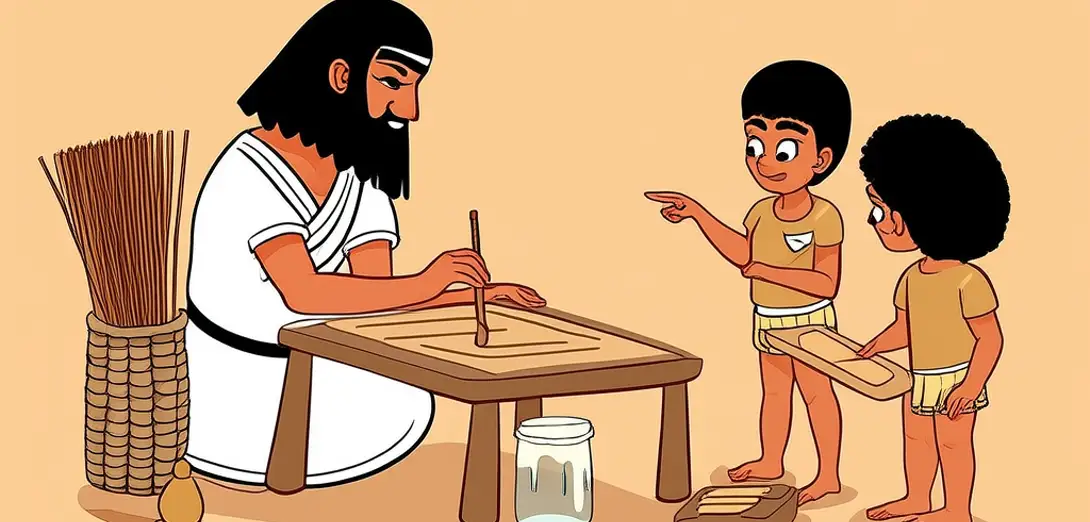
Writing Began in Ancient Sumer
文字起源于古代苏美尔
精读先不看文字,完整听一遍。
-
People in Sumer drew marks on soft clay.苏美尔人将符号刻在软泥板上。
-
They used a reed stick to make wedge shapes.他们用芦苇杆刻出楔形符号。
-
These marks stood for words or sounds.这些符号代表词语或发音。
-
Scribes wrote about grain, workers, and gods.书吏记录谷物、工人和神祇相关内容。
-
No one knew how to read at first.起初无人识字。
-
Only trained scribes could write and count.只有受过训练的书吏才能书写和计数。
-
Clay tablets dried hard in the sun.泥板在阳光下晒干变硬。
-
We still read some of them today.我们今天仍能阅读其中一些。
精读 · 大约 10 分钟
听 → 读 → 学表达 → 懂 → 今天会说这一句 → 跟读录音 → 自己说一句。
③ 学 · 重点表达
- People in Sumer drew marks on soft clay. 苏美尔人将符号刻在软泥板上。
- No one knew how to read at first. 起初无人识字。
- They used a reed stick to make wedge shapes. 他们用芦苇杆刻出楔形符号。
④ 懂 · 选一选
⑤ 今天会说这一句
People in Sumer drew marks on soft clay.
⑥ 跟读并录音
People in Sumer drew marks on soft clay.
第一版:录下来、回听、再听标准音。系统打分以后再加。
⑦ 说 · 自己来一句
用今天的表达,自己说一句。
例子:People in Sumer drew marks on soft clay.
已记下。连续天数以后会显示在课表里。
陈老师指导
课程开发中,敬请期待。成人和孩子都可以先自学听读、精读。
这边的讲解音轨还在做。想先跟着老师走完固定 30 课,可以去陈老师带读社(和自学通行不是同一份会员)。
课程开发中,敬请期待。