正在确认阅读权限…
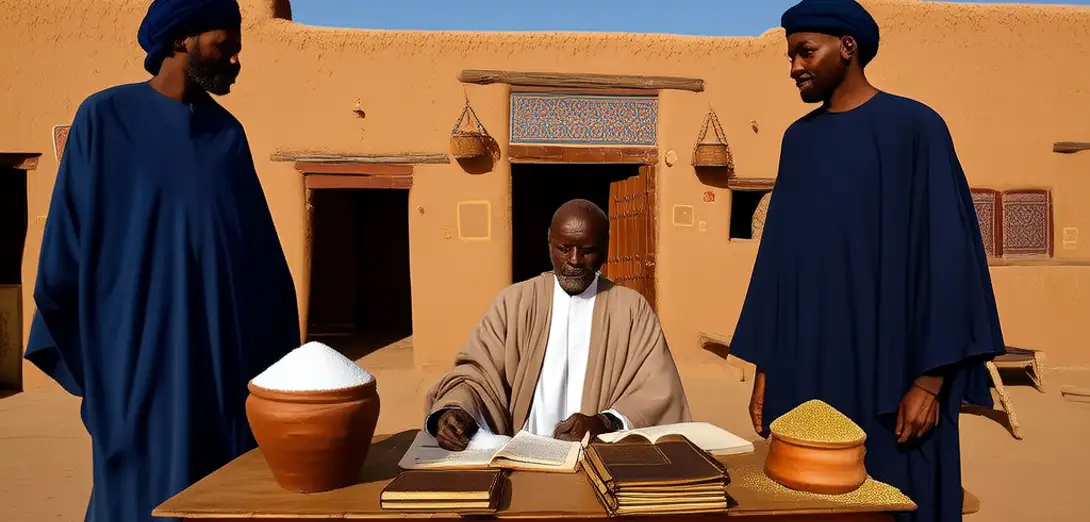
The Salt Roads of Timbuktu — Knowledge Networks, Caravan Credit, and Trans-Saharan Trust Economies
廷巴克图的盐路——知识网络、商队信贷与跨撒哈拉信任经济
-
Medieval Timbuktu’s libraries thrived not because of royal patronage alone but due to caravan merchants who deposited manuscripts as collateral for salt-and-gold loans secured across 2,000-kilometer routes.中世纪廷巴克图的图书馆繁荣,不仅得益于王室资助,更依赖于商队商人——他们将手稿作为抵押品,换取横跨2000公里盐金贸易路线上的贷款。
-
Scholars lent commentary manuscripts not for fees but against future grain deliveries, creating knowledge-backed instruments traded like promissory notes in desert markets.学者出借注释手稿不收酬金,而是以未来粮食交付为担保,由此创制出以知识为背书的金融工具,在沙漠集市中如期票般流通。
-
Caravan leaders issued handwritten 'trust letters' signed by three imams—these circulated as negotiable instruments accepted by Tuareg guides and Songhai tax collectors alike.商队首领签发手写‘信任信’,由三位伊玛目联署;此类信件作为可转让票据,在图阿雷格向导与桑海税吏间通用。
-
Salt slabs carried standardized weight stamps from regional mints, but their real value derived from embedded oral histories recited upon delivery, certifying route integrity and guide reliability.盐砖印有各地铸币厂的标准重量标记,但其真实价值源于交付时诵读的口传史——以此证明商路完好与向导可靠。
-
Qur’anic schools trained students in contract law alongside theology, treating commercial literacy as inseparable from spiritual authority and ethical enforceability.古兰经学校在教授神学的同时传授契约法,视商业素养为精神权威与伦理执行力不可分割的组成部分。
-
When drought disrupted trade, Timbuktu’s jurists convened ad hoc tribunals using precedent from 12th-century merchant disputes—not state statutes—to arbitrate delayed shipments and disputed weights.干旱扰乱贸易时,廷巴克图法学家依12世纪商人纠纷判例(而非国家法条)临时设庭,裁决货物延误与重量争议。
-
Manuscript repositories doubled as notary offices: scribes recorded loan terms in marginalia, linking intellectual property rights to debt repayment schedules.手稿藏馆兼作公证处:抄写员在页边空白处记录借贷条款,将知识产权与债务偿还周期直接挂钩。
-
Modern restorers now digitize texts using blockchain ledgers—not for novelty, but to replicate the original trust architecture where verification required decentralized consensus, not central archives.当代修复者采用区块链账本数字化文献,并非追求新潮,而是复刻原始信任架构——验证依赖去中心化共识,而非中央档案。
-
Trans-Saharan commerce collapsed not from colonial borders but from radio replacing oral relay networks that once verified cargo authenticity across tribal checkpoints.跨撒哈拉贸易的衰落,主因并非殖民边界,而是无线电取代了曾于部族关卡间层层验证货物真伪的口传接力网络。
-
Today’s artisan cooperatives revive salt-stamp motifs on leather goods, signaling adherence to ancient quality covenants still invoked in inter-clan trade negotiations.今日手工艺合作社在皮革制品上复刻盐砖印记,昭示对古老质量契约的恪守——该契约至今仍在部族间贸易谈判中援引。
-
The city’s enduring prestige stems less from gold than from its centuries-long role as an epistemic clearinghouse—where information liquidity enabled material liquidity.这座城市持久声望之源,不在黄金,而在其数百年来作为知识清算中心的角色——信息流动性催生了物资流动性。
-
Trust here was never abstract: it was measured in syllables recited correctly, weights balanced under desert sun, and witnesses remembered across generations.此处的信任从不抽象:它体现于准确诵出的音节、烈日下校准的砝码,以及跨越世代仍被铭记的证人。