正在确认阅读权限…
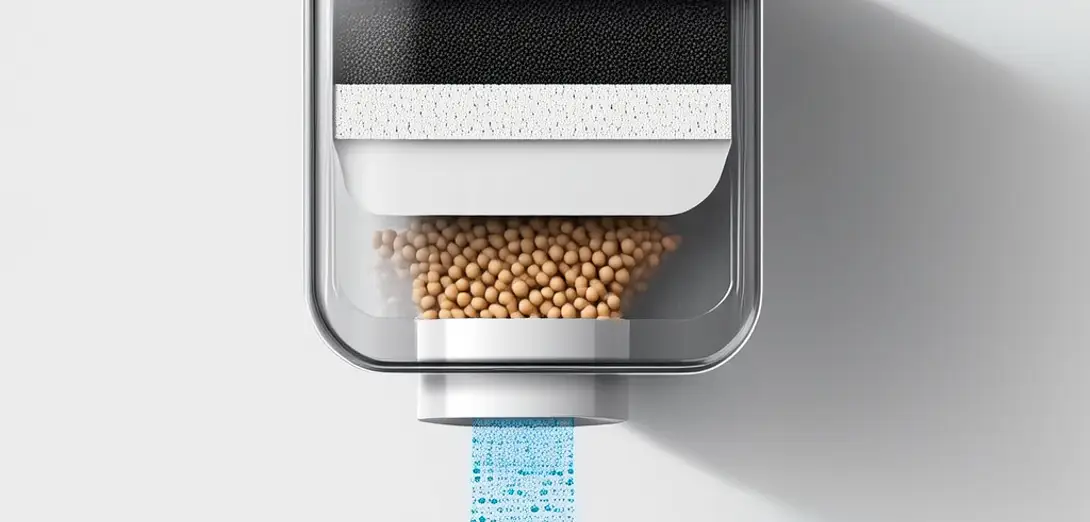
How Water Filters Remove Contaminants Without Chemicals
净水器如何不使用化学品去除污染物
-
Most household filters combine activated carbon, ceramic pores, and sometimes ion-exchange resins.多数家用滤水器结合了活性炭、陶瓷微孔,有时还加入离子交换树脂。
-
Activated carbon traps chlorine, pesticides, and volatile organic compounds through adsorption—not chemical reaction.活性炭通过吸附(而非化学反应)截留氯、农药和挥发性有机物。
-
Ceramic filters block bacteria and sediment with microscopic pores smaller than most pathogens.陶瓷滤芯利用比多数病原体更小的微孔阻隔细菌和泥沙。
-
Reverse osmosis systems force water through semi-permeable membranes, removing dissolved salts and heavy metals.反渗透系统迫使水流经半透膜,去除溶解盐和重金属。
-
Filter lifespan depends on water hardness and contaminant levels—hard water clogs carbon faster.滤芯寿命取决于水质硬度和污染物浓度——硬水会更快堵塞活性炭。
-
Certified units list tested removal rates for lead, cysts, or fluoride, helping consumers compare performance objectively.经认证的净水器会标明对铅、隐孢子虫或氟化物等物质的去除率,便于消费者客观比较性能。
-
Regular cartridge replacement ensures effectiveness; expired filters may leach trapped contaminants back into water.定期更换滤芯才能保证效果;过期滤芯可能将已截留的污染物重新释放到水中。
-
Unlike boiling or chlorination, physical filtration preserves minerals unless specifically designed to remove them.与煮沸或加氯不同,物理过滤通常保留矿物质,除非专门设计为去除矿物质。